Sign in. It’s quick, free and it’s up to you.
An account is an optional way to support the work we do. Find out more.
Sign in. It’s quick, free and it’s up to you.
An account is an optional way to support the work we do. Find out more.
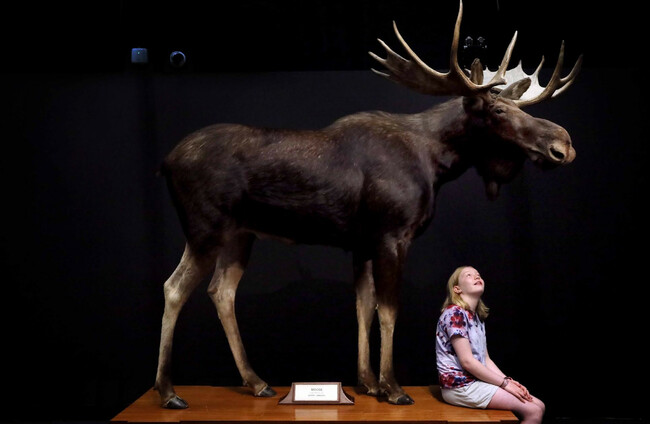
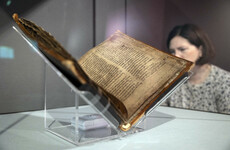
A NEW ‘DEAD Zoo Lab’ has been opened at the National Museum to fill the gap left by the temporary closure of the Natural History Museum in Dublin.
The Dead Zoo Lab has opened today. In September last year, the Natural History Museum closed its doors to allow for an ambitious refurbishment that will take a number of years. The museum housed the Dead Zoo – which consists of thousands of irreplaceable specimens, from elephants to insects.
These specimens have now been moved to the National Museum in Collins Barracks. They will remain there until the reopening of their refurbished home.
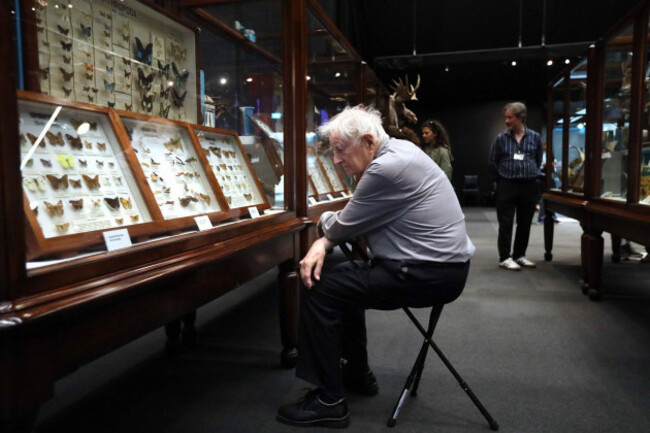
The new Dead Zoo Lab has been created “to ensure the public continues to have an opportunity to see some of the most popular specimens from the natural history collection”, a statement said, as well as some specimens that have not been on display for a number of years.
It said that the display of the natural history collection at the Natural History Museum on Merrion Street has been largely unchanged since Victorian times. The new Dead Zoo Lab will be used by the National Museum “to experiment with and test new methods of engaging the public in conversation with the collection” while works are ongoing.
“The Dead Zoo Lab has been designed to promote and encourage collaboration with communities, artists and scientists, all of which will inform the interpretation of the natural history collections for the redisplay of the Museum on Merrion Street when it reopens,” Director of Collections and Access at the National Museum, Dr Éimear O’Connor said.
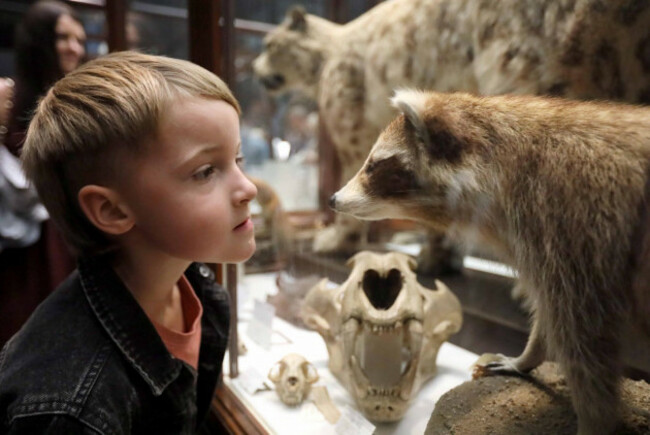
The exhibition will see some rotation in its offerings over time, the museum said. At any one time, there will be around 1.300 objects on display. These will span entomology, geology, mammals, birds, amphibians and reptiles, and a wide variety of marine life.
A selection of the museum’s collection of Blaschka Glass Models of Marine Life, of which it has the largest in the world, are also on display. The delicate models were created in the 19th century by father and son team Leopold and Rudolf Blaschka. Some of these models have not been on display for generations.
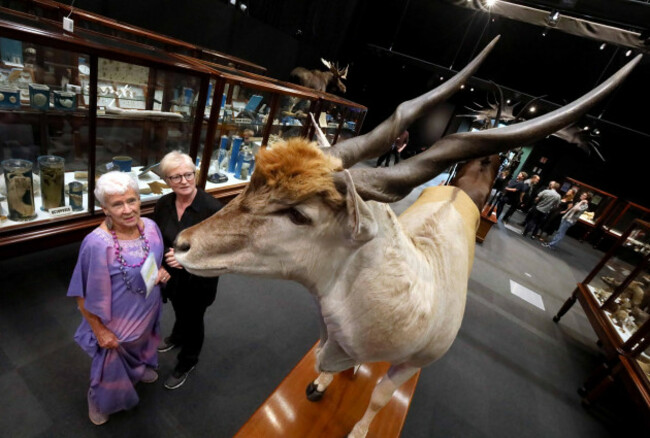
Speaking just prior to the opening of the Dead Zoo Lab, Natural History Keeper Paolo Viscardi said that the team is “so excited” to present the new collection.
“The space is smaller than Merrion Street but lots of firm favourites will be on display like Spoticus the Giraffe, the infamous eel choking on a frog, and Giant Irish Deer,” he said, “as well as many items returning to display after many years in storage.”
These include the dodo skeleton and hundreds of examples of animal species from around the world, which have not been accessible the public for almost two decades while the balcony galleries of Merrion Street were closed.
The National Museum of Ireland is open seven days a week and admission is free.

To embed this post, copy the code below on your site











have your say