Sign in. It’s quick, free and it’s up to you.
An account is an optional way to support the work we do. Find out more.
Sign in. It’s quick, free and it’s up to you.
An account is an optional way to support the work we do. Find out more.
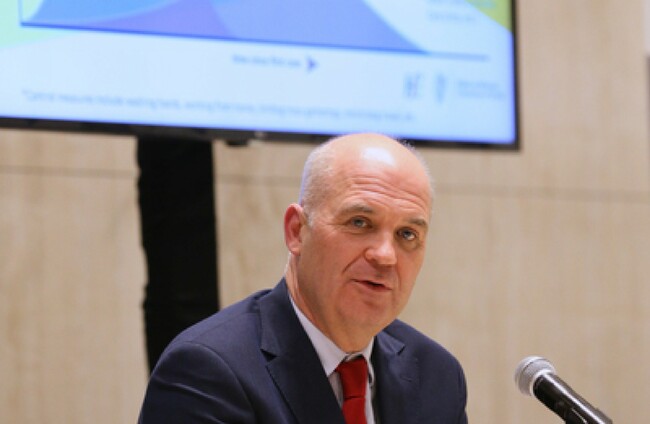
CHIEF MEDICAL OFFICER Dr Tony Holohan has said Ireland’s Covid-19 curve has been flattened and that there is no peak expected.
Speaking on RTÉ’s Late Late Show, Dr Holohan said that as a result of public efforts to suppress Covid-19 in communities through increased restrictions, “hundreds of lives” had been saved.
“What was really important for us to do…was suppress the virus in the community,” said Dr Holohan. “We think we’ve flattened that curve so much that there is no peak, that we think we can go along at a low level and reduce it even further.”
“That’s the impact that we’ve had from all of the work that everybody across society has done,” he said.
For weeks, Dr Holohan had stressed the importance of taking the virus “out of the community” to prevent a surge in cases and better protect the most vulnerable, including those in nursing homes.
On average, Dr Holohan said last night, a person who is infected is passing the virus on to less than one person.
“If we continue on that path the rate of infection will continue to drop,” he said.
He also said it is encouraging that the numbers admitted to ICU are continuing to drop.
However, Dr Holohan continued to stress how infectious Covid-19 is and how important social distancing measures are at reducing infection.
Dr Holohan’s comments come after a further 44 deaths related to Covid-19 were confirmed.
An additional 597 new cases of the coronavirus in the country were also confimred and 112 more Irish cases from a testing backlog confirmed by a lab in Germany.
This brings the total number of cases in Ireland 13,980.
Asked when restrictions could be lifted, Dr Holohan said last night that there is no textbook that can tell you what the appropriate order is on a timeline to lift the measures.
“What we would like to do at the beginning is look at the things that have the lowest rate of infection and the greatest benefit resulting from lifting the measures,” he said.
“We have to be careful as we lift restrictions that we don’t get an unexpected surge in that [reproductive] number.”
Restrictions are currently in place until 5 May. Dr Holohan said it’s important to continue with measures until then.
He said the disease will have to “behave itself” and the reproduction rate has to remain low before the National Public Health Emergency Team (NPHET) consider easing restrictions.
He said it is difficult to predict if children will be able to go back to school in September. ”We are focused on the 5 May and hopeful,” he said.

To embed this post, copy the code below on your site












have your say