Sign in. It’s quick, free and it’s up to you.
An account is an optional way to support the work we do. Find out more.
Sign in. It’s quick, free and it’s up to you.
An account is an optional way to support the work we do. Find out more.
WALK THROUGH PARTS of Dublin 8, and dereliction is hard to ignore.
Boarded-up shopfronts, crumbling terraces and long-vacant houses sit in the middle of a city experiencing one of Europe’s most visible housing crises.
Dublin 8 is an area that is known for its rich history, central location and its tourist attractions, but it’s also a place where buildings that could provide homes instead remain unused for years on end.
The issue itself is not unique to this part of the capital, but the area reflects a wider national pattern: vacancy continues while rents rise, homelessness increases and the supply-chain remains under pressure.
According to Dublin City Council’s latest edition of its Derelict Sites Register, published earlier this week, 136 properties across the city are officially listed as ‘derelict’.
Activists and researchers also suggest that the true number of derelict buildings in the capital is far higher, as many buildings never make it onto the register due to unclear ownership or lack of enforcement.
Of the 136 properties we do know about on DCC’s register, 37 (or 27% of the total) are located in Dublin 8, more than any other postcode in the city.
Orla Hegarty, an Assistant Professor at UCD’s School of Architecture, Planning and Environmental Policy, explains that the nature of a lot of development in the area is a symptom of the underlying problem.
“There’s been a lot of what I would call housing for transient communities,” she says.
“It’s not for people who are integrated in a community, it’s for people passing through. A lot of the developments in Dublin 8 have been for property speculation and the best returns and investment, but it hasn’t been for the long-term life of that community.”
Sinn Féin councillor Ciarán Ó Meachair, who represents the south-west inner city, says that dereliction in the area affects more than just appearances.
“When people see buildings left empty for years, it creates the feeling that nothing is being done,” he says.
He added that “visible vacancy during a housing crisis damages the confidence of the public”, which has helped contribute to a big activism movement around it.
Exemplifying his point, a group calling itself the Revolutionary Housing League began occupying the former Ardee House pub in the heart of Dublin 8 late last month.
The property has been vacant for years and an attempt to remove the group by its owners is now before the courts, where a High Court judge said this week that he had “immense sympathy” for those occupying the building.
However, cases of dereliction are more complicated than they look.
Some involve inheritance disputes, others have unclear ownership, and some require expensive structural work that owners can’t or won’t take on.
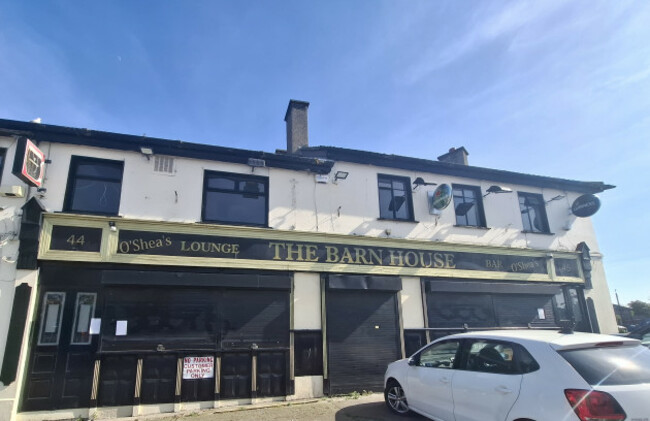
Internal council records show how another former pub in Dublin 8, the former Barn House located at 44 and 45 Dolphin’s Barn, is one such case.
The records, released by Dublin City Council to The Journal under the Freedom of Information Act, detail extensive deterioration, damaged facades, and long-term vacancy at the pub and several adjoining properties.
At one point, planning permission was granted to turn the former pub into a tourist hostel. After a number of applications, permission was finally granted for a 21-bed hostel in February of this year.
Within the cluster of properties declared vacant at the site, FOI records revealed a similar pattern: repeated inspections, little to no change, and limited follow-up beyond imposing levies.
Experts blame lack of action by the government and local authorities as contributing to the problem of dereliction.
UCD’s Orla Hegarty, suggests that a cultural attitude towards property in Ireland may be the reason for this.
“In a lot of ways in Ireland property is seen as a private matter, that it’s an asset owned by people and what they do with it is their own business,” she says.
“That notion persists that people have a right to do whatever they like or do nothing, which kind of ignores environmental, economic and social impact of dereliction.”
From the outside, many derelict buildings look like simple cases of neglect by property owners.
Broken windows, overgrown entrances and peeling paint create an impression that the owners of these properties are refusing to act.
But looking into it a little deeper, it becomes clear that this isn’t always the case.
Renovation costs have increased sharply in recent years, especially for older or protected buildings.
Conservation rules limit what can be changed on face of the building or the windows, and labour shortages and rising material costs also add significantly to these difficulties.
Artist Nathan Wheeler, who recreates miniatures of abandoned buildings, says that he understands public frustration, but that through his involvement within the activism-movement, he does understand the often complex reality of specific cases.
“You’ve got houses that we don’t know who owns,” he says. “Even if the authorities do know, owners may not want to do anything because they are going to be on the losing end.”
In some cases, derelict houses get stuck in limbo when an owner who can’t afford to renovate a property wants to sell it, but can’t find a willing buyer – including local authorities themselves.
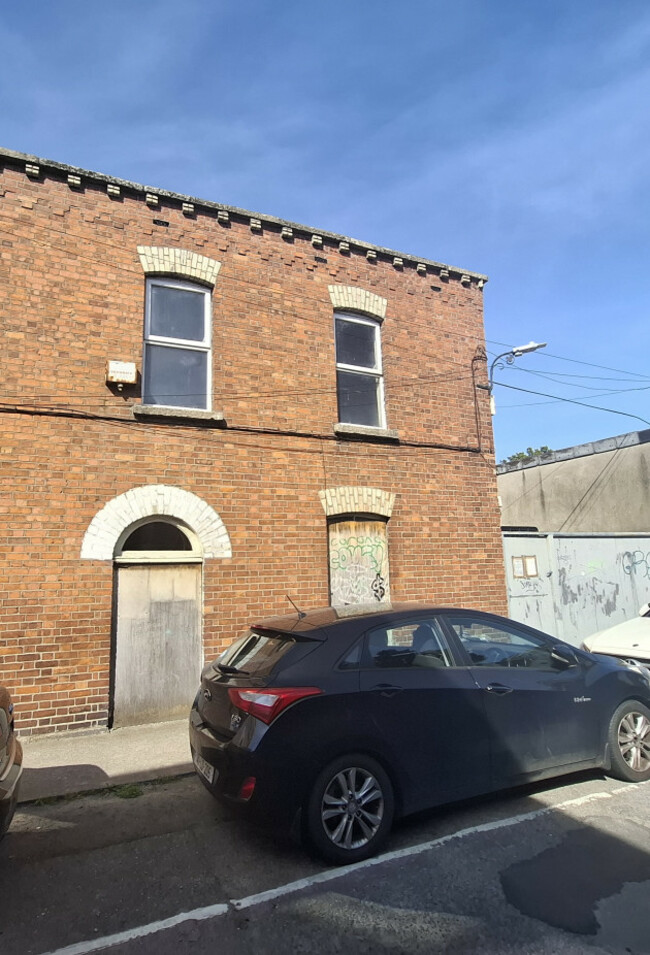
In Dublin 8, more FOI records released by the council show how this was the case at a boarded up property at 1 (1A & 1B) Brainboro Terrace.
The front of the house, located between occupied homes, is sealed with timber sheets, and notices on its front door have faded.
A resident who lives near the property told The Journal that she barely even notices it any more.
“You almost stop seeing it after a while,” she says, looking at the faded notice on the front door. “It’s just always been there.”
FOI documents show repeated inspections have taken place at Brainboro Terrace, all of which mention long-term vacancy and no visible improvements.
But internal correspondence also reveals that the owner of the property, Laherdane Investments, contacted the council in 2024 and in 2025 to say the company wished to sell the property to the local authority.
The council responded that the building was deemed “not suitable” for acquisition following a housing-department assessment.
Levies continue to be charged on the site, but there are no apparent plans for compulsory purchase. As a result, the property remains exactly as it is.
Another councillor for Dublin 8, the Green Party’s Michael Pidgeon, sees the problem of dereliction as part of a bigger picture within the housing crisis.
He says that while the solution to the crisis “is mostly going to be found in new builds”, it’s also frustrating to see places that could be used as homes lie empty when there’s such a shortage.
“It just looks terrible. It pisses people off,” he says.
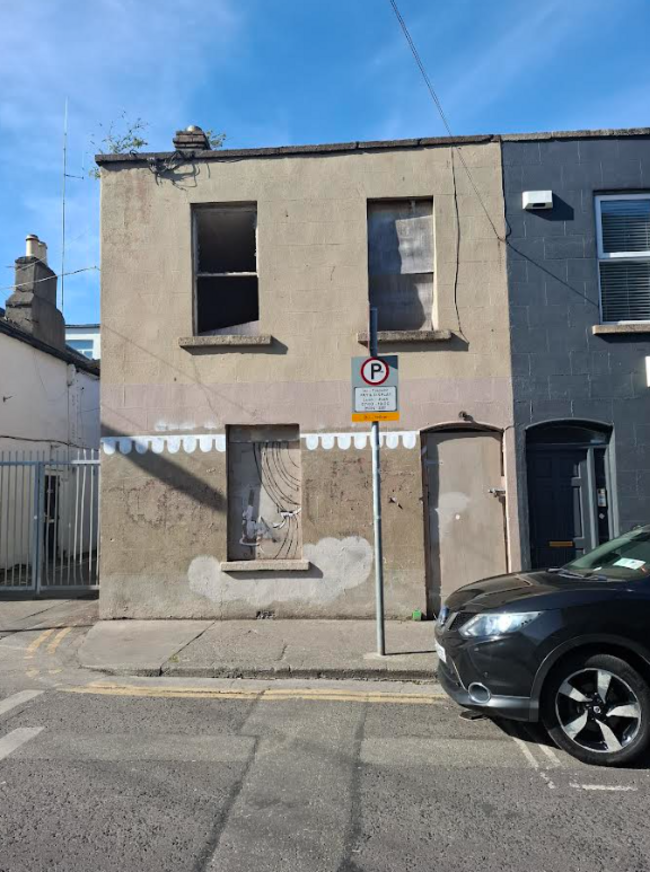
At another derelict property in the area, 48 Pleasants Street, the terrible facade is hard to ignore.
The small house sits on a busy route between Camden Street and the South Circular Road, where thousands upon thousands of people pass by every week.
A few years ago, the entire facade of the building was covered with graffiti, but even now, that is no longer there and the building sits abandoned with boarded-up windows and a damaged front.
FOI records released by the council report the same issues at the property year after year: no visible improvements; no sign of occupation; and no progress from the official owner in developing it.
Activist Frank O’Connor, a sustainability consultant and activist who posts under the #DerelictIreland hashtag on social media, says that dereliction like this has been normalised over decades.
“We’ve accepted empty buildings as part of our landscape” he says, in part because “property rights are treated as more valuable than human rights [in Ireland]“.
In response, Dublin City Council has said it is taking a more “active approach” to vacancy and dereliction, like through the Vacant Property Refurbishment Grant.
The grant is for those turning a vacant property into a new home, although the money, that can go up to €70,000, is only given to owner after renovation.
The government is also set to introduce a Derelict Property Tax to impose annual financial penalties on those who leave sites on the register, while councils can use compulsory purchase orders to bring sites on their derelict sites registers into public ownership so they can be turned into housing.
In many cases, however, councils are understaffed: Dublin City Council’s dedicated dereliction unit only has three full-time employees covering the entire city.
That allows problems to fester.
The council only acquired one property via CPO last year, and by late 2025, more than €10 million in unpaid dereliction levies remained unpaid.
The Green Party’s Michael Pidgeon says that councils often underestimate their own powers.
“We have a bad habit of saying local government is weak, instead of using the powers we have more aggressively,” he says.
In a city where housing is so desperately needed, that feels like a missed opportunity.
Update: This article originally stated that a planning application for a hostel at The Barn House was declared invalid, but was later changed to say that permission was granted in February this year.
To embed this post, copy the code below on your site













have your say