We need your help now

Support from readers like you keeps The Journal open.

You are visiting us because we have something you value. Independent, unbiased news that tells the truth. Advertising revenue goes some way to support our mission, but this year it has not been enough.

If you've seen value in our reporting, please contribute what you can, so we can continue to produce accurate and meaningful journalism. For everyone who needs it.

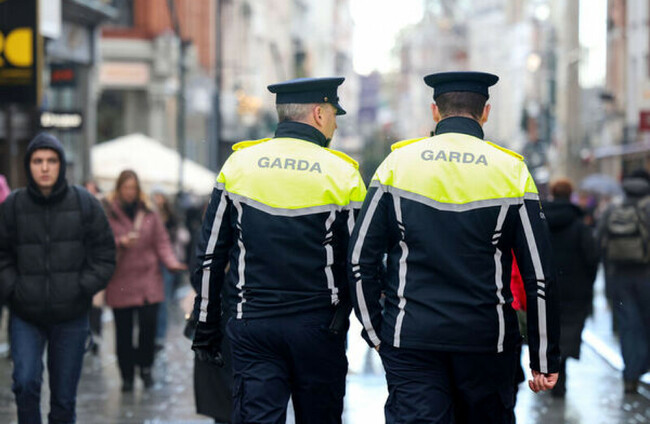
Many councillors will no longer be part of fora for consulting with gardaí on local policing decisions, under new government rules. RollingNews.ie

Dublin councillors furious at partial exclusion from new policing committee

The government defended limiting political representation on new Local Community Safety Partnerships.

DUBLIN CITY COUNCILLORS have been scathing in their criticism of a new “community safety” model established by the government to replace the now defunct Joint Policing Committees that were charged with holding gardaí accountable.

At a meeting in City Hall earlier this month, a number of Dublin councillors expressed anger and concern that many of them will no longer be able to participate in the forum for consulting with gardaí on local policing decisions.

That is because of limits imposed by Minister for Justice Jim O’Callaghan on political representation on the new Local Community Safety Partnerships (LCSPs) he has established nationwide.

A spokesman for the minister last night defended the new system. Limiting the number of councillors on LCSPs allows for “wider community representation and expertise”, while democratic input can continue, the Department of Justice said.

Fianna Fáil councillor Daryl Barron, chair of Dublin City Council’s north central area committee, said at the council meeting earlier this month that it was “not good enough” that only seven councillors out of 17 for his area would be able to attend the LCSP.

Green Party councillor Janet Horner, who has been involved in a pilot LCSP in the north inner city, said the model “does not facilitate proper engagement with gardaí”.

She said it was “essential for the safety of the city” that councillors maintain regular meetings with gardaí, which will mean looking beyond the new LCSPs.

The Department of Justice said LCSPs were “moving beyond” community safety being “solely the responsibility” of gardaí. 

Joint Policing Committees scrapped

All councillors and TDs for an area had a seat on the Joint Policing Committees, which politicians used to hold gardaí accountable for local policing decisions. 

Thirty-six LCSPs – which will bring together gardaí, community representatives and statutory agencies such as the HSE and Tusla, as well as a set number of councillors – are currently being constituted by local authorities across the country. 

Dermot Lacey, a Labour councillor, said nine councillors in his area were effectively being “dismissed” from their policing committee “while a bunch of unaccountable public servants are going to be given the same status” as elected representatives.

There will be five LCSPs covering different areas of Dublin city, but there will not be a city-wide forum bringing politicians and police together – a development that Lacey criticised.

“There’s now no longer a Dublin City joint policing committee, so in the event of something like the riots that happened two years ago, there’s no immediate forum to come together as representatives for the people of Dublin,” Lacey said.

In the aftermath of the Dublin riots in November 2023, then Garda commissioner Drew Harris was grilled at the city-wide Joint Policing Committee on his force’s preparedness and response.

Independent councillor Cieran Perry said it was “disgraceful” that some councillors who wanted to participate in the new LCSPs had been excluded.

Sinn Féin councillor Daithí Doolan said concerns had already been raised “directly” with the Department of Justice, but no change had been made except to allow the new LCSPs to elect their own chairpersons. 

The election of chairpersons is underway in several local authorities nationwide, with the membership of eight LCSPs now approved by Minister for Justice Jim O’Callaghan.

Doolan said TDs should be invited to every LCSP meeting as a way for councillors to influence policy. TDs will no longer have permanent seats on LCSPs as they did on Joint Policing Committees.

Sinn Féin councillor for Donaghmede Micheál MacDonncha said LCSPs would be required to find community representatives to sit on them – but councillors are community representatives.

Lord Mayor Ray McAdam, a Fine Gael councillor who has previously criticised the replacement of Joint Policing Committees with LCSPs, said he would convey councillors’ concerns to the Department of Justice. 

Nominees to Dublin city’s new LCSPs were agreed at the council meeting. Joint Policing Committees were disbanded over a year ago to make way for the new LCSPs. 

Department of Justice defends LCSPs

In a statement responding to Dublin councillors’ criticism, the Department of Justice said Minister Jim O’Callaghan “recognises the importance of elected representatives to any response to community safety, and the need to ensure they remain central” to the new structure.

The new system aims to “strike a fair balance between elected representatives, community voices, and key agencies whose cooperation is essential to improving safety outcomes”, the Department said.

It said meetings between LCSPs, other councillors and members of the Oireachtas were allowed for by the new regulations establishing LCSPs. These would be “closed meetings”, it added.

The Department said the 2017 Commission on the Future of Policing in Ireland had found that community safety must be a whole-of-government responsibility, which requires multi-agency co-operation.

“That is why the legislation specifically requires that Safety Partnerships will have statutory representatives from the HSE, local authorities and Tusla, in addition to gardaí and elected members of local authorities in order to recognise that many of the issues that arise do not only concern policing and that community safety is a collective responsibility,” the Department said.

The Journal’s reporting of the new Local Community Safety Partnerships is supported by the Local Democracy Reporting Scheme.

Readers like you are keeping these stories free for everyone...
A mix of advertising and supporting contributions helps keep paywalls away from valuable information like this article. Over 5,000 readers like you have already stepped up and support us with a monthly payment or a once-off donation.

Close
58 Comments
This is YOUR comments community. Stay civil, stay constructive, stay on topic. Please familiarise yourself with our comments policy here before taking part.
Leave a Comment
    Submit a report
    Please help us understand how this comment violates our community guidelines.
    Thank you for the feedback
    Your feedback has been sent to our team for review.

    Leave a commentcancel

     
    JournalTv
    News in 60 seconds