Sign in. It’s quick, free and it’s up to you.
An account is an optional way to support the work we do. Find out more.
Sign in. It’s quick, free and it’s up to you.
An account is an optional way to support the work we do. Find out more.
LAST UPDATE | 1 Sep 2025
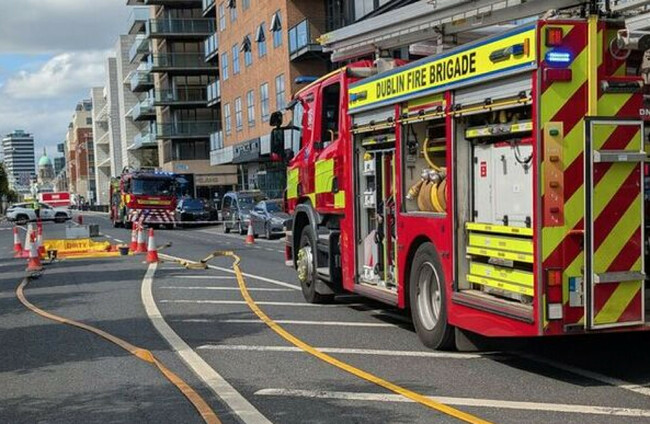
SIPTU MEMBERS IN Dublin Fire Brigade are planning to take industrial action due to “serious safety concerns” over the introduction of a new call-out and dispatch system.
Firefighters and officers in Dublin Fire Brigade have raised concerns about a new computer-aided dispatch system (CAD), which the union says is being imposed by the Department of Local Government without consultation.
Those concerns include the fact that the new CAD would remove ambulance services from Dublin Fire Brigade, and that there would be no longer be fire and ambulance services dispatched simultaneously.
SIPTU has approximately 900 members in Dublin Fire Brigade.
97% of the members have voted in favour of industrial action.
The action is expected to take place from next week in the form of non-cooperation with the new system, but could escalate further if the dispute is not resolved by management.
Speaking to the Journal, Siptu organiser Geoff McEvoy said that the new system will “remove the busiest part of the job” from Dublin Fire Brigade as it will not include call outs for ambulance services.
“The new CAD system will only include fire-and-rescue calls and will remove ambulance services from Dublin Fire Brigade, and to us that does not make any sense. It would be like Dublin Airport traffic control having two different systems to direct Aer Lingus and Ryanair,” he said.
“Dublin Fire Brigade is trained to provide vital ambulance and paramedic services which are of extreme value to the government. If a fire truck is on the way to another incident, it can be diverted and could potentially provide life-saving measures to someone in need.”
“The fact that the department has undermined that without speaking to the people making life-saving decisions is frank arrogance.”
Siptu Dublin Fire Brigade Convenor Luke McCann explained that every emergency service has a CAD system which allows call takers to see where the resources are and mobilise them effectively.
However, the department wants every fire brigade to be on one national CAD system which he says will have “severe consequences”.
“The fire based emergency medical service allows fire and ambulance resources to be dispatched simultaneously and provides critical lifesaving care in daily emergencies, including high-profile incidents such as the tragic attack on schoolchildren in Parnell Square in November 2023,” he said.
“In that case, paramedics were on site within minutes because a Dublin fire brigade resource was nearby. The new system would not allow for this level of response, adding a dangerous new risk factor to the system.”
“We raised these concerns with the Minister previously, and there are serious questions to be asked about decision making in the Department. How such a flawed proposal has progressed without proper consultation with frontline staff is deeply alarming.”
Meanwhile, Sinn Féin’s Dublin city councillors have called on the Minister for Housing, Local Government and Heritage James Browne to intervene to avoid strike action by Dublin Fire Brigade.
Sinn Féin Councillor Daithí Doolan said: “Today’s announcement by SIPTU must serve as a wakeup call to Minister for Housing, Local Government and Heritage James Browne TD. He must immediately intervene to avoid strike action by Dublin fire brigade.”
“This strike action can be avoided if the Minister ensures there is full consultation with the Dublin fire brigade workforce on the proposed new call and dispatch system,” he said.
“The call and dispatch system being imposed by the department simply will not work in Dublin. It may well meet the needs of other local authorities, but it is not fit for purpose here in Dublin.
“It is wholly unacceptable that the very workforce operating this service have been ignored. This must be rectified. The Dublin Fire Brigade workforce must be fully consulted on the introduction of this call and dispatch system.”
Labour TD Duncan Smith has urged Minister Browne to meet with Dublin Fire Brigade and SIPTU in order to deescalate the situation and avoid industrial action.
“These are reasonable and serious points being raised by frontline workers. It is not a question of resisting change for the sake of it – it is about ensuring that any change strengthens, rather than weakens, the emergency response we rely on,” he said.
“I am asking Minister James Browne to meet with Dublin Fire Brigade representatives and SIPTU without delay. Constructive engagement is the best way to move forward and to avoid unnecessary conflict.”
“Workers must have confidence that the system they use every day supports them to do their job to the highest standard. Government should take this opportunity to work with them and ensure that any new dispatch arrangements meet the needs of both workers and the public.”
A spokesperson for the Department of Housing, Local Government and Heritage said: “Emergency 999 call taking for Fire Services is delivered as a shared service across local authorities. The Department of Housing, Local Government and Heritage, through the NDFEM, provide capital funding and oversight on policy implementation.”
”A new improved call taking system was successfully brought live and is now operating in the Munster and Western regions, supporting emergency mobilisation of 121 fire stations from both the Munster and West Regional Communication Centres.”
“This national platform for 999 call taking and mobilising is designed to maximise public safety, underpinned by a resilient architecture. The system design enables any fire service 999 call to be mobilised from any of the three Regional Communication Centres.”
“While Minister Browne has no direct involvement in this dispute, he hopes that Dublin Fire Management and the Unions can agree a way forward to enable the full implementation of the new system which brings benefits both in terms of public safety and resilience.”

To embed this post, copy the code below on your site











have your say