Sign in. It’s quick, free and it’s up to you.
An account is an optional way to support the work we do. Find out more.
Sign in. It’s quick, free and it’s up to you.
An account is an optional way to support the work we do. Find out more.
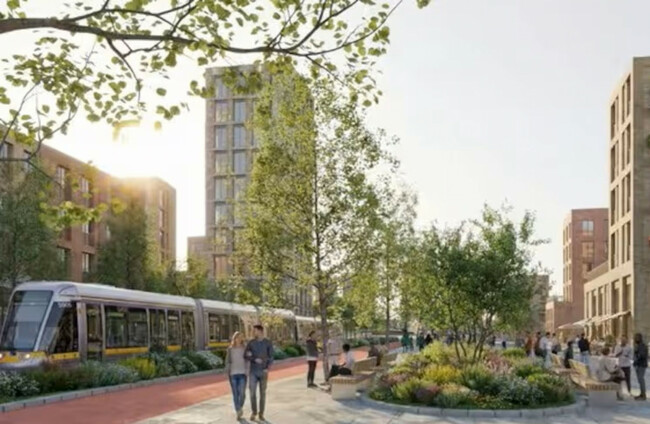
ONE OF THE country’s major builders has blasted plans for a new town in northwest Dublin in a former landfill in Dunsink, saying it won’t succeed unless big changes are made to what’s on offer for house-hunters.
Michael Prenty, property director with Ballymore Group, believes the homes proposed for Dunsink “won’t get built” because the proposals are for “way too dense” apartments, which he claimed will also mean much of the housing will be unaffordable for people.
Fingal County Council’s plans will see up to 18,500 homes built on land surrounding a former dump in northwest Dublin. Located between Finglas and Blanchardstown, the 1,000-acre site is viewed by housing experts as the largest remaining land bank inside the M50.
But the intervention by Ballymore Group – which is responsible for major developments across Dublin and London – is the latest concern to be aired over a wider emphasis on high-rise blocks in the government’s housing strategy.
The argument against apartments centres around how they are increasing in costs not just for the would-be buyer, but also further up the chain for the builder. This is exacerbated because, unlike a typical housing estate, the entire block must be built before a single apartment can be sold.
Prenty told The Journal that plans for the site to have 10 to 15-storey apartment blocks would “not be viable” financially for builders.
“What [Fingal County Council are] planning, it’s not possible,” Prenty said.
No developer is yet attached to the project, with Fingal County Council due to tender for the works.

Housing experts have increasingly been raising concerns over the high number of apartments that have planning permission but which are yet to start building, mainly due to financing issues.
Issues such as this prompted the government to cut the VAT rate and change rental laws over the past year in a bid to entice greater investment into the Irish housing market.
Prenty said that Ballymore, which has offices in Millennium Park near Dunsink, believes the site is a good location with “a lot of infrastructure” such as public transport, but he argued that it will be hard to finance and sell many of the apartments.
“The developer cannot build it because the developer can’t afford it,” Prenty said.
Let me give you an example. We had 70 apartments in Malahide that we sold to the private market. By the time we had the first apartment ready for occupation, we had spent in the region of €30 million, because we had to build the whole lot before the time [people can] occupy.
Prenty, who is the chairman of the Irish Home Builders Association (IHBA), said these costs mean that smaller construction firms will be priced out of these developments.
He added that he believes there will be “no private market for apartments” in Dunsink, except at the most expensive end.
Instead, according to Prenty, it is likely that the “only market” may be an Approved Housing Body or the Land Development Agency which takes on the homes at a higher cost to the taxpayer.
According to a major report released last year into apartment costs by the Society of Chartered Surveyors Ireland, the average cost of an apartment means that first-time buyers needed a combined salary of between €84,000 and €129,000 to be in with a chance of purchasing an apartment.
In suburban areas, the cost to build a medium-rise apartment block – which is considered to range between three and eight storeys – has risen by 32%.
That report found at the time that apartments could cost anywhere from €411,000 to €541,000, but this cost will have risen significantly by the time any homes at Dunsink are built.
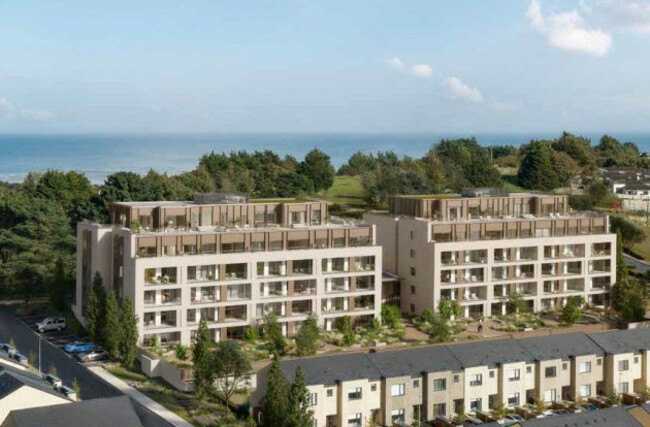
Lorcan Sirr, a lecturer in housing and planning at Technological University Dublin (TUD), said Ballymore’s criticisms sum up the problems surrounding the housing model currently being pursued to solve Ireland’s accommodation crisis.
“To make high-density apartments work, quite often they’re small apartments,” Sirr told The Journal.
“So this ends up in a mix of mostly one- and two-beds, particularly studios, but it will also mean that growing families will continue to move further and further away from the capital and commute.”
This risks Dunsink “ending up being housing for wealthy tech workers and finance sector workers and transient communities,” added Sirr, who has authored a new book called Housing a Nation, examining recent generations of Irish housing policy.
He added that the government has pursued a primarily “investment model”, which he said was “predictably posing problems” for builders and people looking for a home.
“There’s a conflict between what planning policy is seeking and what builders say they can make viable. And there’s another conflict with what households actually want,” Sirr said.
Prenty, of Ballymore, pointed to the Construction Industry Federation’s (CIF) budget submission as a potential way forward for Dunsink, as it has sought the VAT relief that is applied to apartments to be extended to duplex units.
This type of accommodation, which is side-by-side or stacked, can still achieve “density of up to 50-odd units per hectare”, but also benefits from own-door accommodation, Prenty said.
He believes duplexes may have an added benefit: “You should be able to sell them to the private market without looking for more government subsidies to get them built.”
The overall plan for Dunsink will take 10-15 years to develop, with construction of the first 2,500 homes to get under way within three years.

To embed this post, copy the code below on your site















have your say