Sign in. It’s quick, free and it’s up to you.
An account is an optional way to support the work we do. Find out more.
Sign in. It’s quick, free and it’s up to you.
An account is an optional way to support the work we do. Find out more.
LAST UPDATE | 18 May
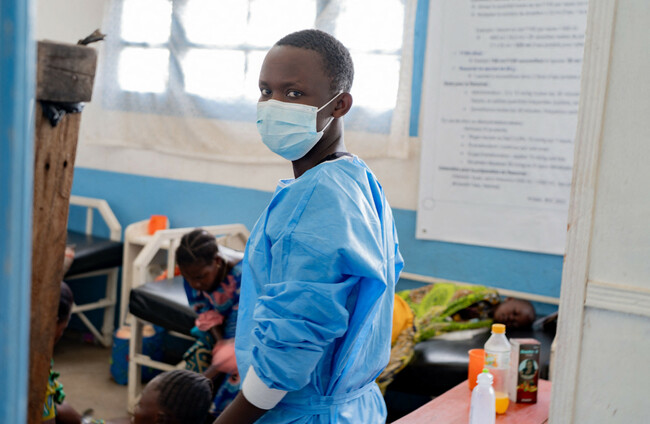
AN OUTBREAK OF a new strain of the deadly Ebola disease in the Democratic Republic of the Congo (DRC) and Uganda has prompted the World Health Organization (WHO) to declare a public health emergency of international concern.
But what does that mean?
The strain of Ebola, caused by the Bundibugyo virus, has no treatment or vaccine and is different from the more common Zaire form of the virus. The new strain has a death rate of between 25% and 40%.
Although more than 20 Ebola outbreaks have taken place in Congo and Uganda since 1976, this is only the third time that the Bundibugyo virus has been detected.
The DRC will open three treatment centres for the virus in the eastern Ituri province following the outbreak.
Although the outbreak is centered in the Ituri province, cases have been reported in the capital, Kinshasa, and in Goma, the largest city in the country’s east.
Trish Newport, Doctors Without Borders’ emergency management programme manager, has said:
“The number of cases and deaths we are seeing in such a short timeframe, combined with the spread across several health zones and now across the border, is extremely concerning.”
Doctors Without Borders and the International Rescue Committee have dispatched teams responding to the outbreak.
Meanwhile, Philippe Guiton, national director of World Vision DRC, remarked that his “main concern is for children, who are the most vulnerable in a region already heavily affected by conflict and where humanitarian assistance remains insufficient due to a lack of resources”.
Invoking the International Health Regulations (IHR), a legal framework adopted by 196 countries, the WHO’s director-general Tedros Adhanom Ghebreyesus determined that the Ebola disease caused by Bundibugyo virus in the DRC and Uganda “constitutes a public health emergency of international concern” (PHEIC), but does not amount to a pandemic.
A PHEIC is defined as “an extraordinary event which is determined to constitute a public health risk to other states through the international spread of disease and to potentially require a coordinated international response”.
A PHEIC is characterised as a serious, sudden, unusual or unexpected situation that carries implications for public health beyond the affected state’s borders and may require immediate international action.
Since the establishment of the IHR in 2005, there have been nine PHEIC declarations, including for swine flu, polio, Ebola, Zika and Mpox.
The WHO declared the outbreak of the Covid virus a PHEIC on 30 January 2020, before eventually recognising it as a pandemic on 11 March the same year.
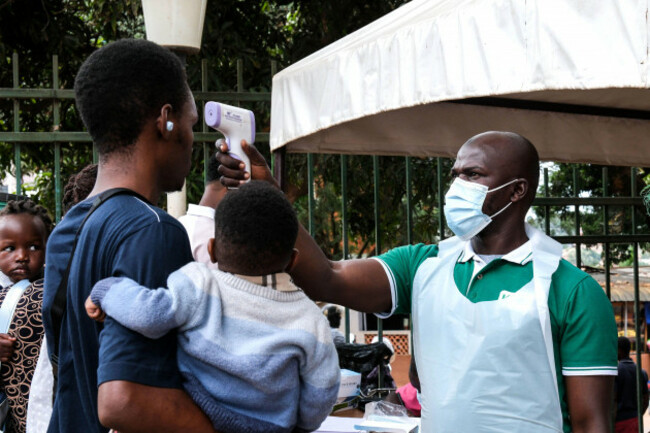
As of today, there were more than 390 suspected cases and 105 deaths in the DRC, and two deaths in neighbouring Uganda.
CBS News reported yesterday that at least six Americans had been exposed to the Ebola virus in Congo.
“There are significant uncertainties to the true number of infected persons and geographic spread associated with this event at the present time,” the WHO said.
“In addition, there is limited understanding of the epidemiological links with known or suspected cases.”
The UN agency said the event requires international coordination and cooperation to understand the extent of the outbreak, to coordinate surveillance, prevention and response efforts, to scale up and strengthen operations, and ensure ability to implement control measures.
For the countries affected so far, the DRC and Uganda, the WHO recommends that they activate their national disaster or emergency mechanisms, which should include enhanced surveillance, contact tracing and laboratory testing.
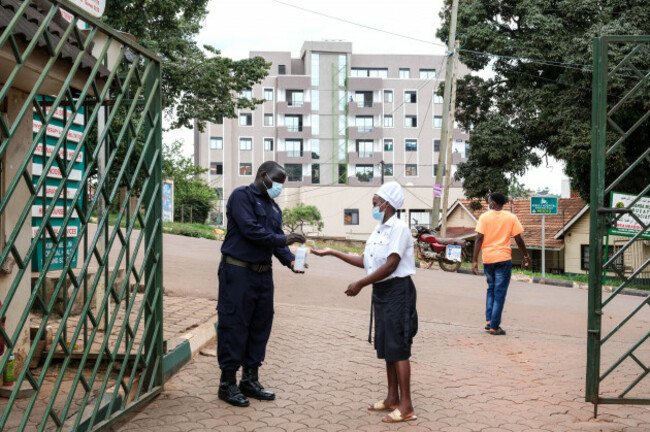
Countries that share land borders with the DRC and Uganda should urgently enhance their preparedness and increase surveillance at healthcare facilities and at borders.
Nine countries share land borders with the DRC and/or Uganda. They are the Republic of Congo, the Central African Republic, South Sudan, Kenya, Rwanda, Burundi, Tanzania, Zambia and Angola.
Rwanda has already partially closed its border with the DRC.
For all other states, the WHO insists that they should not close borders or place any restrictions on movement and trade.
“Such measures are usually implemented out of fear and have no basis in science,” the agency says.
States should be prepared to facilitate the evacuation and repatriation of citizens who have been exposed to the disease, the WHO advises.
“Entry screening at airports or other ports of entry outside the affected region are not considered needed for passengers returning from areas at risk,” the agency says.
The European Centre for Disease Prevention and Control (ECDC) has dispatched a health expert to the Africa Centre for Disease Control and is preparing to possibly send more advisers to affected countries.
Before the latest outbreak of Ebola, the Irish Department of Foreign Affairs’ advice had already urged citizens not to travel to the DRC for a number of reasons, including unrest, crime and diseases.
The Department of Foreign Affairs and the HSE have been contacted for comment.

To embed this post, copy the code below on your site














have your say