We need your help now

Support from readers like you keeps The Journal open.

You are visiting us because we have something you value. Independent, unbiased news that tells the truth. Advertising revenue goes some way to support our mission, but this year it has not been enough.

If you've seen value in our reporting, please contribute what you can, so we can continue to produce accurate and meaningful journalism. For everyone who needs it.

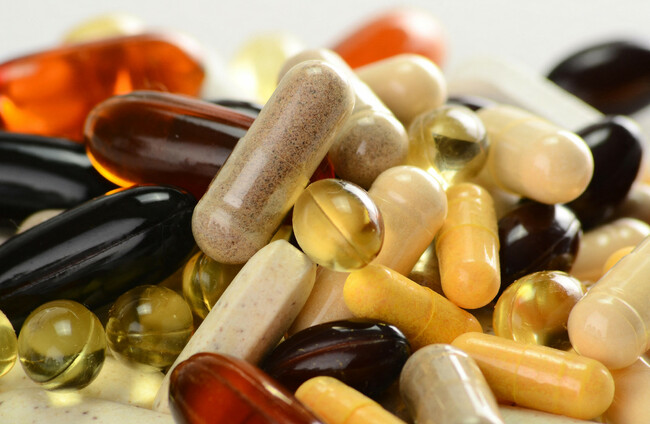
Various dietary supplements Alamy Stock Photo

Why the EU wants to limit food supplement doses - and why health food stores are not happy

Critics say the planned regulation will amount to an effective “ban” on some products.

THE EU IS working on regulations that aim to standardise the maximum permitted levels of vitamins and minerals in dietary supplements across the 27 member states.

But the supplement industry and some Irish politicians are opposed to the move. 

The EU Commission, which began work on the regulations over 20 years ago, argues that making maximum levels uniform across the bloc will not only resolve trade issues, but also ensure the products are safe for consumers. 

The proposed new limits are yet to be set, but critics of the EU’s directive that sets out the planned regulations say they will amount to an effective “ban” on some products. 

Nutrition experts, on the other hand, argue that imposing limits makes sense, especially because they say most healthy people have no need for supplements as long as they have a balanced diet.

As it stands, each member state has its own set of regulations for nutrients in food supplements. This is unusual in the EU single market, where industry regulations are generally the same across all member states and therefore border checks are unnecessary. 

Some of the EU’s regulations on food supplements are already in place in Ireland, and some supplement ingredients are already banned

Last year, the government brought in legislation (in line with EU directives) that introduced stricter controls on the supplements that can be sold in Ireland while also restricting what manufacturers can say about them. 

For example, labels and ads cannot say a food supplement can prevent, treat or cure a disease. They are also prohibited from saying or implying that a balanced and varied diet cannot provide appropriate quantities of nutrients.  

Industry opposition

There has been significant opposition to the planned implementation of more regulations from the food supplement industry in Ireland.

A petition published by Health Stores Ireland — an industry representative group — has received more than 20,000 signatures and there is even a website specifically dedicated to the campaign.

The ‘Save Our Supplements’ campaign argues that the industry in Ireland is already adequately regulated by the Food Safety Authority of Ireland (FSAI).

“We are very happy to continue operating with the regulations which currently exist in Ireland and have actually done quite a solid job for the Irish consumer,” Matt Ronan, co-founder of the Evolv Healthstore in Enniscorthy, told The Journal

The industry group has also warned about the potential economic impacts. 

“These regulations threaten the viability of local health businesses and established Irish brands that are leaders in the European market,” the petition reads, arguing that some products produced in Ireland will no longer be viable with strict limits in place. 

The petition calls on public representatives “to protect our right to choose vitamin and mineral supplements at a potency that has been proven safe and effective”.

It also says the proposed maximum levels “could force sharp reductions in supplement dosages — including vitamin D, vitamin C, Magnesium and Vitamin B6 — leaving many products at strengths too low to be of practical benefit to consumers”.

Ronan said Irish consumers are “already very well protected by our current Irish regulations, but it is the consumer who will lose the most in this process if limits are substantially pushed down, thereby lessening the benefit which they derive from their products”.

Some members of the Dáil have taken up the industry’s cause, including Independent Ireland TD Ken O’Flynn and Aontú’s Paul Lawless

Lawless claimed that the plan to limit the amounts of nutrients contained in food supplements would “ban” some Irish-made products, offering Revive Active supplements as one example, but the maximum levels have not yet been agreed. 

Too much of a good thing?

Determining safe maximum levels is complicated and is still a matter of debate between the European Commission, member states and industry stakeholders. 

“Due to the complex nature of the issue and the divergent views expressed by the parties involved, this process is ongoing and no final conclusion has been reached,” the European Food Safety Authority (EFSA) says on its website

One complicating factor is the diversity of diets and conditions across different EU countries, which researchers at University College Cork have said can lead to “conservative” limits being recommended. 

The same researchers, however, also said that safe limit recommendations have been “too liberal” in some past cases. 

South Dublin Independent Ireland councillor Linda de Courcy, who spoke to Ken O’Flynn about the proposed limits in a video post on social media, argued that there are plenty of over-the-counter medications, like aspirin, that can be harmful and even fatal in high doses.

“Nobody dies from taking vitamin C. You never read a headline in the paper going ‘Auntie Mary took a high dose of vitamin D and she collapsed’,” she said.

It is true that taking too much vitamin D will not result in death, but it can lead to vitamin D toxicity, which causes a build-up of calcium in the body (hypercalcemia).

Hypercalcemia can lead to an upset stomach and vomiting as well as weakness and frequent urination. It can also weaken bones and cause damage to the kidneys and heart. 

Too much vitamin C can also cause health problems, including diarrhoea, vomiting, heartburn and swelling of the oesophagus.

Mary McCreery, a dietician at Blackrock Health, told The Journal that limiting the amount of vitamins and minerals in supplements “makes perfect sense” and that these supplements should only be used to treat a deficiency.

McCreery also does not agree that a “one-size-fits-all” approach is a bad thing, as the industry has suggested. 

“I don’t think this is a fair argument. The recommended daily intakes are set to meet the requirements of 90% of healthy people but also to ensure that the intakes are unlikely to cause harm,” she said.

“Some supplements provide very high levels of nutrients that we tend to get every day in our daily diet.”

She said that most people do not need to take supplements at all, as long as they have a balanced diet. 

“Yes, in Ireland we need vitamin D during the winter months but only at the recommended 10 micrograms per day. I only recommend supplements to someone who has a specific deficiency like anaemia due to low iron intake or an absorption problem.

“Consumers need to be more aware of what they are putting into their bodies and should be looking at what harm they might do rather than what good they may do.”

Close
43 Comments
This is YOUR comments community. Stay civil, stay constructive, stay on topic. Please familiarise yourself with our comments policy here before taking part.
Leave a Comment
    Submit a report
    Please help us understand how this comment violates our community guidelines.
    Thank you for the feedback
    Your feedback has been sent to our team for review.

    Leave a commentcancel

     
    JournalTv
    News in 60 seconds