Sign in. It’s quick, free and it’s up to you.
An account is an optional way to support the work we do. Find out more.
Sign in. It’s quick, free and it’s up to you.
An account is an optional way to support the work we do. Find out more.
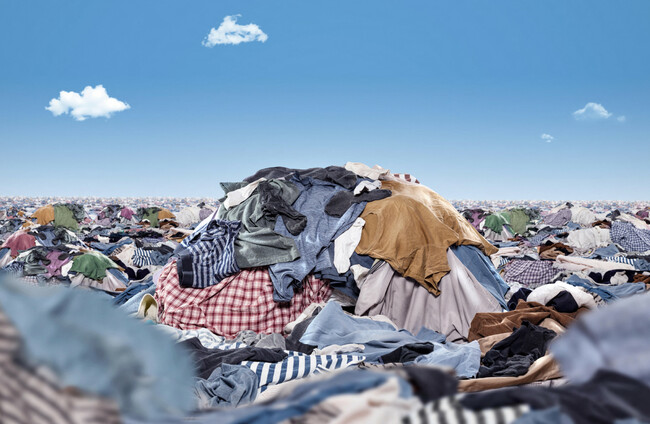
THE EU HAS banned big companies from destroying unsold clothes and shoes for no good reason.
The new law, which came into effect today, aims to force fast fashion giants to resell, repurpose, or donate leftover stock from returns or overproduction.
The EU estimates that up to 9% of clothing is incinerated without having ever been worn. A small amount is recycled, and the rest ends up in landfill.
Unsold clothing destruction in Europe alone generates around 5.6 million tonnes of CO₂ emissions every year.
For big companies, destroying clothes is often cheaper than storing them, and creating scarcity feeds exclusivity.
On the face of it, the ban sounds sensible, but environmentalists are worried it won’t go far enough to discourage bad behaviour.
The EU says, under the rules, companies can’t export garments to be destroyed elsewhere.
It is up to authorities in each member state to police and sanction companies that don’t comply. In Ireland, this is the Department of Enterprise. It is unclear what penalties it’ll choose.
Theo Dillon, is a project development officer with the Environmental Forum, a non-profit based in Cork. He said that fines, if imposed, won’t have the desired effect.
“The company, I bet, will just pay the fines and then put the price back on the consumer,” he said.
He also fears it’ll lead to cheaper materials being used and lower pay for workers globally.
According to Dillon, Ireland’s own response to the threat of fines shows they don’t work.
The country may have to fork out around €26 billion as a consequence of missing climate targets for the period 2018 to 2030.
Instead of fining them, Dillon believes the EU should shut down companies that don’t comply.
“If a café or a restaurant is caught to be breaking the health code, they are shut down as a business. That’s just what happens. Yet, if a clothing company violates the laws of humanity and the environment, they’re just slapped with a fine,” he said.
Pat Kane, a sustainability consultant at Antaris and owner of Reuzi, an online shop that sells eco-friendly products, says such a move isn’t realistic.
Realistically speaking, do we see the EU taking down H&M or Primark? Hardly.
Kane told The Journal that reputational damage may have more of an impact than any fines, if consumers stop supporting companies with wasteful practices.
However, asked whether consumers will sacrifice their fast fashion hauls, she said: “I would temper expectations.”
There is an “attitude-values gap” among consumers, according to Kane, where their ethics don’t match their actions.
She acknowledged that cost is a huge factor in the choices consumers make, and the cheaper option is often the only option for some.
“I don’t expect the law to change what people buy in any visible way in the next few years,” she said.
“Habits follow structures, not the reverse. Make waste expensive and visible for companies, and consumer options will gradually reshape around that.”
Earth Overshoot Day is on 30 July this year. The “overshoot” is the point at which humanity’s demand for ecological resources and services in a given year exceeds what the planet can regenerate.
It highlights that humans are consuming at an unsustainable rate.
Dillon, like many climate activists, is encouraging “degrowth”, which means cutting back drastically to try and return to a sustainable level of consumption.
“At the end of the day, no one is shovelling this stuff down our throats. No one is forcing us into the shops to buy fast fashion,” he said.
“What is needed now is regulation because you can’t get people en masse to change their views about everything because you can’t reach all human beings.”
From February 2027, large companies operating within the EU will also be required to transparently report how many garments they dispose of and how they do it. Currently, there is no standardised reporting system.
Each country will have to police companies operating in their own jurisdiction.

To embed this post, copy the code below on your site












have your say