Sign in. It’s quick, free and it’s up to you.
An account is an optional way to support the work we do. Find out more.
Sign in. It’s quick, free and it’s up to you.
An account is an optional way to support the work we do. Find out more.
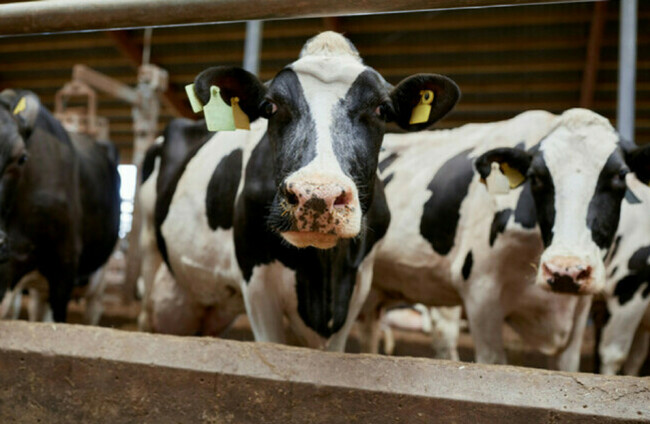
THE EUROPEAN COMMISSION has proposed €2 trillion budget focused on tackling overseas competition and Russian aggression at Europe’s borders – at the risk of a new showdown with farmers.
Presenting the €2 trillion budget blueprint for 2028-2034 to reporters in Brussels, EU chief Ursula von der Leyen said it “will be the most ambitious ever proposed”.
The plans seek to bolster Europe’s security and ramp up its competitiveness, while paying off debts from a massive Covid-era loan as of 2028 – against a backdrop of soaring trade tensions with the bloc’s biggest commercial partner, the United States.
The European Commission put €451 billion on the table under a broad “competitiveness” tag that encompasses defence and space.
The budget plan earmarks up to €86 billion for the reconstruction of war-torn Ukraine – as well as substantial new “flexibility” funds kept available in event of crises.
But Brussels came under heavy criticism by EU lawmakers who accused it of not leaving sufficient funds for priorities including climate adaptation and the agriculture subsidies that currently make up the biggest share of the EU’s budget.
Budget commissioner Piotr Serafin said under the commission’s plans, €300 billion would remain ring-fenced to support farmers.
However, this is a 22% reduction when compared to the €387 billion of support payments under the current seven-year budget.
The European Commission says the difference reflects an overhaul of the massive subsidies known as the common agricultural policy (CAP) - with some funding moved to other budget columns.
But the future of the CAP is headed for a fight, with farmers warning against cuts to their slice of the EU pie – and marching today in Brussels to show their resolve.
Hundreds of European farmers joined a protest outside the commission building in Brussels organised by a pan-European agriculture lobby group, Copa-Cogeca.
The group described it as a “Black Wednesday” for farmers, accusing Brussels of having “effectively decided to dismantle the ‘common’ nature of the CAP through concealed budget cuts”.
The warning raised the spectre of another confrontation after last year’s protests across Europe by farmers upset at cheap imports, low margins and the burden of environmental rules.
Speaking from Brussels, Irish Farmers’ Association president Francie Gorman described the proposals as a “hammer blow” for the sector.
“The only definitive figure for farming supports is 20% lower than the current budget,” said Gorman.
He said the Commission is “more interested in finding ways to cut payments to individual farmers rather than support them”.
Gorman also warned that cutting CAP funding will “reduce food production and lead to food price inflation”.
He called on the Irish government to secure the “maximum funding for Irish farmers to encourage the next generation to consider farming as a career”.
Agriculture Minister Martin Heydon described the proposals as “complex” and remarked that the “major changes” will be studied in detail to “better understand the impact on Ireland”.
Detailed legislative proposals are expected to be published tomorrow.
He added that these proposals will form a “key focus” when Ireland assumed the EU presidency next year.
Minister Heydon will host the first meeting of Ireland’s CAP Consultative Committee tomorrow on the proposals.
Heydon said this Committee will play a “crucial role in ensuring that the CAP reform process is transparent, inclusive, and responsive to the needs of various stakeholders within the agricultural and rural community.”
Meanwhile, Minister for Rural and Community Development Dara Calleary remarked that CAP “critically supports the economic, social and environmental performance of rural Ireland”.
He added that its development post-2027 is a “matter of significant importance for my department” and that he will engage closely with colleagues both in Ireland and the European Parliament to “ensure rural Ireland is kept front and centre in all negotiations”.
Elsewhere, MEP Maria Walsh said the proposed changes would “harm our farmers and the development of rural Ireland”.
“The CAP is a lifeline to farmers across Ireland and the EU, yet this fact has been ignored by Commissioner for Budget Piotr Serafin,” said Walsh.
She added that the “fight is far from over” and that the “real battle will play out within the Parliament’s Agriculture Committee and the EU Council over the coming months.”
“Crucially, the final negotiations will take place during the Irish Presidency of the EU Council in the second half of 2026 meaning that Irish Ministers and MEPs will play a leading role in defining the final structure of the CAP,” said Walsh.
The announcement sets the stage for two years of fraught negotiations between the European Parliament and 27 member states.
Already stretched thin, some states are unwilling to contribute more to the common pot.
Unlike in the previous budget, the EU has debts due from the Covid pandemic, when states teamed up to borrow €800 billion to support the bloc’s economy. These are estimated to cost €25-30 billion a year from 2028.
The previous 2021-2027 budget was worth around €1.2 trillion and made up from national contributions and money collected by the EU such as customs duties.
National contributions will grow slightly, from 1.13% of member states’ gross national income to 1.15%, plus 0.11% devoted to repaying the Covid loan.
The commission will also seek to raise about €58 billion a year collecting money directly through five instruments, including its carbon border tax and a levy on electronic waste.
-With additional reporting from © AFP 2025

To embed this post, copy the code below on your site













have your say