We need your help now

Support from readers like you keeps The Journal open.

You are visiting us because we have something you value. Independent, unbiased news that tells the truth. Advertising revenue goes some way to support our mission, but this year it has not been enough.

If you've seen value in our reporting, please contribute what you can, so we can continue to produce accurate and meaningful journalism. For everyone who needs it.

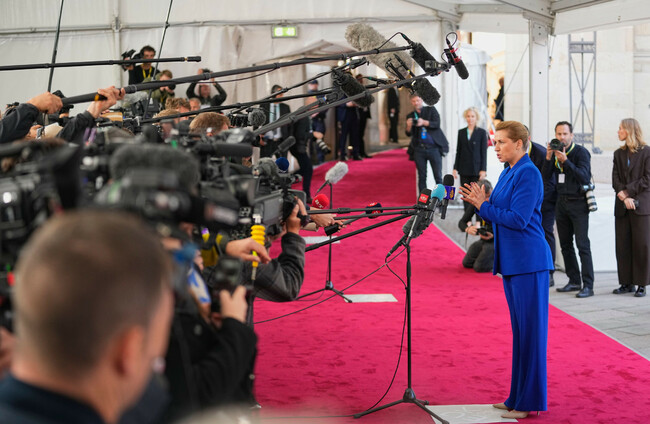
Denmark's Prime Minister Mette Frederiksen speaks to journalists as she arrives for an informal summit in the Danish parliament at Christiansborg Castle - also known as 'Borgen'. Alamy Stock Photo

Tight security as Taoiseach and other EU leaders meet in Denmark to talk defence and drones

Denmark has been rattled in recent days as unidentified drones shut down airports and flew near military sites.

LAST UPDATE | 1 Oct 2025

TAOISEACH MICHEÁL MARTIN other EU leaders are gathering in Denmark today for an informal European Council meeting to discuss bolstering Europe’s defence and security and strengthening support for Ukraine. 

Thousands of police are on high alert, civilian drones have been banned and NATO allies have sent reinforcements as the continent converges on Copenhagen for the long-planned talks, to be followed by a broader gathering of European leaders on Thursday.

Denmark – which holds the EU’s rotating presidency – has been rattled in recent days as unidentified drones shut down airports and flew near military sites, ramping up fears about the threat from Russia. 

Nordic neighbours as well as allies from the United States to Ukraine have dispatched anti-drone technology and specialists to bolster Denmark’s capabilities ahead of the summit talks.

Suspicions have pointed at Russia for what Prime Minister Mette Frederiksen called a “hybrid attack” – but so far no culprit has been definitively named.

Nonetheless the drone incidents have sharpened the focus on the chinks in Europe’s defences after high-profile air incursions by Moscow in Poland and Estonia.

EU leaders meeting in the Danish capital are looking to flesh out details for priority projects, including a “drone wall” aimed at countering Russia’s threat.

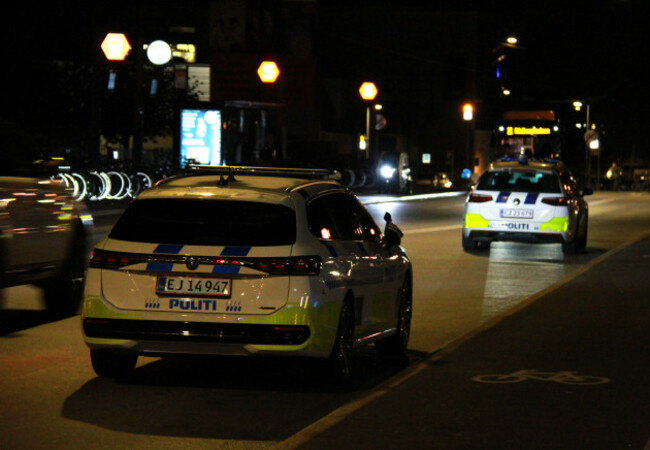
copenhagen-denmark-30th-sep-2025-police-vehicles-are-seen-in-copenhagen-capital-of-denmark-on-sept-30-2025-the-united-states-will-provide-anti-drone-capabilities-to-denmark-during-the-informa Police officers patrol in Copenhagen, ahead of the informal meeting of European Union heads of state and government. Alamy Stock Photo Alamy Stock Photo

Defence ministers from some 10 countries mostly along the EU’s eastern flank last week kicked off talks on the plan to build a system of defences to detect, and ultimately take down, drones.

The EU is looking to tap the war-tested expertise of Ukraine, whose President Volodymyr Zelenskyy will join for Thursday’s gathering of the European Political Community.

“Europe must deliver a strong and united response to Russia’s drone incursions at our borders,” EU chief Ursula von der Leyen said Tuesday.

Today’s discussion is the latest step in the EU’s efforts to get ready for a potential conflict with Russia by 2030 – as warnings swirl Moscow could look to attack in the coming years.

Leaders will seek to lay out a roadmap for addressing Europe’s most pressing defence needs as confidence wavers in US backing under President Donald Trump.

The 27-nation bloc has already come up with a 150-billion-euro loan scheme to help fund defence spending, with the lion’s share being snapped up by eastern countries.

Brussels has proposed countries now club together on four “flagship” projects — the drone wall, securing the eastern flank, missile defences and a space “shield”.

On Thursday, the Taoiseach will co-chair a roundtable discussion on economic security with the Prime Minister of Iceland. He will also attend an event focused on addressing the shared challenge of cross-border illicit drug trafficking, and hold a number of bilateral meetings.

“As the people of Ukraine continue to endure relentless and brutal bombardment by Russia, it is vital that the EU keeps up its efforts to strengthen our economic, political and military support for Ukraine,” Martin said.

“Our focus remains on achieving a just and lasting peace for Ukraine and therefore leaders will consider how to increase pressure on Russia to agree to a ceasefire and meaningful negotiations, including by stepping up sanctions and other economic measures.”

Tapping Russian frozen assets?

But while the EU looks to prepare for a possible future war, a crucial pressing issue is how to help finance Ukraine as it tackles Moscow’s ongoing invasion.

“Putin wants to have us talking about ourselves, not about Ukraine, not about helping Ukraine, not to push back Russia in Ukraine,” Estonian Prime Minister Kristen Michal told AFP in an interview on the eve of the summit.

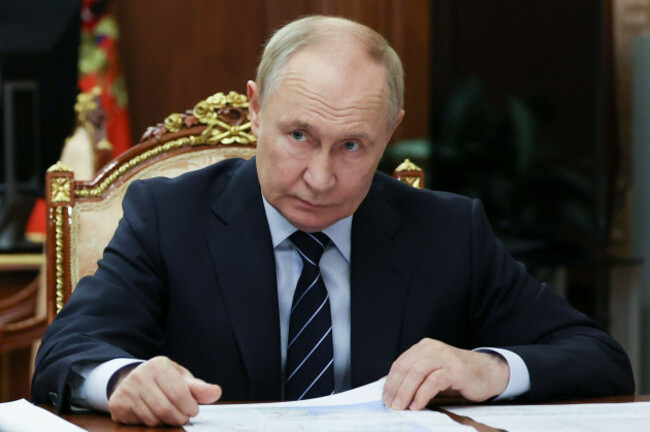
russian-president-vladimir-putin-listens-to-deputy-prime-minister-marat-khusnullin-during-a-meeting-at-the-kremlin-in-moscow-russia-tuesday-sept-30-2025-alexander-kazakov-sputnik-kremlin-pool Russian President Vladimir Putin listens during a meeting at the Kremlin in Moscow, Russia. Alamy Stock Photo Alamy Stock Photo

Leaders will pick over a proposal from Brussels to use frozen Russian central bank assets to fund a new €140 billion loan for Kyiv.

That push could face resistance from Belgium, where most of the assets are held, but it is seen as crucial to help Kyiv plug looming budget shortfalls.

As US support for Ukraine has dried up under Trump, the plan last week won the backing of key powerbroker, German Chancellor Friedrich Merz.

Officials say they hope to get a green light from leaders to continue work on the plan.

“The positions are not necessarily black and white, no and yes, some may say that they could ponder going down that road if certain conditions are met,” a senior EU official said.

Beyond the push to keep Ukraine going financially, officials are also trying to keep Kyiv’s bid to join the EU on track despite a block from Hungarian leader Viktor Orban.

Russia-friendly Orban has been flexing his veto to stop negotiations with Ukraine from progressing.

European Council chief Antonio Costa, who chairs the summit, has been canvassing support for a plan that would mean countries cannot veto each new step of talks.

“No leader to this day has replied with a total ‘no’, in a totally negative way to this idea,” the EU official said.

But it appears it would be a stretch – and need the consent of Orban and all the other leaders.

Additional reporting from © AFP 2025 

Readers like you are keeping these stories free for everyone...
A mix of advertising and supporting contributions helps keep paywalls away from valuable information like this article. Over 5,000 readers like you have already stepped up and support us with a monthly payment or a once-off donation.

Close
JournalTv
News in 60 seconds