Sign in. It’s quick, free and it’s up to you.
An account is an optional way to support the work we do. Find out more.
Sign in. It’s quick, free and it’s up to you.
An account is an optional way to support the work we do. Find out more.
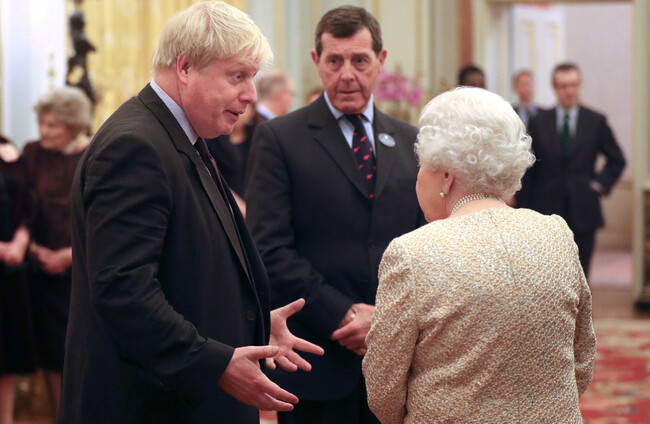
IT’S BORIS JOHNSON versus Jeremy Hunt in the race to become Conservative leader and the next UK prime minister.
After a contest among MPs that saw 10 candidates whittled down to these two, the task now turns to the Conservative party membership to choose their leader.
A process which begins today and will last a month.
In tandem with this process, the UK is continuing its efforts to leave the European Union.
Current Prime Minister Theresa May attended her final Brussels summit this week, with the EU’s top leaders taking the opportunity to fire a warning to whoever replaces her.
“Maybe the process of Brexit will be even more exciting than before because of some personal decisions in London but nothing has changed when it comes to our position,” Tusk told reporters after the summit of EU leaders in Brussels.
We are open for talks when it comes to the declaration on the future UK-EU relations if the position of the UK were to evolve, but the withdrawal agreement is not open for renegotiation.
Both Johnson and Hunt have pledged that a renegotiation of the Withdrawal Agreement is part of their plans should they enter 10 Downing Street.
After resigning as foreign secretary, Johnson repeatedly attacked May’s policies, saying in October 2018 that the Irish backstop would make the UK “an EU colony”.
Speaking at the Pendulum Summit in Dublin in January, Johnson claimed that “nobody will implement” a hard border on the island of Ireland.
Johnson said that there are technological solutions to the border issue that have not been explored.
Hunt also wants the backstop gone and said a technological solution was “doable” and that “we have to find the mechanisms to deal with the situation”.
But the forthright statements from Tusk and others have demonstrated that the Brexit extension granted to the UK could again run out if no settlement is reached over the next few months.
So here is the timetable for the leadership contest and the key dates for the new premier on the road ahead to Brexit.
Today
The leadership rivals take part in a hustings before Conservative party members in the central English city of Birmingham, the first of 16 such events taking place across the country.
2 July

Inaugural session of the new European Parliament. The UK’s newly elected MEPs take their seats, including 29 from the Brexit Party — the biggest single party in the chamber.
Eleven of the Republic of Ireland’s 13 elected MEPs will also take their seats.
Two Irish MEPs will only take their seats if and when the UK leaves the EU: Barry Andrews of Fianna Fáil and Deirdre Clune of Fine Gael.
6-8 July
Postal ballots are sent out to an estimated 120,000 Conservative party members to choose a new leader. They can start voting immediately.
Previous polls have shown that Boris Johnson has a massive lead among Conservative party members.
15 July
This week will see the final leadership hustings before Conservative party members in London.
22-26 July
The result of the leadership contest will be announced this week.
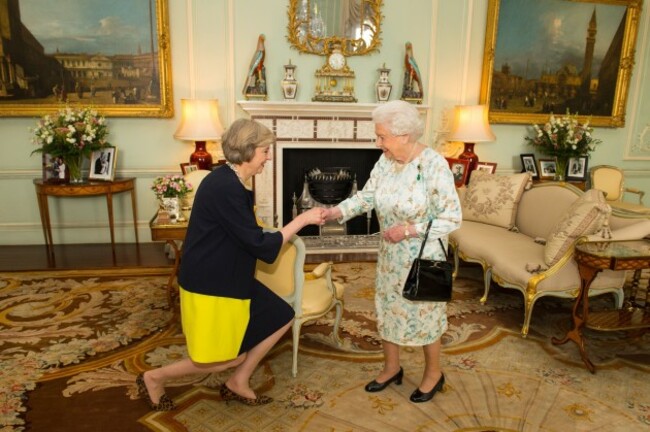
When this is complete, Johnson or Hunt will become prime minister when they are appointed by Queen Elizabeth II.
The queen’s role in this regard is to find someone who can command the confidence of the House of Commons. The Conservatives just about have a majority with the support of the DUP.
The queen will first accept May’s resignation as prime minister and will then invite either Johnson or Hunt to form a government.
24 July
Prime minister’s weekly questions session in parliament. It will either be May’s last appearance or the first one for the new premier.
25 July
The House of Commons is scheduled to begin a six-week summer break despite the looming Brexit deadline.
25-27 August
G7 summit in Biarritz, southwest France. New British prime minister due to attend.
3 September
House of Commons due to return from its summer recess.
17-18 October
EU summit in Brussels with the British prime minister due to attend if the UK is still in the bloc.
If the UK hasn’t yet left the EU, expect frantic negotiations with a no-deal Brexit on the horizon.
31 October
Barring a third postponement or an earlier departure, Britain leaves the European Union.
With reporting by © – AFP 2019

To embed this post, copy the code below on your site















have your say