We need your help now

Support from readers like you keeps The Journal open.

You are visiting us because we have something you value. Independent, unbiased news that tells the truth. Advertising revenue goes some way to support our mission, but this year it has not been enough.

If you've seen value in our reporting, please contribute what you can, so we can continue to produce accurate and meaningful journalism. For everyone who needs it.

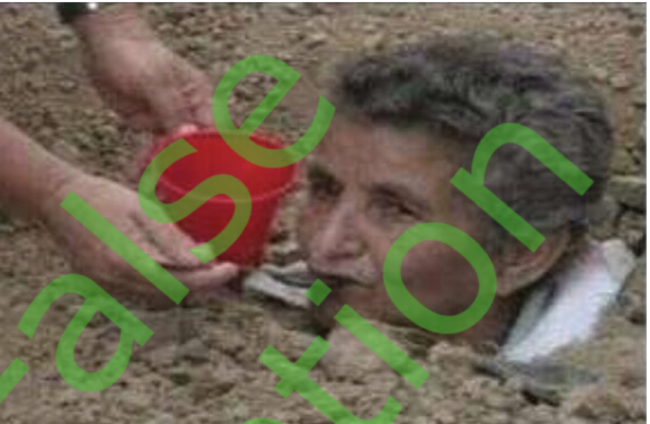
Debunked: Photo of woman buried in the ground does not show her about to be stoned to death in Iran

A decades-old photo shows a volunteer at a Colombian protest.

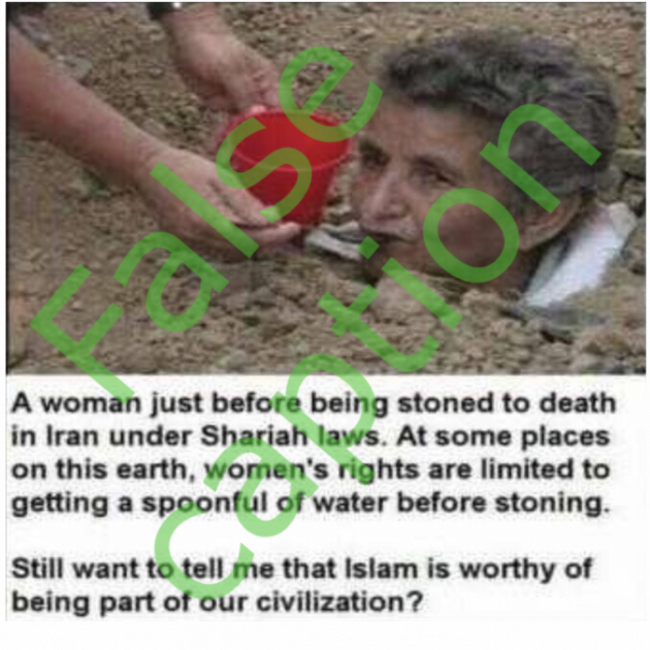
HARROWING PHOTOS SUPPOSEDLY showing a woman buried in the ground up to her head, awaiting execution by stoning in Iran, have been spread widely on social media.

The photo is actually decades old, and shows a volunteer who was buried as part of a protest in Colombia.

“A woman just before being stoned to death in Iran under Shariah laws,” dozens of identical posts on social media read. “At some places on this earth, women’s rights are limited to getting a spoonful of water before stoning.”

While the image is old, so too is the false caption. Versions of it have been shared since at least 2019, when the AFP debunked versions of it that spread online then.

The claim has spread again recently, including one post on X that was viewed 237,400 times since being posted on 21 March.

However, the photo actually shows a 66-year-old protester in Colombia, who was voluntarily buried in the ground up to her neck in 2003 as part of a protest over displaced people not being relocated, according to Reuters news agency, which took multiple photos at the scene.

While the photo of the Colombian woman is not of an execution, stonings in Iran did involve women being buried up to their necks.

Stoning has been a real method of execution in Iran, though it is unclear if it still used given legal changes over a decade ago. The punishment, condemned by the UN as cruel, was regularly used before 2010, according to Human Rights groups

However, due to information restrictions in Iran, the extent of such punishments cannot be verified.

Stoning remains a technically legal punishment in a number of countries, mostly in the Middle-East, though is rarely carried out in recent times. However, some countries have made efforts to reintroduce the practice.

Brunei introduced stoning as a penalty in 2014, but has said it will not impose it as a penalty. Afghanistan has sentenced dozens to die from stoning since the Taliban regained power.

The Journal has debunked numerous false claims since the start of the US and Israel launched a war with Iran, including fake footage that has been used to push political agendas; fake footage of an explosion in Tel Aviv; old footage of US military coffins being falsely described as showing troops killed in the conflict with Iran; claims Keir Starmer has threatened to kick US forces from British bases, as well as fake claims that Iran admitted that they were responsible for bombing a girl’s school that is believed to have killed more than 100 young children.

The Journal’s FactCheck is a signatory to the International Fact-Checking Network’s Code of Principles. You can read it here. For information on how FactCheck works, what the verdicts mean, and how you can take part, check out our Reader’s Guide here. You can read about the team of editors and reporters who work on the factchecks here.

Readers like you are keeping these stories free for everyone...
It is vital that we surface facts from noise. Articles like this one brings you clarity, transparency and balance so you can make well-informed decisions. We set up FactCheck in 2016 to proactively expose false or misleading information, but to continue to deliver on this mission we need your support. Over 5,000 readers like you support us. If you can, please consider setting up a monthly payment or making a once-off donation to keep news free to everyone.

Close
JournalTv
News in 60 seconds