Sign in. It’s quick, free and it’s up to you.
An account is an optional way to support the work we do. Find out more.
Sign in. It’s quick, free and it’s up to you.
An account is an optional way to support the work we do. Find out more.
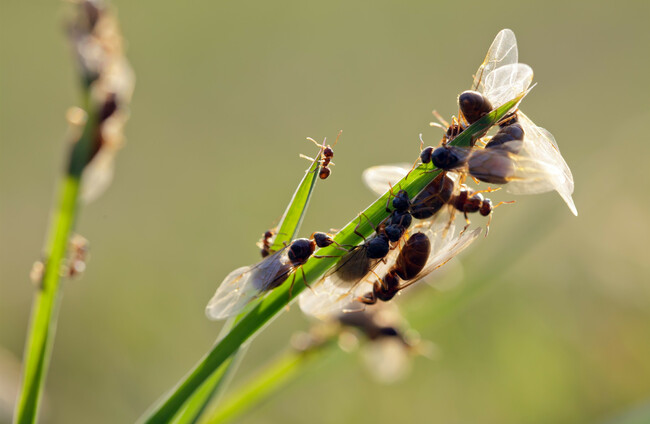
WARM, HUMID WEATHER means that black garden ants around Ireland will soon be taking to the air for their annual nuptial flight, better known as “flying ants day”.
It doesn’t actually all happen on a single day. It’s a mating season ritual that gets underway in earnest once the conditions are right and can go on for a number of days.
Swarms of mating ants may appear anytime during the summer months, but they most commonly do so in July or August.
As ecologist Padraig Fogarty told The Journal, ”It’s a perfectly normal part of the summer”, even if it can be a bit of a nuisance.
Ants have an interesting way of mating.
Having begun life as crawling ants, both the males and females briefly transform into winged insects, take to the skies and mate in midair.
Once the deed is done, the female bites off her wings and seeks out somewhere to lay her eggs and build a new colony.
The males, as is common in the insect world, don’t have it so easy. Once their job is done, there’s no more need for them, and they promptly die.
“The male insect has the raw deal,” said pest control expert Brendan Ryan.
Trying to predict the exact day that the ants will take flight is the wrong way to go about dealing with any issues they might cause, Ryan explained.
“The best way to avoid having flying ants is to deal with them when they’re crawling ants, so that they never get to that stage of the life cycle.
“So you know, people who’ve had experience with either crawling or flying ants over the years will have enough knowledge to know that come March, and maybe even before March, they’re on the lookout for calling ants.”
In other words, a preventative approach is better than a reactive one.
He said that ants usually build colonies on the sunny sides of buildings and that they like sandy soil, so those are the areas to keep an eye on.
Crawling ants in Ireland are appearing earlier in the year than they used to, Ryan said.
“Ant activity now is becoming obvious as early as January, which was unheard of 30 years ago when I started out in this business. It’s an extraordinary thing.”
Ryan said the early activity is a common topic of conversation within the pest control industry and that the life cycle of ant and other insects is becoming longer.
“There is no doubt that the life cycle of insect pests has changed dramatically. It’s elongated,” he said.
“So ants are emerging earlier, wasps are emerging earlier, and are active for longer. So there is no doubt, but there is something going on.”
Ryan is not a climate scientist and didn’t want to attribute the phenomenon to any particular cause.
“If someone wants to attribute that to climate change, well, you know, I wouldn’t argue with that, but there’s no doubt that their seasons have elongated.”
Fogarty said that studying the impact of climate change on insects is not a well trodden path in the sciences.
“We don’t do an awful lot of monitoring of insects” when it comes to climate change, he said.
He also said that while some people might complain about ants taking over their garden briefly or landing in their food, “A world that doesn’t have ants is far more terrifying than the alternative”.

To embed this post, copy the code below on your site















have your say