Sign in. It’s quick, free and it’s up to you.
An account is an optional way to support the work we do. Find out more.
Sign in. It’s quick, free and it’s up to you.
An account is an optional way to support the work we do. Find out more.
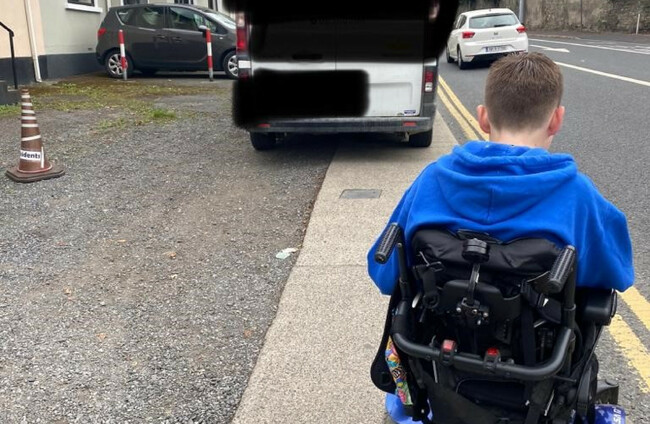
CARS AND VANS parked on footpaths continue to be one of the most serious barriers to the full inclusion of disabled people, a survey has found.
The Disability Federation of Ireland (DFI), to mark Make Way Day today, has published details of a survey of its activists it conducted which found 96% would like to see more awareness of accessibility issues caused by vehicles parked on pathways.
Wheelie bins and sandwich boards on footpaths also topped the list of barriers, as well as bicycles tied to lamp posts and beer barrels on pathways.
DFI communications manager Clare Cronin said most obstacles are caused by thoughtlessness and genuine lack of awareness.
“Frequently drivers believe it’s a civic minded thing to pull the car or van well in off the road,” she said, adding that it is not widely known that fines can be issued by gardaí and local authority traffic wardens for this offence.
Think before you park!
— Fingal County Council (@Fingalcoco) September 22, 2021
As we approach #Makewayday remember under Fingal County Council Parking Control Bye-Laws 2020 & the Road Traffic Act, illegal & dangerous parking is prohibited & may incur a Fixed Charge Penalty Notice. Here are some examples where notices were issued. pic.twitter.com/vXQoFNrQ5H
13-year-old James Casserly from Lucan in Co Dublin is forced to take the long route to school because the more direct route is blocked by cars parked on the footpath.
His mother Vicki, who is a local councillor, said she does not “want to be that person on the estate WhatsApp group constantly nagging” but there have been times when the path was so badly blocked “all we could do was just stand there until the drivers got back to their cars”.
“It should not be up to the person with the disability to constantly explain their needs, which are the same are everyone else’s – that is to have equal access public spaces in order to get from A to B,” said Clare Cronin.
Mike Hennessy Cullen, who uses a wheelchair as a result of a car crash when he was 19 years old, said outdoor dining during the pandemic brought these issues “to the fore”.
“We don’t know at what point did it become acceptable in society for cars to wholly park on paths or for al fresco dining furniture to supersede tactile paving at road crossings,” he said. “Paths belong to all pedestrians. The function of paths in our towns and cities has become diluted and it should not be up to disabled people to police this.”
DFI is asking people to get involved in Make Way Day by taking photos of obstacles they see today and posting them to social media using the #MakeWayDay21 hashtag.

To embed this post, copy the code below on your site











have your say