Sign in. It’s quick, free and it’s up to you.
An account is an optional way to support the work we do. Find out more.
Sign in. It’s quick, free and it’s up to you.
An account is an optional way to support the work we do. Find out more.
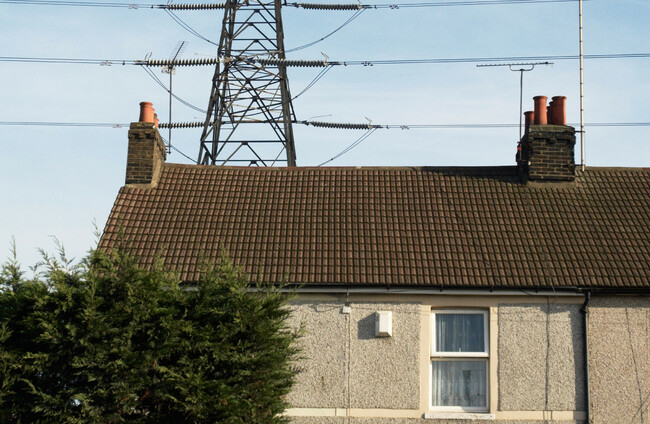
THE HIGH COST of electricity is the biggest barrier to uptake of heat pumps in Ireland, the director of retrofitting at the Sustainable Energy Authority of Ireland (SEAI) has said.
And while soaring oil and gas prices since the US and Israel attacked Iran nearly two months ago are likely to have many homeowners thinking about retrofitting to reduce their energy bills, the conflict could also push up prices in the sector.
Ciaran Byrne, director of retrofitting at the SEAI, told The Journal that “as surely as night follows day”, construction cost inflation sparked by the Iran war will spill over into the retrofit industry.
“It hasn’t come through yet, but it’s a reasonable prediction that it probably will,” Byrne said.
He added that the cost of moving products around by ship and truck has already gone up, and the price of packaging for products such as windows is also likely to increase, which will carry through to cusotmers. The sector will be somewhat shielded by the fact that many retrofit products are not energy intensive to make, Byrne said.

Replacing oil and gas boilers with heat pumps, which use electricity to take energy from outside to heat homes and provide hot water, would be a game-changer when it comes to cutting Irish homes’ greenhouse gas emissions.
A heat pump is generally needed to get a home to an A-rating on the BER scale, and almost all new homes in Ireland have heat pumps.
But owners of older houses are baulking at the cost and intrusiveness of the works involved in insulating to the required standard for heat pump readiness, and Ireland is now way behind on its target of installing the technology in 400,000 existing homes by the end of the decade.
Byrne said that there is a “multitude of barriers” to heat pump adoption, both behavioural and technical, but “the big one at the moment is the cost of electricity”.
One recent study found that Ireland had the most expensive electricity in Europe in 2024, although energy credits and VAT reductions lowered the actual price paid by consumers.
Lower electricity prices – such as through a special tariff for heat pump owners – would reduce the running cost for heat pumps and speed up the payback period for this expensive product.
A heat pump costs between €12,000 and €18,000, although the available SEAI grant was recently increased to €12,500. However, most Irish homes would need extensive and expensive insulation work to qualify for the grant, as a particular “heat loss indicator” must be achieved.
“There’s a range of barriers. Cost is a barrier – so we jacked up the grants. But electricity costs is the one that we certainly have to tackle,” Byrne said.
“It’s not an Irish problem, it’s a European problem. It’s to do with market regulation and the framework of how we ultimately set electrical prices.
One case study on the SEAI website instances a family who replaced their 20-year-old oil boiler with a heat pump when they upgraded their 200m2 bungalow from C3 to A3 on the building energy rating (BER) scale. The heat pump cost €1,300 to run over the course of a year, €250 less than they would have spent on oil.
Like for like comparisons are difficult, however, given that homeowners may be seeking greater comfort after a retrofit. Recent research by the ESRI has indicated that people tend to underheat poorly insulated homes and use more heating after an upgrade – a factor that’s likely to mean the expected emissions reductions from retrofits may not materialise.
The SEAI is currently trialling the use of high temperature heat pumps in Irish homes. These can be used in existing central heating systems meaning radiators and pipework don’t have to be replaced.
When it comes to retrofitting works to improve the fabric of Ireland’s badly insulated houses, cost and homeowner inertia are among the biggest barriers, Byrne said.
The SEAI hopes that low-cost loans can help to encourage more people to undertake retrofit works. The agency is also trying to improve the processing of grants to make it quicker and easier for people to get approval.
A pilot project currently underway for retrofitting “traditional” homes built before 1941 could open up retrofitting options for between 250,000 and 350,000 Irish homes when it is rolled out further.

To embed this post, copy the code below on your site














have your say