Sign in. It’s quick, free and it’s up to you.
An account is an optional way to support the work we do. Find out more.

Sign in. It’s quick, free and it’s up to you.
An account is an optional way to support the work we do. Find out more.
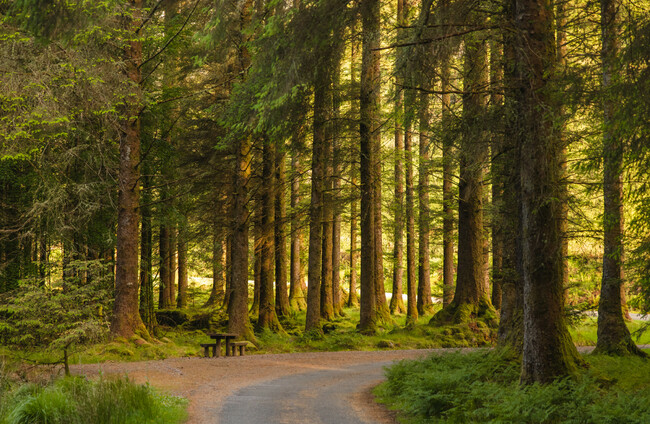

WHEN IT COMES to Ireland’s fight against climate change, forests play a critical role.
Serving as the lungs of the planet, forests offer a threefold benefit — acting as a carbon sink, store and substitute. This triple action is crucial for mitigating the impacts of global warming and helping Ireland achieve its Climate Action targets.
Let’s look at some of the reasons why forests are one of our most important allies in creating a sustainable, climate-friendly future for Ireland.
How forests remove, reduce and replace carbon
As you may remember from your Junior Cert science lessons, trees provide the essential function of absorbing CO₂ from the atmosphere and storing it in their biomass before releasing pure oxygen back in return. It is for this reason that they are often referred to as the lungs of the planet.
The process of photosynthesis reduces the overall concentration of greenhouse gases, making forests vital in the battle against climate change. Trees also store the carbon they absorb in their trunks, branches, leaves, and roots, effectively locking it away for decades or even centuries.
Ireland’s forests boast a mix of coniferous and broadleaved trees. Coniferous trees, such as spruces and pines, grow quickly in Ireland and are excellent at combating climate change, as they rapidly absorb CO₂. While coniferous trees suck in CO₂ very quickly, which is critical in achieving our near-term climate targets, broadleaved trees come into their own when it comes to storing carbon over long periods of time. Together, all of the trees in our forests work in tandem to offer a sustainable solution to the climate crisis.
While all trees remove and store CO₂ from the atmosphere, conifers have the additional benefits that they produce softwood, which is the material that we need to produce a wide range of wood products, from fencing and decking for our gardens, to construction materials to help build our homes.
Wood products derived from sustainably managed forests offer a lower carbon alternative to carbon-intensive materials like concrete and steel in construction. As demand for housing in Ireland continues to rise, a transition to timber frame construction has never been more essential. Building more with wood not only reduces emissions from these industries but also keeps carbon locked in the wood itself. Building with Irish wood also has positive knock-on effects for employment in Ireland’s forestry sector.
Coillte, Ireland’s state forestry company, has an ambition to produce over 15 million cubic metres of certified Irish timber in the period to 2030, which will support the construction of new low-carbon homes across Ireland. This, coupled with Ireland’s world-class saw-milling sector, means that Ireland has a golden opportunity to increase the use of wood in construction, further cutting carbon emissions.
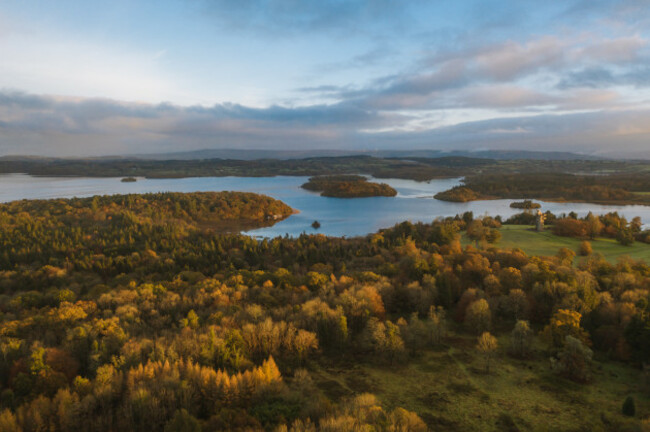
Coillte’s strategy for a greener future
Since 1989, Coillte has created 100,000 hectares of new forests in Ireland, and today the total area of forests and lands under its management is 440,000 hectares. Coillte is working hard to create new forests, and has an ambition to capture approximately 18m tonnes of carbon dioxide by 2050. In addition to new forests, Coillte is also carefully managing its existing forests to increase their carbon store by 10 million tonnes of carbon dioxide by 2050, as well as redesigning areas of peatland forests to be more climate-friendly and improve Ireland’s biodiversity.
Coillte has developed a forest strategy that balances and delivers the multiple benefits of forests for climate, nature, wood and people. Coillte is committed to creating a greener future for everyone by:
In order for Ireland to meet its climate targets, we must plant more trees and continue to sustainably and actively manage our existing forests. The creation and sustainable management of forests are vital steps towards a healthier planet.
To embed this post, copy the code below on your site













have your say