Sign in. It’s quick, free and it’s up to you.
An account is an optional way to support the work we do. Find out more.
Sign in. It’s quick, free and it’s up to you.
An account is an optional way to support the work we do. Find out more.
LAST UPDATE | 30 Jun 2024
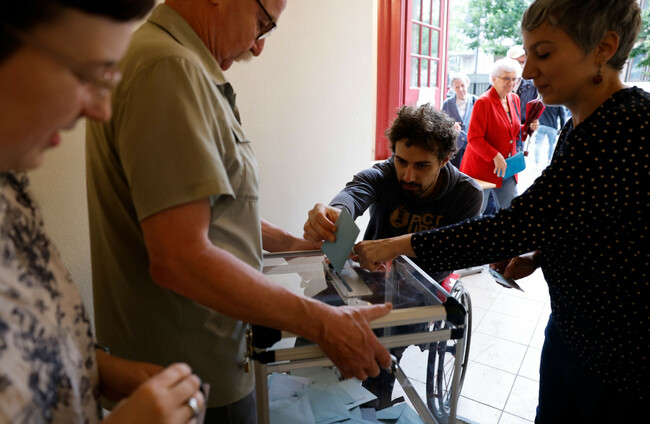
VOTERS ACROSS FRANCE have gone to the polls today in the first of two rounds of parliamentary elections.
Earlier this month, French President Emmanuel Macron unexpectedly called for a parliamentary election after the results of the European elections showed his party, Ensemble, lost many of their seats while the far right and conservatives experienced massive gains.
Much of the attention since then has turned to the far-right National Rally, led by Marine Le Pen. The party’s 28-year-old MEP Jordan Bardella is in the running to become France’s youngest ever Prime Minister.

Candidates must earn at least 12.5% of the votes from their constituencies to retain their place in the race. Any candidate with more than 50% of the vote after the first round is automatically elected.
The remaining candidates then go through into the second round. In France there is one seat per constituency and often three or four people are left in the race after the first round.
The candidates with the highest percentage of votes after the second round are then elected to the National Assembly.
French citizens living in Ireland who are registered to vote can do so at one of three polling stations, two in Dublin and one in Cork. Online voting and polls in the country’s oversea territories opened for a day earlier this week.
As France votes electronically, the earliest projections of the official results are likely to be announced shortly after polls close tonight at 8pm.
The results of the first round will also indicate just how popular the extremist parties – who have dominated headlines in France in recent weeks – have performed against the incumbent centrist Government.
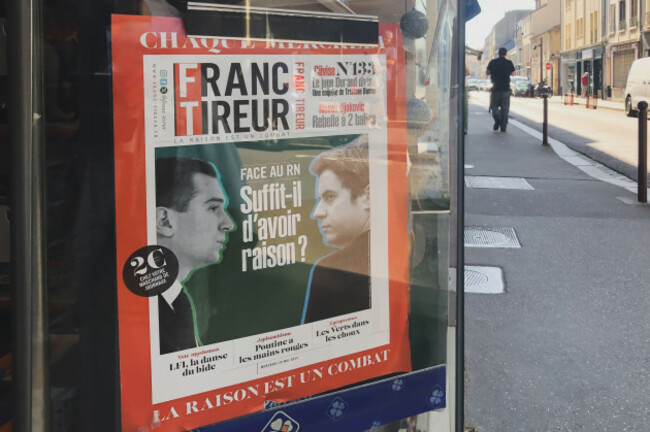
Current local polling, which can be used as a snapshot of public opinion at one particular time, shows that the National Rally – an anti-immigrant, Eurosceptic and far-right party – are most popular with the public at 35%.
Macron’s Ensemble have fallen within the last year, according to a number of polls, and current sit at just 15%.
The Socialist Party, which is the largest party in the coalition of left and far-left leaning parties ’The Popular Front, is currently polling in third place on 14%.

In comparison, after the last election, almost exactly two years ago, the centrist coalition Ensemble won around 35% of the vote while the National Rally won around 17.5% of the vote. Ensemble also lost it’s governing majority during that same election.
If the National Rally win the 289 seats needed to form an absolute majority, the young Jordan Bardella could be appointed as Prime Minister by his rival Macron.
However, local reporting suggests that his constituency, near Paris, may not even elect him.
The President of France is the head of Government and is elected every five years. Macron’s position is not under threat during this election.
The Prime Minister is second-highest office and is in charge of the Council of Ministers, or the cabinet, who are directed by the President to oversee the implementation of new laws.
If one party secures a majority in the parliament, their members are more likely to be appointed to ministerial positions, by the President, as the positions are subject and proportional to the outcome of the elections.
Bardella has said if he will only take over the Prime Ministerial role from the Ensemble’s Gabriel Attal if his party secure’s an absolute majority, to avoid being what he called the “President’s assistant”.

To embed this post, copy the code below on your site














have your say