Sign in. It’s quick, free and it’s up to you.
An account is an optional way to support the work we do. Find out more.
Sign in. It’s quick, free and it’s up to you.
An account is an optional way to support the work we do. Find out more.
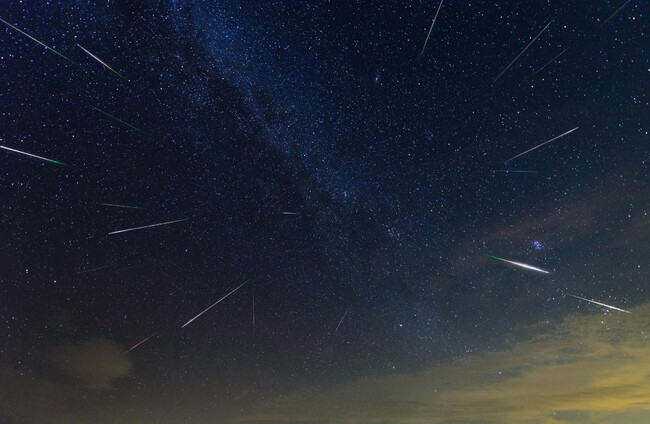
THERE WILL BE 20 times more shooting stars in the sky for the next three nights thanks to an astronomical phenomenon.
The meteor shower will be most visible at 10pm on Monday night, but likely can also be seen tonight and Tuesday night.
Perseids can appear anywhere in the sky. If it’s cloudy, search for clear patches.
The path of all Perseids should point back to constellation Perseus (near the W of Cassiopeia) which is high in the northeast. This connection is where Perseids get their name.
At peak activity, the Perseid shower has about 20 times more shooting stars than a normal night.
Those viewing from rural areas will likely see more than those in urban areas due to the light pollution levels.
David Moore, the editor of Astronomy Ireland magazine, says he’ll be watching from the countryside, where he’s hoping for a clear sky.
The annual event occurs at a point in Earth’s orbit where we are nearest to a swarm of dust particles from an old comet.
“On this date, we’re destined to plough through this dust field and the number of meteors goes up,” Moore explained.
“This meteor, Perseids, is known for producing very bright, fast meteors, because the particles are actually going around the sun the wrong way, so we hit them head on.”
The shower builds in intensity over a week and after the peak, the shower gradually decreases in intensity day by day.
This is why it’s worth looking out for shooting stars on Sunday and Tuesday nights as well.
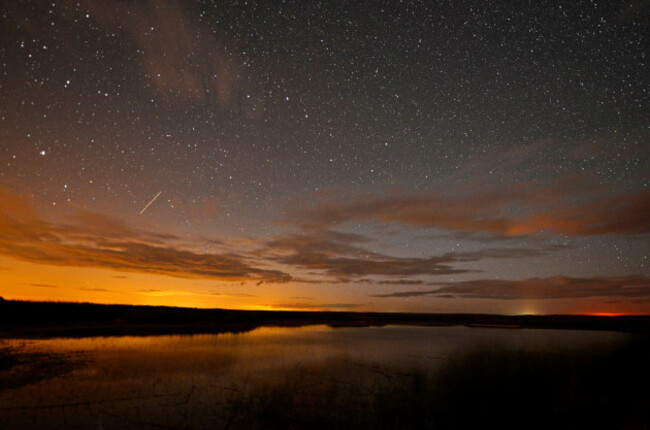
No special equipment is needed to get a good view of the meteor shower,”not even a pair of binoculars”.
“Shooting stars can happen anywhere in the sky and just ordinary eyesight is the best tool for the job.”
Astronomy Ireland magazine is asking people to count how many shooting stars they see per minute and to send the number to them. This will allow them to compare with other years.
“Such counts are fun but also have great scientific value as this tells us how these meteor showers are developing over the years” said Moore.
His advice to star-spotters: “Wrap up well, make a few snacks and make a night of it. Bring the whole family if you can.”

To embed this post, copy the code below on your site














have your say