Sign in. It’s quick, free and it’s up to you.
An account is an optional way to support the work we do. Find out more.
Sign in. It’s quick, free and it’s up to you.
An account is an optional way to support the work we do. Find out more.
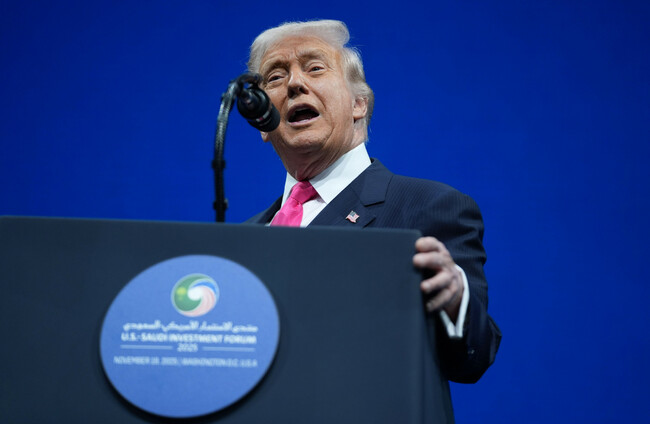

THE WORLD’S LEADERS will gather this weekend in Johannesburg, South Africa – but a Donald Trump-shaped absence may cause bother for the high-level negotiations.
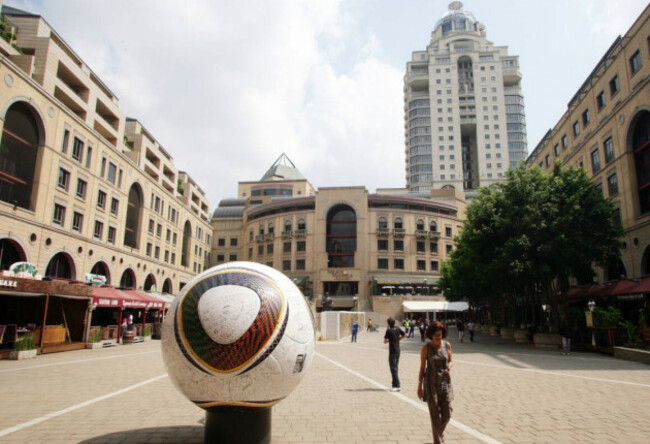
Set to kick-off on Saturday, the summit of the world’s top economies will be historic as it marks the first time the Group of 20 (G20) will convene on African soil.
The UK, Canada, France and Germany will be attending, as will delegations from China, India, Saudi Arabia and Brazil and several other countries. European Commission president Ursula von der Leyen will also be at the summit as a representative of the bloc.
Ireland have been invited to this year’s summit as a guest for the first time owing to strong international links with the host nation, with Taoiseach Micheál Martin set to attend.
Founded in 1999, the G20 represents 85% of the world’s GDP and about two-thirds of its population.
The summit is not actually 20 nations, as some longstanding members are not attending. It also invites several nations as guests.
It discusses pressing global issues such as food security, climate financing and improving education levels among poorer nations. While its final declaration is not legally binding, it can be viewed as a direction for where the international community is moving on these issues.
South Africa wants to use its presidency to champion Global South priorities, including boosting climate resilience and tackling debt in developing countries, before handing the baton to the US next year.
But Trump’s administration has labelled the goals as “anti-American” and earlier this month the US president declared he would not attend the summit or send any officials.
It comes hot on the heels of a similar US disinterest in the COP climate talks.
Irish officials tasked with helping prepare the state’s delegation believe this disengagement does complicate things.
It also means this weekend will be a chance to see if the world’s nations can swim around the big American fish, but there are doubts over whether it can properly pursue the large-scale visions amid a splintering international scene.
However it may still present an opportunity for emerging nations like South Africa according to Donnacha Ó Beacháin, political scientist at Dublin City University.
“It may be somewhat easier that the US isn’t looking over their shoulder, making informal vetoes on what ends up in the final communique and declaration on things like restructuring for poor states and climate finance,” Ó Beacháin said.
“So in a way, it will be somewhat easier to kind of get common ground on those issues without Trump in the room.”
This weekend will mark the latest example of the broader shift in US foreign policy.
The US is going to take over the G20 presidency from next month, making this weekend’s absence all the more bizarre.
Trump’s second term in the White House has also seen occasional swipes at the South African leadership.
Earlier this year, Trump ambushed President Cyril Ramaphosa in the Oval Office, playing a video in which he alleged a campaign against white farmers by the post-apartheid government.
Trump has cited debunked claims of white Afrikaners being systematically “killed and slaughtered” in South Africa as his reason for skipping the gathering this weekend.
Pretoria has also come under fire from the Trump administration over its case against Israel at the International Court of Justice and laws meant to empower black South Africans as part of efforts to redress inequalities inherited from apartheid.
Ramaphosa played down the absence last week, telling reporters it would be “their loss” when quizzed about the US boycott.
Observers and officials believe it will make it harder to strike a consensus among those who attend.
The US had been the traditional leader on the financial track of the G20 summit – another sign of its longstanding soft power on the world stage – so its absence will felt all the more there.
The G20 has a role in agreeing finance for the Sustainable Development Goals, which were adopted by the UN in 2015 – but these have also come in for criticism since Trump returned to the White House.
In March, the US said that a “course correction” was needed on gender and climate issues, which it said “pervade” the Sustainable Development Goals.
In essence, these goals are supposed to be the world’s roadmap for ending poverty, protecting the planet and tackling inequalities.
One of the questions thrown up by the US withdrawal is whether it will allow nations like China to step up on the world stage.
Unless that happens, the G20 summit may see itself become irrelevant in guiding the broader global agenda.
“Trump is not enthusiastic about multilateral cooperation,” said Ó Beacháin, adding that he prefers one-to-one negotiations.
“He works on the assumption that, as the US is still the strongest economy in the world, he’ll twist arms and get his way. But in terms of this summit, I think that while the absence of the US is damaging to the G20, it’s not crippling.”

To embed this post, copy the code below on your site












have your say