Sign in. It’s quick, free and it’s up to you.
An account is an optional way to support the work we do. Find out more.
Sign in. It’s quick, free and it’s up to you.
An account is an optional way to support the work we do. Find out more.
(This article is produced by our Gaeltacht team. You can read an Irish version of this piece here)
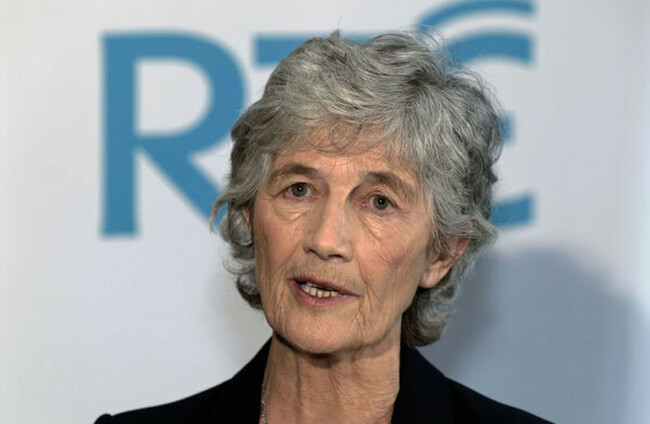
RTÉ RAIDIÓ NA GAELTACHTA and TG4′s Nuacht will be unable to host a live debate with the candidates competing in the Galway West by-election — the Dáil constituency with the largest Gaeltacht in the country — because only three of the candidates nominated to date are sufficiently fluent to take part.
As was the case during the presidential election campaign, broadcasters will be required to ensure that equal airtime is given to all candidates. With the majority of candidates lacking fluent Irish which would enable them to take part in a live broadcast debate, it will be difficult to comply with the guidelines laid down by Coimisiún na Meán, the media regulator.
The Journal understands that there are not enough Irish-speaking candidates to hold a debate on RTÉ Raidió na Gaeltachta’s news programmes.
Although the Galway West by-election will not be held until May — on the same day as the Dublin Central by-election — a significant number of candidates have already been nominated.
Mark Lohan was selected on Thursday night to stand for Sinn Féin in the constituency, and it is understood that only a handful of votes separated him from the other leading candidate, Kevin O’Hara, a fluent Irish speaker based in Connemara. On Adhmhaidin, RTÉ Raidió na Gaeltachta’s news show yesterday, the sitting SF TD, Máiréad Farrell, acknowledged that the by-election candidate was not ‘líofa sa Ghaeilge’/fluent in Irish.
It is understood that the following candidates do not have fluent Irish: People Before Profit’s Denman Rooke, Labour Party candidate Helen Ogbu, Niall Murphy for the Green Party, independent candidate Tom Welby, and Noel Thomas, who is standing for Independent Ireland.
Sheila Garrity, a woman originally from Canada who has been living in Galway for many years and who was previously involved in Catherine Connolly’s campaigns, is also entering the race as an independent candidate.
Fianna Fáil has yet to select a candidate. The party’s convention is scheduled to take place on Sunday, 29 March.
To date, the Irish-speaking candidates are Míde Nic Fhionnlaoich of the Social Democrats, Senator Seán Kyne of Fine Gael, and Orla Nugent, who is standing for Aontú.
Speaking to The Journal, Social Democrats candidate Míde Nic Fhionnlaoich said it was important that Gaeltacht communities received fair treatment during the election campaign, both in terms of debates and media coverage more broadly.
“It is important that Gaeltacht communities in those constituencies are treated fairly in terms of the attention given to the Irish language — and not only when we are talking about the language itself. We should be able to discuss housing through Irish,” she said.
“We should be able to discuss healthcare, disability issues and transport, and it is a poor state of affairs that this is not possible.”
She suggested that other parties consider putting forward an Irish-speaking representative in place of their candidate to participate in debates on RTÉ Raidió na Gaeltachta and TG4.
The housing rights campaign group Bánú, which has been campaigning on housing rights in the Gaeltacht, has indicated that it will be organising a public meeting in the constituency during the campaign and that candidates will be invited to attend.
Contact was made with candidates in the Galway West by-election, and a response was received from Denman Rooke of People Before Profit, who said he was eager to learn Irish but that, between working full-time and having a two-year-old child, it was difficult to find the time.
“I am determined to learn it, not just because of its importance to the area politically,” he said. “I’ve also recently been inspired by Catherine Connolly’s learning of it later in life as well.”
He added that if a debate were to be held, he would endeavour to find an Irish speaker to participate on his behalf as a representative.
The Journal’s Gaeltacht initiative is supported by the Local Democracy Reporting Scheme.
This article was originally written in the reporter’s native Irish and has been translated to English here. AI was used as part of the translation process before final edits.

To embed this post, copy the code below on your site











have your say