Sign in. It’s quick, free and it’s up to you.
An account is an optional way to support the work we do. Find out more.
Sign in. It’s quick, free and it’s up to you.
An account is an optional way to support the work we do. Find out more.
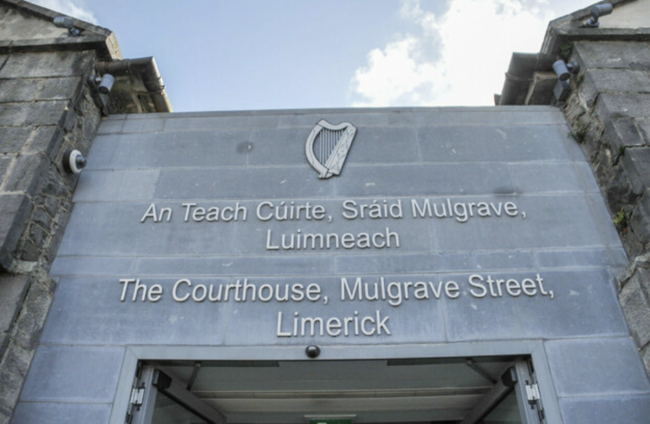
GARDAÍ HAVE “COMMON Law powers” entitling them to use their own “discretion” when dealing with the public, a trial of four gardaí and a retired superintendent accused of unlawfully interfering in pending or potential road traffic offences, heard, Friday.
The five on trial, following a probe conducted by the Garda National Bureau of Criminal Investigation (GNBCI), are accused of “engaging in conduct tending and that intended to pervert the course of justice”.
The five accused are retired Superintendent Eamon O’Neill; Sergeant Anne Marie Hassett; Sergeant Michelle Leahy; Garda Tom McGlinchey and Garda Colm Geary, attached to stations in the Limerick and Clare Garda Divisions.
The charges against O’Neill, Hassett, Geary and McGlinchey are related to them each allegedly communicating with a Garda or gardaí in respect of terminating prosecutions.
Michelle Leahy faces two charges relating to having a summons “struck out” and a summons “withdrawn” from court in her role as Court Presenter.
Garda witnesses called to give evidence by the prosecution said that “discretion” was part of normal policing, and that they had used their own discretion on a “case by case” basis.
Superintendent Oliver Kennedy, Roxboro Road, gave evidence that discretion was a key part of policing and he agreed with Felix McEnroy, senior counsel for O’Neill, that it was normal for gardaí to use their discretion on a “case by case basis”.
Kennedy also agreed that, in his prior role as a prosecuting court sergeant he used his “common sense” when dealing with cases which were often withdrawn or struck out.
Another witness, Inspector John Dunne, Mullingar Garda Station, formerly a Sergeant, Limerick Division, agreed, under cross examination by Jim O’Mahony, senior counsel for Hassett, that using discretion in certain situations was “no big deal”.
Dunne gave evidence that he asked a garda in his unit if she would consider exercising her discretion in respect of a motorist she detected allegedly holding a mobile phone while driving.
Dunne said he was passing on the query from a colleague who had been contacted initially by the accused, O’Neill.
Dunne said the garda replied she was “happy” to do so and he relayed this to his colleague, and didn’t think any more on it: “It wasn’t a frequent occurrence so I didn’t place any significance in it.”
When asked by John Byrne, senior counsel for McGlinchey, that since then nobody had cautioned him as a “suspect” for wrongdoing or served him with disciplinary papers, Dunne replied: “No, I’m not under any investigation.”
Dunne agreed with Jim O’Mahony, senior counsel for Hassett, who suggested the witness “just passed on a request” and that this was “no big deal”.
Dunne agreed with Felix McEnroy, counsel for O’Neill, that it had never been suggested to him by anybody that what he did was wrong or that it had constituted a crime.
Dunne told the court he had sometimes given “informal cautions”, or “warnings”, to members of the public and he said, in his opinion, “a word of advice or warning given on the side of the road can be just as effective as (issuing) a fixed charge penalty notice”.
Vincent Hengehan, senior counsel for Geary, put it to Dunne: “Gardaí use their discretion all the time?” Dunne replied: “We police by discretion.”
Policing with “common sense” was “important”, then witness said.
Sergeant Patricia Ryan, formerly Limerick Divisional Roads Policing Unit, gave evidence that she detected Pat Ryan, a member of the All-Ireland winning senior hurling team, allegedly driving a black BMW 318 car at 135kph in a 100kph zone, at Dooradoyle, Limerick, on November 14, 2018.
Ryan said she explained to Ryan that a fixed charge penalty notice would be issued in respect of the alleged speeding offence.
Ryan said afterwards she received a text message from one of the accused, Hassett.
The message which was shown to the court read: “Hey missus. Anne-Marie Hassett here. Sorry to be bugging you but you stopped a fella today, Pat Ryan, Doon. He’s on the Limerick panel with Eamon. Any way you could you do something for him? No panic if you can’t and sorry again for annoying you about this.”
Ryan’s reply, also shown in court, read: “I’m sorry Anne-Marie, I’ve all my incidents on the system. Unfortunately, once they’re on the system they can’t be deleted.”
Ryan agreed with Carl Hanahoe, prosecuting, that ‘Eamon’ in Hassett’s text referred to co-accused, Eamon O’Neill, who the court has heard is Hassett’s partner.
Hanahoe asked Ryan why she told Hassett that she had input all of her incidents on the roads detection system, when she in fact had not. Ryan replied: “It was a polite way of saying no.”
The trial, before a jury of eight men and four women is expected to run for another three weeks.
To embed this post, copy the code below on your site










have your say