We need your help now

Support from readers like you keeps The Journal open.

You are visiting us because we have something you value. Independent, unbiased news that tells the truth. Advertising revenue goes some way to support our mission, but this year it has not been enough.

If you've seen value in our reporting, please contribute what you can, so we can continue to produce accurate and meaningful journalism. For everyone who needs it.

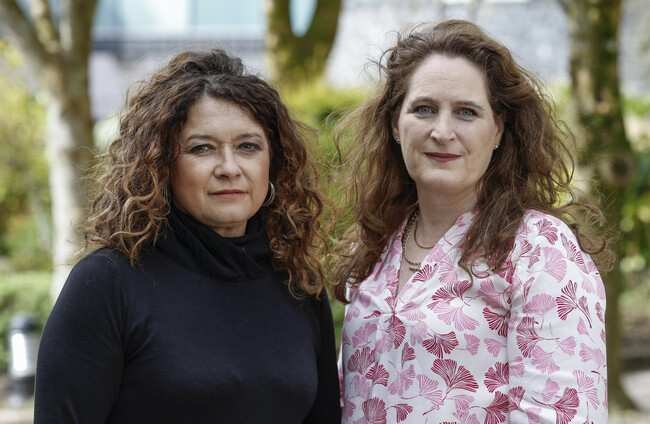
Veteran Gardaí Magaret Hession and Nessa Durkin. CONOR Ó MEARÁIN

'It's women who take the career hit': Gardaí on the realities of being on the frontline

Gardaí Margaret Hession and Nessa Durkin on their experiences on the frontline of policing.

AN GARDA SÍOCHÁNA has strong female representation compared to other European countries – within policing in Ireland women make up roughly a third of sworn members and an increasing presence across supervisory and senior ranks.

While parity remains some way off, recruitment trends over recent years have seen more and more women entering the force. 

Yet for two experienced gardaí active within the Garda Representative Association (GRA), the working environment all gardaí face is becoming more challenging, and when it comes to balancing family life, “it’s women who take the career hit”. 

Both spoke to The Journal during the annual conference of the GRA which was held in Westport this week. The GRA is a statutory body which advocates for better conditions for members of An Garda Síochana. 

The two gardaí described a working environment shaped by operational pressure, growing scrutiny, and what they characterise as “a culture of fear” developing among rank-and-file members.

“When two gardaí are married – and it happens a lot – you will often see the woman take on a job share rather than the man, it’s always the woman who takes the hit career-wise,” Garda Margaret Hession, Junior Liaison Officer in Malahide, told The Journal.

Hession works with young people aged 12–18 who come into contact with the criminal justice system, supporting them through diversion programmes.

“We often say, we’re the only people in the station who don’t want the people we work with who offend to go to court,” Hession said. 

With decades of experience in the job, she has recently joined the GRA’s Central Executive Committee (CEC), the body responsible for negotiations on pay and conditions and representing more than 12,000 rank-and-file gardaí.

Hession felt that as a more experienced member, she could use her voice to try and improve conditions on the ground. 

The GRA has been actively encouraging more women to take up representative roles, and acknowledges that female participation remains lower than it would like.

Nessa Durkin, a garda based in Louth, has spent decades in the force, including frontline policing and more recently working with trainees in continuous professional development. 

“They could arrive on a Wednesday and be in the High Court on Friday with a prisoner they arrested on their second night in the job, that’s how fast-moving it is,” she said.

Durkin said the experience of being a woman in An Garda Síochána has changed significantly since she joined in the 90′s. 

“There were very few women in the job. When you were working on regular tours, you might be the only woman working in a division at night.

“You would have to deal with nearly every sexual assault, the lads would step back and it was handed over,” she said.

Durkin added that she could be called to a station in another county because there was no female staff member on hand to search a prisoner. 

Many more women are gardaí today, but they still face career progression issues.

Hession noted that job-sharing, while necessary for many, often carries long-term consequences.

“I job-shared when I had my children and ended up having three-and-a-half years to pay back at the end to complete my service. That’s common. When you look at the lads on the unit, very few of them job-share when they have young kids,” she said.

She added: “It’s a very welcome addition to see so many women coming in, but, I feel that it’s a very difficult job if you are a woman to have a regular family life. You are trying to balance opposite shift times and most of the time, it’s the women who end up making the job sacrifices.”

Durkin said that the first time she was pregnant, another woman in her unit asked her, “So which office are you going into?”

“It wasn’t expected that women with children would continue working in uniform, but I said that I didn’t join the job to go into an office.”

Hession said that when she came back from maternity leave she took a post as a Superintendent’s Clerk as it was what was available at the time. 

“I did it because it suited my family life, but it wasn’t what I joined the Gardaí to do, in that way your career takes a hit,” she explained. 

Durkin is in a similar position. She has 18 months to repay service time at the end of her career.

“We made a choice to have kids, but we have to do a lot of juggling, and it’s very difficult,” she said.

Facing abuse from the public 

Hession said women now face an increased risk of violence in the job, as public attitudes have changed. 

“When I first started out I was stationed in Ballymun and there was still that thing there in a fella where they would hold themselves to the idea of ‘you don’t hit women’, that’s gone now,” she said. 

Durkin added that frontline policing has become much more unpredictable. 

“You almost already knew who was going to be in the house before you got there. It’s not like that anymore, you could be going into anything, so you have to be more concerned about your protection on a continuous basis,” she said.

The GRA has also highlighted concerns about assaults on gardaí in frontline settings, including incidents involving female officers, describing them as part of the ongoing risks associated with public order policing.

Despite the challenges women face within An Garda Síochana, both gardaí said that there are lots of opportunities for women in the job. 

“I’ve had a great career. I have enjoyed every single minute of it. If I thought a woman going in now was going to experience what I have experienced, I would tell them ‘Yes, go for it, there’s real opportunities for you here’,” Hession said.

However, she warned that increasing pressure and scrutiny are reshaping the culture of the organisation.

On the day she was speaking to The Journal, Eamonn Cunnane the garda at the centre of the bike-gate controversy took to the stage at the GRA alongside fellow gardaí from counties Limerick and Clare who the association says faced “wrongful suspension”. He received a standing ovation from his colleagues

“I see the challenges around accountability and the burden of micro-managing, and today what we’ve talked a lot about is the idea of working with discretion, common sense, and supporting each other in the job. That culture needs to be protected, because it isn’t an easy job to do in the first place,” she said.

Durkin agreed, arguing that fear is increasingly shaping decision-making on the ground.

She said that there have been recent incidents where Gardaí have been seriously injured in car ramming incidents, and even as the incidents were unfolding, they were in fear of facing internal enquiries or questioning over their driving. 

“When that happens, fear is impacting your ability to do the job, which is exactly what we don’t want within the organisation,” she said.

Readers like you are keeping these stories free for everyone...
A mix of advertising and supporting contributions helps keep paywalls away from valuable information like this article. Over 5,000 readers like you have already stepped up and support us with a monthly payment or a once-off donation.

Close
JournalTv
News in 60 seconds