We need your help now

Support from readers like you keeps The Journal open.

You are visiting us because we have something you value. Independent, unbiased news that tells the truth. Advertising revenue goes some way to support our mission, but this year it has not been enough.

If you've seen value in our reporting, please contribute what you can, so we can continue to produce accurate and meaningful journalism. For everyone who needs it.

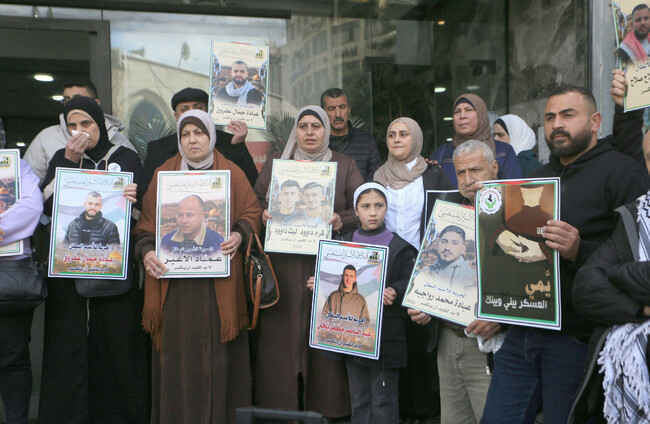
Nablus, Palestine. 24th Mar, 2026. Mothers and relatives of Palestinians hold up posters of their loved ones detained in Israeli prisons. Alamy Stock Photo

Israel pushes on with its execution bill for Palestinian prisoners, in a worrying policy shift

As global attention shifts to Iran, a controversial Israeli bill advancing toward final approval could transform the legal fate of thousands of Palestinian detainees.

AS IRAN INTENSIFIES its strikes across the region — rejecting a US-backed ceasefire and hitting targets from Israel to the Gulf — Israel has moved forward with a controversial decision that is drawing far less global attention: advancing a bill to execute Palestinian prisoners.

While the war is rapidly reshaping the Middle East militarily and economically, a quieter but deeply consequential front is unfolding behind Israeli prison walls. Overshadowed by escalating regional conflict, the fate of thousands of Palestinian detainees is slipping from the headlines — just as Israeli authorities push ahead with legislation that could fundamentally alter their treatment and place their lives at direct risk.

On 24 March, the Knesset’s National Security Committee approved a bill advancing the execution of Palestinian prisoners, moving it toward its final readings. The decision marks a significant and potentially unprecedented shift in policy, raising fears over the fate of more than 9,000 detainees and triggering warnings of serious humanitarian, legal, and political consequences.

The proposal is expected to be brought before the Knesset for its second and third readings in the coming days.

Israeli media reports said the Knesset’s National Security Committee approved a bill imposing the death penalty on individuals accused of carrying out attacks. According to the reports, the proposed legislation mandates capital punishment without requiring unanimous agreement among judges.

It also outlines that executions would be carried out by hanging through the Israel Prison Service within a set timeframe not exceeding 90 days, with no possibility of pardon or sentence reduction.

Prisoners and the War Dynamics

The issue of prisoners has long been central to the Palestinian-Israeli conflict, often shaping both escalation and negotiation. On October 7, 2023, Hamas launched a large-scale attack on southern Israel, killing about 1,200 people and taking roughly 250 hostages into Gaza.

Hamas leaders, including Yahya Sinwar, who was killed during the 2023 war, said the 7th October 2023 operation was partly aimed at securing the release of Palestinian prisoners, a long-standing objective of the group.

Analysts and Hamas officials have also said the attack sought to reshape the regional dynamics and bring renewed international attention to the Palestinian issue.

Prisoner exchanges have remained central to ceasefire efforts. Under the Gaza truce that took effect in January 2025, Hamas agreed to release Israeli hostages in phases in exchange for large numbers of Palestinian prisoners.

Hamas reaction

In a statement, Hamas said: “The approval by the occupation’s Knesset National Security Committee, in the first reading, of what is known as the law to execute Palestinian prisoners represents a dangerous step that paves the way for acts of killing and liquidation against our prisoners inside prisons.”

The group added that the move reflects “an unprecedented level of decline within the occupation system” and violates international laws and conventions related to prisoners of war.

Hamas further warned that the law aims to “turn prisons into arenas of direct execution,” following what it described as ongoing practices of “slow killing” through torture, deprivation, and medical neglect.


The group also held Israel responsible for any consequences of the law, describing harm to prisoners’ lives as a “red line,” and called on Palestinians, as well as Arab and Islamic countries, to intensify support for prisoners and escalate public action.

In parallel, Hamas urged the international community and human rights organisations to intervene urgently to halt the bill before its final approval.

Human rights warnings

Recent cases have also raised further concerns about accountability inside Israeli detention facilities. In March 2026, Israel’s military dropped charges against five soldiers accused of sexually abusing a Palestinian detainee at the Sde Teiman detention facility, despite video evidence and medical reports documenting severe injuries, according to Associated Press.

The case had drawn international attention and criticism from human rights groups, who said the decision highlighted broader concerns about impunity and the treatment of Palestinian detainees during the war.

On Wednesday, Palestinian prisoners’ advocacy organisations issued an urgent global appeal, calling for immediate international intervention to halt the proposed law before it is too late.

In a joint statement, the groups said Israel was moving forward with the legislation while the world remains preoccupied with the ongoing regional war, describing it as part of a broader effort to intensify measures against Palestinians.

They added that the Knesset committee had advanced the bill to its final stage shortly before midnight between Tuesday and Wednesday, paving the way for a vote in the full parliament next week. The organisations urged the international community, particularly the United Nations and human rights bodies, to act swiftly, warning that conditions inside Israeli prisons have already deteriorated sharply.

jerusalem-israel-25th-feb-2026-israeli-prime-minister-benjamin-netanyahu-joins-knesset-members-to-applaud-for-indian-prime-minister-narendra-modi-in-the-knesset-the-parliament-in-jerusalem-on-we Israeli leader Benjamin Netanyahu in the Knesset. Alamy Stock Photo Alamy Stock Photo

The groups said they had repeatedly contacted international legal and diplomatic bodies in recent months to highlight what they described as escalating abuses inside prisons, including systematic mistreatment and medical neglect.

They argued that continued international inaction has emboldened Israeli authorities to escalate further, with the proposed execution law representing what they described as a dangerous new phase.

Human rights activists have warned that implementing the law would effectively open the door to the “deliberate killing of prisoners inside prisons,” adding that the issue of detainees continues to face clear marginalisation on the international stage.

Aida Touma-Suleiman, an Arab member of the Knesset representing the Hadash–Ta’al alliance, described the committee’s approval of the bill as a “moral and legal stain.” She said the death penalty is fundamentally unacceptable on humanitarian grounds, regardless of the identity of the perpetrator or the victim, adding that “reviving the gallows is an unethical act that cannot be legitimised under any circumstances.”

She further warned that applying such a law in this context risks turning it into what she described as a discriminatory and retaliatory tool selectively enforced against Palestinians, while, she said, violence by Israeli settlers is not addressed with the same legal framework.

Readers like you are keeping these stories free for everyone...
A mix of advertising and supporting contributions helps keep paywalls away from valuable information like this article. Over 5,000 readers like you have already stepped up and support us with a monthly payment or a once-off donation.

Close
JournalTv
News in 60 seconds