Sign in. It’s quick, free and it’s up to you.
An account is an optional way to support the work we do. Find out more.
Sign in. It’s quick, free and it’s up to you.
An account is an optional way to support the work we do. Find out more.
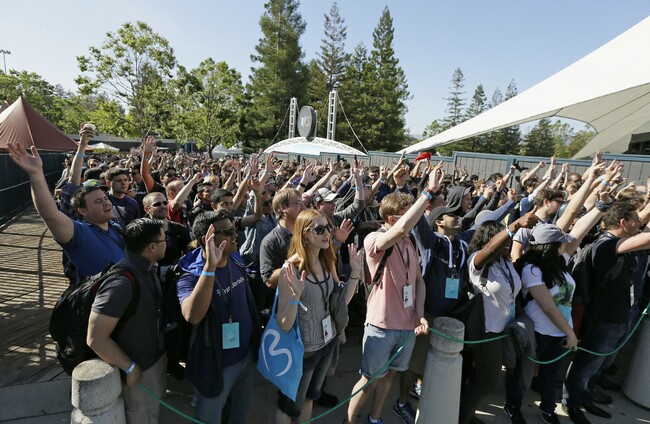
GOOGLE ISN’T JUST content with just being the go to place for a query or being at the top of the smartphone market, it’s wants to become front and centre of everything you do.
The company held its annual developer event Google I/O, one of the biggest events in its calendar. A large number of services and updates were announced but most were linked by one thing: Google Assistant.
From first glance, Google Assistant looks like a cross between Google Now, personal assistants like Siri and a chatbot.
Using the work already established with Google Now, it’s able to complete a two-way conversation between the user and Google. It can deal with more complex questions and remember the context of previous questions so it can bring up more relevant information.
In the example provided, asking what movies are in the cinema will bring up three popular movies. When you say you’re bringing kids, it presents more appropriate suggestions and will ask if you want to book tickets.
Home sweet home
This feature ties into another significant product announcement, Google Home. Looking like a fancy vase, the speaker was made by the same team who made Chromecast and is always listening to you (At the start of the event, Google’s CEO Sundar Pichai said that 50% of searches were made on mobile; one-fifth of those are voice searches)
Not only can it answer your questions, it will also link up with your other devices including speakers – much like Chromecast Audio and the speakers don’t need to be in the same room to link up – and your TV if Chromecast is connected.

Smart responses
The final example of Assistant integration was the announcement of one of two new messaging apps. One was Duo, a Facetime-live video messenger, but the more important one is Allo, a likely replacement for the messy Google Hangouts.
While it shares many similarities to other messaging apps like WhatsApp, Viber and Facebook Messenger, it does bring in its own small twists to existing ideas.
Alongside the traditional messaging, stickers, photos and others, there were three features that Google believes separates itself from its competitors: expression, Google Assistant and Security.
One small but useful feature is before you hit send, you can drag your finger up and down the send button, making the text bigger or smaller (so no more need for Caps Lock), as well as doodling on photos.
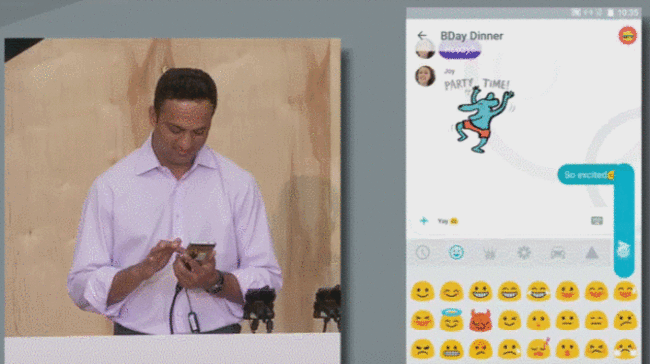
But the real pull is Google Assistant. While you’re talking to someone or a group, you can rely on Google to help you out with conversations with smart replies. The more you use the app, the better it becomes at offering suggested replies that you can quickly use.
The chatbot can figure out the context of the conversation or photo so if someone sends you a photo of a dog, it will suggest responses like “Cute dog!” or “Aww!”. On top of that, Google Assistant into the conversation is to help you out with searches or choosing a restaurant or playing a game.
They’re not revolutionary additions but the idea is to make things as quick and as convenient as possible. And for you to rely more on Assistant as time goes on.
No specific dates were provided but Allo and Duo will arrive on iOS and Android later this summer. Google Home will arrive in the autumn but no mention as to whether it will make its way over to Ireland.

To embed this post, copy the code below on your site














have your say