Sign in. It’s quick, free and it’s up to you.
An account is an optional way to support the work we do. Find out more.
Sign in. It’s quick, free and it’s up to you.
An account is an optional way to support the work we do. Find out more.
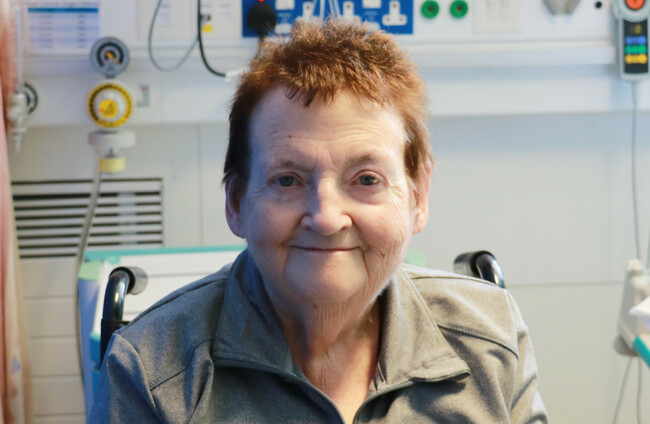
A HEART FAILURE patient from Galway has become the first in Ireland to be implanted with a device that will send early warning signals to the doctors at the hospital in the event of a worsening heart condition.
The procedure, carried out by Prof Faisal Sharif, consultant interventional cardiologist at University Hospital Galway (UHG), was performed successfully on Sheila Concannon, a resident of Spiddal, Co. Galway.
The device will give doctors vital time to eliminate the risk of an eventual heart attack in a country where over 10,000 new cases of heart failure are diagnosed annually.
The device can spot problems in the body two weeks before the patient notices any symptoms, giving valuable time for intervention.
“The procedure is very straightforward and is carried out as a day case operation. The sensor is implanted using a small catheter which is placed in a vein at the top of the leg. It is collapsed on entry so it can be pushed up into the inferior vena cava (IVC), which carries oxygen-depleted blood back to the heart,” Sharif said.
“The sensor is then expanded to its full size where it continuously measures the size of the IVC, which signals the amount of fluid in the body. High levels can increase the risk of breathing difficulties and a build-up of fluid in the lungs which can lead to an emergency hospital admission.”
The patients are given detection belts after the surgery which they are required to wear across the stomach for a few minutes every day. The belt powers the implanted sensors, which measures the volume of fluid build-up, allowing real-time information to the cardiology teams.
Doctors have traditionally relied on information given by the patients about the symptoms which may not be thoroughly accurate as the patient “may have already progressed to the point of hospitalisation”.
“Now we are getting crucial information about how the patient is doing and we can get it while they are at home. The device foretells of a fluid overload in the body 14 days before the patient has any symptoms so action can be taken to prevent the symptoms of shortness of breath, swelling of the legs and prevent hospital admission.
“Clinicians are alerted if readings are elevated beyond the thresholds. We would also have regular remote consultations with the patient if we observe any elevation in the readings,” he said.
Meanwhile, Sheila Concannon said she is happy that the implant saves her time travelling to the hospital as it takes only a few minutes to do the readings of her heart condition. “I can’t even feel the device is there which is great,” she said.
To embed this post, copy the code below on your site













have your say