Sign in. It’s quick, free and it’s up to you.
An account is an optional way to support the work we do. Find out more.
Sign in. It’s quick, free and it’s up to you.
An account is an optional way to support the work we do. Find out more.
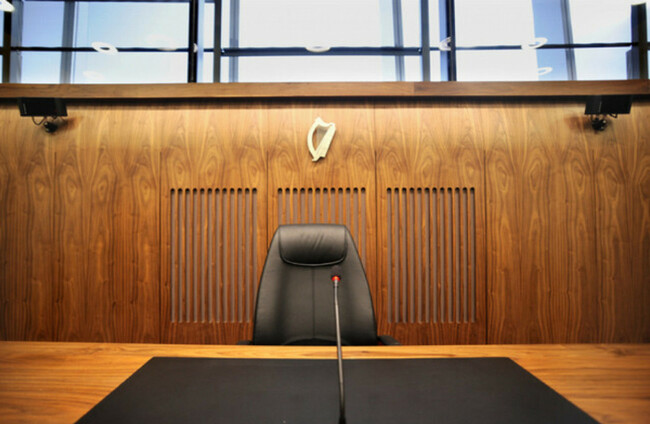
A UKRAINIAN BOY who was taken to Ireland by his mother after the Russian invasion in 2022 without his father’s consent must be returned to his war-torn home country, the High Court has ruled.
Ms Justice Mary Rose Gearty said the court had considered the boy’s fear that he would die “very seriously” and directed that undertakings be given by the father as to the child’s future safety. However, she said there was no evidence of a grave risk to the boy.
“While many women and children have sought safety in neighbouring countries, most Ukrainian children remain, safely, at home in Ukraine,” she wrote.
The judgment outlined that the child’s father lives in Ukraine and that after Russia invaded in February 2022, he claimed he consented to the child’s mother taking their son, who they had 10 years ago, to Poland for two months only.
However, the boy’s mother claimed the move was for the duration of the war – an “indefinite” period and not two months.
In her judgment, Ms Justice Mary Rose Gearty said it was clear that the agreement was “probably only for two months” but that the mother then removed the boy, referred to as ‘W’, from Poland and did not tell the father she had taken him to Ireland without his consent.
“There is no evidence of any risk to W, which would be sufficient to allow this defence to supersede the urgent and important imperatives of the Hague Convention, namely the prevention of child abduction and the vindication of the child’s right to a relationship with both parents,” Ms Justice Gearty said.
The judge said the issue of risk is linked to the views of the child who considers himself to be at risk, if returned, but the High Court said there was “insufficient evidence to substantiate his concerns”.
The judge said there had also been “insufficient evidence” of a defence of “settlement” in the case, meaning the establishment of attachment to a new country for the boy.
In March 2022, the mother and son left Ukraine for Poland along with a group of mothers and children, all of whom had been sheltering in the basement of the father’s residential block for eight days. In November 2022, she brought her son to Ireland, fearing an invasion of Poland.
“It is clear that the child was habitually resident in Ukraine in 2022 at the time of his removal,” Ms Justice Gearty said.
The judge said it was up to the mother to show that after the two months had passed in Poland, there was then consent for the move to Ireland.
Text messages in the case supported the father’s claim that the trip was to be for only two months and that the mother was to return with her son to Ukraine, the judge said.
In September 2022, the mother texted that she will not return “as long as there’s danger to the baby, that’s obvious”.
Ms Justice Gearty said there was no evidence of an agreement that the boy could remain in Ireland until the end of the war.
“Limited consent is insufficient to establish consent to any retention of this child away from his home for a period longer than two months” Ms Justice Gearty stated.
This child was wrongfully retained in May of 2022 and his location was deliberately concealed from the applicant thereafter.
“There is no strong evidence of settlement in terms of emotional connection with people and place,” she said.
The evidence the boy offered to support his conclusion that Ukraine is unsafe is that people that his mother knows have been killed in the war, the judge noted.
“I take these objections seriously and have considered his view very carefully. His only objection to return is based on his personal safety. Anyone would sympathise with this view, but it does not appear, on the evidence before me, to be one that has been formed on a sound factual basis,” Mr Justice Gearty said.
“While many women and children have sought safety in neighbouring countries, most Ukrainian children remain, safely, at home in Ukraine.
“It is insufficient to suggest that there is a grave risk of remaining in Ukraine at present without details as to why; details describing what conditions prevail in the place to which the child would otherwise return and details of the current situation in that region or city. There is no such information in this case,” she said.
Ms Justice Gearty said there was insufficient evidence of settlement and no evidence of grave risk, except that W fears he will die due to information he has received.
“That fear is not based on established facts,” said Ms Justice Gearty, who added that the court considered the child’s fear “very seriously and seeks specific undertakings [from the father over W's safety]“.
“The child must be returned to Ukraine forthwith and I will direct appropriate undertakings,” the judge added.
To embed this post, copy the code below on your site














have your say