Sign in. It’s quick, free and it’s up to you.
An account is an optional way to support the work we do. Find out more.
Sign in. It’s quick, free and it’s up to you.
An account is an optional way to support the work we do. Find out more.
FEARS THAT THE Middle East war could cause a global economic crisis have been brought to an even greater pitch after Houthi rebels in Yemen entered the conflict, putting another important oil shipping route in the firing line.
In the first month of the war, the Iran-backed Houthis had made threats in support of their ally, warning they had their fingers “on the trigger”.
On Saturday, the group essentially pulled that trigger, announcing they had fired missiles and drones at Israeli military sites.
The escalation complicates an already delicate situation and already this morning oil prices have risen again amid concerns that the conflict could spread to the Red Sea.
So why is this important, and what could it mean?
It’s a matter of geography
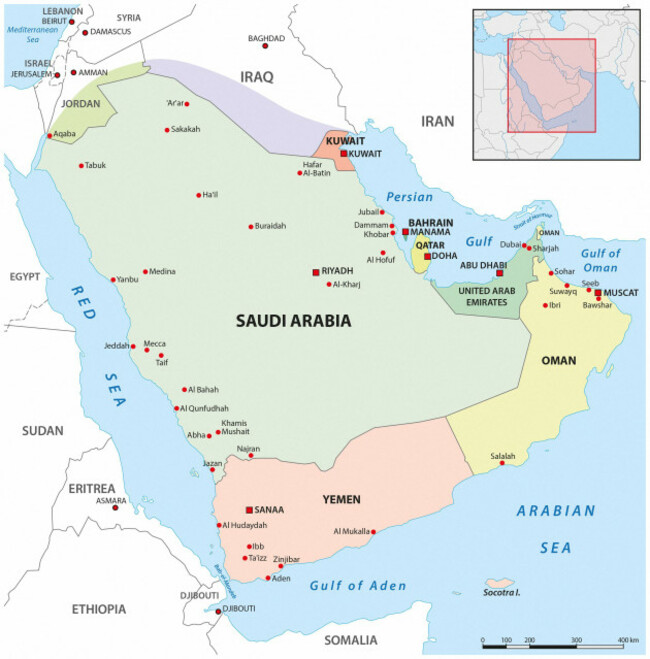
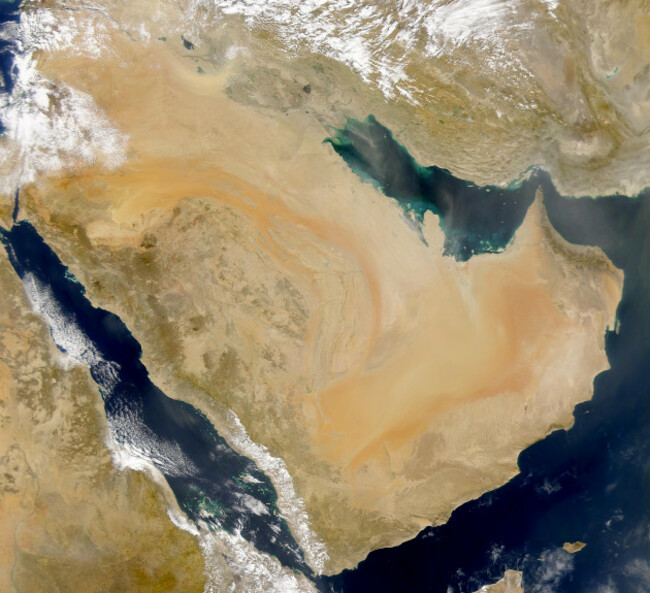
The Red Sea is the sea on the opposite side of the Arabian Peninsula from the Persian Gulf, and it is where Saudi Arabia has been rerouting much of its oil exports to avoid the Strait of Hormuz.
As anyone following this conflict knows, Iran has closed the Strait of Hormuz to shipping as a response to the attack launched by the US and Israel just over four weeks ago.
It has meant that the Strait, through which about 20% of the world’s crude and gas passes, is now Iran’s strongest strategic advantage in the ongoing war.
The closing of the Strait of Hormuz and attacks on energy infrastructure have had dramatic effects on the price of oil, and the entry of the Houthis into the conflict has pushed the price upwards even more.
As of this morning, the price of oil rose to its highest level in weeks, with Brent Crude hitting close to $117 a barrel, before easing back.
The season for this is another vital marine choke point, the Bab-el-Mandeb Strait which sits between Yemen and the Horn of Africa and connects the Red Sea to the Gulf of Aden and out into the open ocean.
At its narrowest, the Bab-el-Mandeb Strait is just 26km wide and shipping there is thus very vulnerable to attack.
It is a key international trade route and the Houthis previously used this fact to their advantage, striking shipping there on a number of occasions.
This came to a particular head in early 2024, when the Houthis launched a number of attacks on shipping in a bid to force western countries to pressure Israel to curtail its bombing of Gaza.
In January 2024, the US and UK launched a series of air strikes on Houthi targets in Yemen in an effort to prevent them launching further attacks on shipping.
That the Houthis have now resumed this tactic has sparked panic that another trade route being placed at risk will worsen the economic crisis.
“Any sustained disruption will drive up shipping costs, increase oil prices, and place additional strain on a fragile global economy that is already reeling from the situation in the Strait of Hormuz,” Middle East and North Africa expert at Chatham House Farea Al-Muslimi wrote at the weekend.
At the same time, vital economic and military infrastructure across the Gulf region may become increasingly exposed.
Key to this concern, as Al-Muslimi and other security experts have noted, is the fear that oil-rich Saudi Arabia could be drawn further into the conflict.
“The Houthis are better placed than Iran to threaten Saudi infrastructure and Western military bases in the Gulf,” says Al-Muslimi.
“Recent rhetoric suggests such attacks remain a possibility. Such actions would likely trigger a return to large-scale conflict, including renewed direct confrontation between Saudi Arabia and the Houthis.”
A quick reminder, who are the Houthis?
The Houthis are a Shia militant group, formally known as Ansar Allah (Supporters of God), that first emerged in the 1990s.
They have controlled large parts of Yemen, including the capital Sanaa, since 2014, and the taking of Sanaa sparked a brutal civil war in the country.
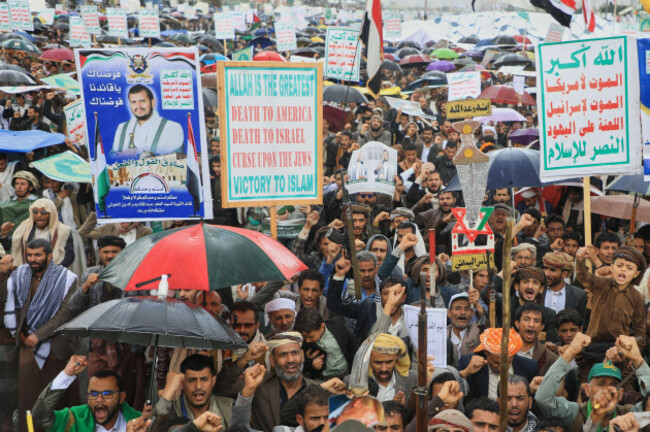
The Yemini Civil War soon developed into a pseudo proxy war between the region’s two most prominent powers, Iran and Saudi Arabia.
In 2017, the Houthis began launching a significant number of rocket attacks against targets in Saudi Arabia.
The UN estimates that over 150,000 people have been killed as a direct result of the war and a further 227,000 Yemenis have died due to famine and health crises.
A series of truce agreements between the two main parties to the conflict – the Houthis and the internationally-recognised Yemeni government – held further violence at bay but the conflict between Israel and Hamas in Gaza and now the Iran war has complicated the picture.
Why now and the ‘Axis of Resistance’?
The extent to which the Yemeni Civil War constituted an actual proxy war remains a subject of disagreement among Middle East experts, particularly as the Houthis are not under Iran’s direct control, which is the case for other militant groups it supports in the region.
But the Houthis are considered part of Iran’s ‘Axis of Resistance’, a collection of armed groups in the Middle East that operate with Iranian support and are opposed to the US military’s presence in the region and to the state of Israel.
Hezbollah in Lebanon is the most famous among them.
Given this context, it had been expected that the Houthis would join the conflict but the delay in doing so has led to questions about why they are doing so now?
Speaking on Al Jazeera’s Inside Story programme, senior Yemen advisor at the European Institute of Peace Hisham Al Omeisy said the timing could be seen as response to suggestions that the US is considering an invasion of Iran’s Kharg Island.
“The Houthi spokesperson specifically mentioned the attacks on the infrastructure in Iran, and this being a response to that, but also in support of the Axis of Resistance.
“We’ve seen what happened in Hezbollah over the past couple of weeks, and the increasing pressure on them. The Houthis are expanding those fronts so that the US and Israel would be fighting at multiple fronts in an attempt to ease up pressure on the other members of the axis.
“There’s also, there’s been a lot of talk with the US saying they’re going to be putting boots on the ground and the Houthis are hoping to deter an invasion by basically signalling that now they have joined the fighting.”
Can the US do anything to deter the Houthis from attacking shipping?
It is very possible that further strikes similar to those in 2024 could be considered, but the difficulty for the US is that no matter what military response it undertakes it is unlikely that the risk to shipping will disappear completely.
Speaking on the same programme, former Pentagon advisor Michael Mulroy said that he is in no doubt that the timing has been done in concert with Iran and he expressed doubts that the US and Israel would be able to counter it.
“I think Iran has a plan. The plan included seizing the Strait of Hormuz, and likely is going to include initiating the Houthis to potentially disrupt the flow of commercial vessels in the Red Sea, and specifically the Bab-el-Mandeb.
So I think that’s what we’re, of course, concerned about, because it would take the current economic global issue and compound it substantially.
“How is the Pentagon going to deal with it? Likely, how we’ve dealt with everything so far. Major air campaigns trying to deplete their ability to launch these missiles and drones. That’s unlikely to be completely successful and all they have to do is hit a few commercial vessels and it will shut down.
“Because even if we can militarily deal with it, it’s more than just that. We have to convince these commercial vessels and those that insure them that it’s safe, and that is a big issue for the military.”
Aside from the shipping element, is there any other way the involvement of the Houthis could worsen the situation further?
Yes, the Houthis have hinted at possible strikes on neighbouring states and, as mentioned above, this includes Yemen’s neighbour Saudi Arabia in particular.
One of the major concerns is therefore that Riyadh is drawn into becoming a more active participant in the war.
With the Strait of Hormuz effectively closed, Saudi Arabia has seen tankers diverted to its Red Sea port of Yanbu, making it the kingdom’s last secure outlet for its oil.
If this route is blocked, Riyadh may abandon its current stance of intercepting near-daily Iranian missiles and drone attacks without retaliating.
Saudi security analyst Hesham Alghannam told AFP this “careful neutrality in the war” could collapse.
Riyadh might consider retaliation, “even if limited”, he added.
- With reporting by David McRedmond and © – AFP 2026

To embed this post, copy the code below on your site

















have your say