Sign in. It’s quick, free and it’s up to you.
An account is an optional way to support the work we do. Find out more.
Sign in. It’s quick, free and it’s up to you.
An account is an optional way to support the work we do. Find out more.
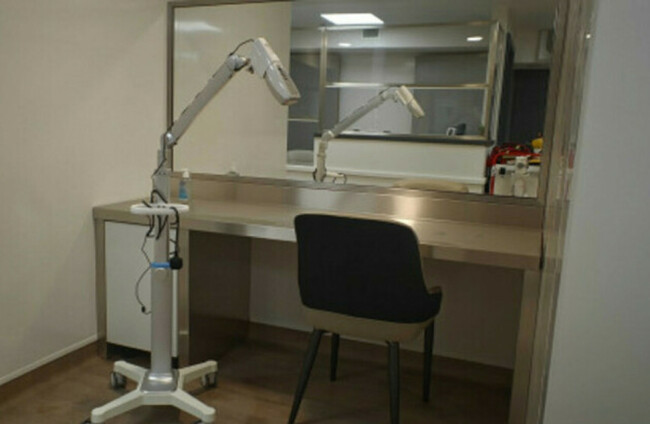
AN COIMISIÚN PLEANÁLA has given the planning green light for Ireland’s first medically supervised drug injection facility (MSIF) at Merchant’s Quay in Dublin to become permanent.
ACP has granted permanent planning permission after finding that the MSIF would not result in an over-concentration of institutional accommodation and other social support services in the area around the Riverbank Building at Merchants Quay, Dublin.
The Commission also found that the MSIF application by Merchants Quay Ireland (MQI) would not seriously injure the amenities of the area or the sustainability of the local neighbourhood, including the local school and other community facilities.
The Commission also found that the facility will not seriously injure the local economy including the tourism business or the public realm in general.
The centre officially opened in December 2024 after it secured a temporary 18-month planning permission and the ACP permanent permission comes ahead of the 18-month temporary planning permission for the MSIF expiring next month.
The case was before the ACP after a grant of permanent permission issued by Dublin City Council last January was appealed by Patrick Coyne of Arran Street East, Inns Quay, Dublin 7.
Mr Coyne appealed the Council decision contending that the application relies on incomplete, non-independent, selectively framed data; ignores the cumulative effects of regional service saturation and relies on interim, unpublished evaluation work and omits the statutory 18-month independent review.
The proposed development seeks permission for the permanent change of use of a previously vacant basement to a Medically Supervised Injecting Facility at the Riverbank Building.
Riverbank Building located at 13/14 Merchant’s Quay is a long-established base for MQI’s homeless, health, and addiction services since 1991.
In a submission made on behalf of MQI, planning consultants, Brock McClure stated that the outcomes during the December 2024 to September 2025 period demonstrate the MSIF’s effectiveness in reducing overdose deaths; reducing pressure on emergency and policing services; improving safety for both clients and the wider community and reducing the visibility of drug related activities in public areas.
Brock McClure state that an MSIF Activity Data Report “clearly demonstrates a compelling case for the permanent retention of the MSIF”.
The Activity Data Report found that there were 179 non-fatal overdoses in the MSIF in the period; 98 of which involved the administration of oxygen alone or 81 of which required the administration of naloxone and oxygen.
Over the 10-month period, the Activity Data Report found that 10,723 visits were made to the MSIF where the average number of visits per day has risen steadily during the first nine months of 2025 from 16.9 visits per day in January to 51.8 visits per day in September 2025.
Users of the facility can inject drugs, obtained elsewhere, using sterile equipment provided by the facility. Nurses are present to provide advice and guidance, including assistance with vein location, but do not administer the drugs. Emergency support and aftercare is provided.
Advancing the case for the MSIF, the report by Brock McClure stated that “the need for a permanent supervised injecting facility remains acute and ongoing”.
It states that “Dublin continues to experience high levels of drug-related harm, and the city centre in particular remains a focal point of visible street-level drug use. Without the permanent continuation of the MSIF, all of the benefits both for users of the MSIF and the wider community will be for nothing”.
Brock McClure states that the MSIF “delivers critical harm-reduction and healthcare outcomes – preventing overdoses, reducing public injecting and drug-related litter, and linking vulnerable individuals with medical and social supports”.
To embed this post, copy the code below on your site














have your say