We need your help now

Support from readers like you keeps The Journal open.

You are visiting us because we have something you value. Independent, unbiased news that tells the truth. Advertising revenue goes some way to support our mission, but this year it has not been enough.

If you've seen value in our reporting, please contribute what you can, so we can continue to produce accurate and meaningful journalism. For everyone who needs it.

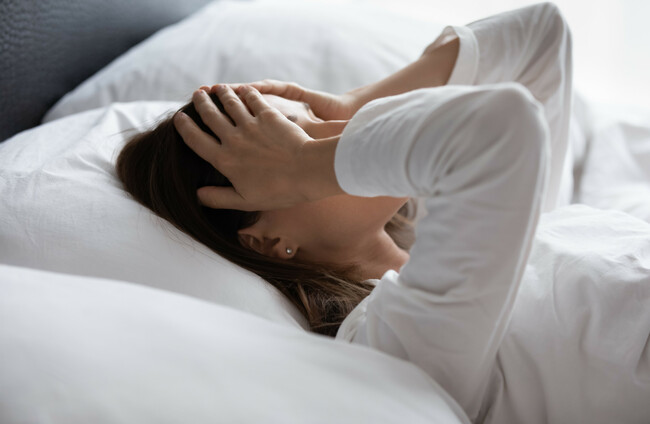
Shutterstock

Have you been having weird dreams? It may be due to the heat

Your body may be interpreting Ireland’s current warm spell as an ‘unseen threat’, causing vivid dreams and a bad night’s sleep.

HOT WEATHER IS a common culprit for causing a bad night’s sleep, but did you know it can also contribute to strange dreams?

The warm spell we’ve been experiencing in Ireland this week may have led you to experience unusually vivid dreams which you remember more clearly than usual, according to sleep expert and health scientist Tom Coleman.

Speaking to The Journal, he explained that heat can have a significant impact on sleeping patterns as the human body’s brain and core temperature are “key for quality sleep”.

Dreaming occurs during the body’s REM sleep cycle, which is a phase of ‘light’ sleep during which brain activity is high and body temperature is elevated.

Coleman said that the warm weather spell could be causing people to wake up more during this light cycle, and then remember dreams more vividly. 

Your dreams may also be more intense than usual because the body has interpreted the heat as a threat, triggering the subconscious to attempt to figure out what’s going on.

Coleman said something similar happened during the Covid-19 pandemic, in a phenomenon known as “pandemic dreaming”. 

Although dreams are not fully understood, he said the current best theory is that they are a “virtual reality simulator where your brain practices solving problems without consequences”. 

The REM sleep cycle is when your subconscious engages in emotional regulation and problem solving, so vivid dreams may be your body’s attempt at solving the threat and “making sense of the world”.

During the pandemic, people’s subconscious minds were aware of the “unseen threat” of the pandemic, and while sleeping, their dreams attempted to make sense of this threat which caused them to become more intense or vivid.

Coleman said that anxieties about global warming, or simply an unusually hot night, may be interpreted as another ‘unseen threat’ by the body.

“We don’t like change. We always want to return to what is comfortable,” he said.

So, although the dreams may be uncomfortable, they could actually be caused by your body trying to help you adapt to a change in environment and any dangers it may bring.

The bad news is that this can cause more tiredness the next day.

Coleman said: “People will be tired, light sleep is very important. If you’re waking up and you’re getting fragmented sleep, you will be more fatigued. There might be grogginess and brain fog.”

The sleep expert warned that if you’ve had a bad sleep, you should not drastically change your routine. In particular, if you don’t tend to take naps, you shouldn’t try to take one.

“Do the exact same thing you always do to get to sleep,” he said.

Coleman explained that staying awake, and getting exercise and fresh air builds up “sleep pressure”, which helps you fall asleep more easily.

If crazy dreams have disrupted your sleep, he advises sticking to a normal routine and going to bed the following night when your body feels tired.

To reduce weird dreams, try to keep your room as cool as possible at night.

Here’s some advice about how to stay cool at night during the warm spell:

  • ensure your bedroom is well ventilated – keep windows open and curtains closed during the day,
  • stay hydrated,
  • choose duvets, pillows and bed linens that dissipate heat (Coleman recommends using a material like wool as it can regulate temperature),
  • have a cold water bottle instead of a hot water bottle,
  • sleep in cool clothes or no clothes,
  • avoid taking cold showers, keeping your room too cold or eating late at night, as these things can cause the body to heat up.

Readers like you are keeping these stories free for everyone...
A mix of advertising and supporting contributions helps keep paywalls away from valuable information like this article. Over 5,000 readers like you have already stepped up and support us with a monthly payment or a once-off donation.

View 23 comments
Close
23 Comments
This is YOUR comments community. Stay civil, stay constructive, stay on topic. Please familiarise yourself with our comments policy here before taking part.
Leave a Comment
    Submit a report
    Please help us understand how this comment violates our community guidelines.
    Thank you for the feedback
    Your feedback has been sent to our team for review.

    Leave a commentcancel

     
    JournalTv
    News in 60 seconds