Sign in. It’s quick, free and it’s up to you.
An account is an optional way to support the work we do. Find out more.
Sign in. It’s quick, free and it’s up to you.
An account is an optional way to support the work we do. Find out more.
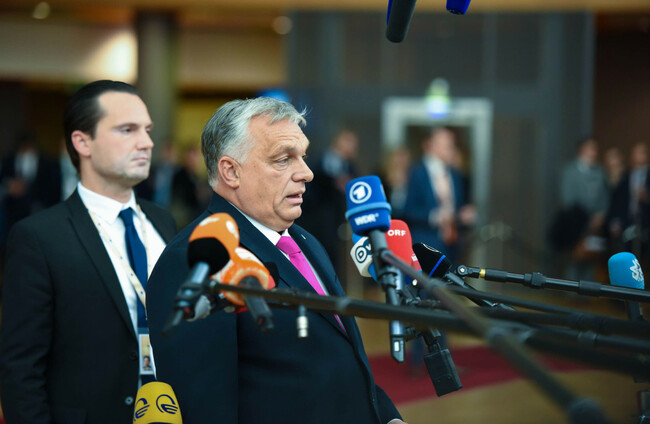
ON SUNDAY, HUNGARIANS will go to the polls in parliamentary elections that could end Prime Minister Viktor Orbán’s 16 years in power.
Since 2010, Orbán, the closest EU ally of both US President Donald Trump and Russian President Vladimir Putin, has led Hungary’s 9.5 million population.
During his tenure, his ruling coalition has used its two-thirds majority in parliament to overhaul the central European country’s electoral and political systems, with a rule characterised by authoritarianism and democratic backsliding.
State resources have been leveraged for campaigning to keep Orbán in power, while his business allies have radically changed the media environment.
But a lagging economy and a desire by many Hungarians for a better relationship with the EU have seen support for the current government slip.
The challenge facing Orbán is unprecedented, with opinion polls putting his main rival, pro-European Peter Magyar’s conservative party, Tisza, well ahead.
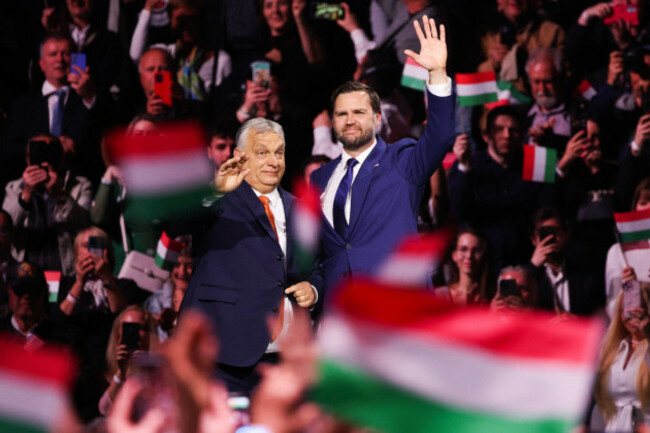
In the same week that US Vice President JD Vance visited Hungary and endorsed Orbán, the Hungarian Prime Minister accused Magyar, a former member of his party, of “colluding” with foreign intelligence, saying he will “stop at nothing to seize power”.
Magyar has retaliated with claims of election fraud by Orbán’s Fidesz party and accusations of “criminal acts, intelligence operations, disinformation and fake news”.
The message he is projecting is one of confidence that he will win the election, but just how different would a Tisza government be from Orbán’s rule?
European diplomats, lawmakers and analysts have cautioned that a win by Magyar might not bring the overhaul in EU relations many would like to see.
A pro-European conservative who currently sits in the EU parliament, Magyar is a former government insider who hails from the same ideological camp as the current prime minister.
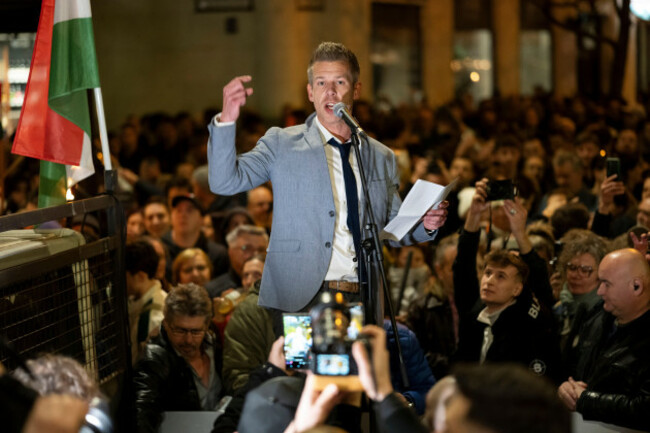
He has focused his campaign on turning around what Transparency International deems the EU’s most corrupt country but, like Orbán, he rejects sending arms to Ukraine and opposes the country’s quick EU integration.
Speaking to The Journal, Donnacha Ó Beacháin, professor of politics at Dublin City University explained that a new Tisza-led government would have to rebuild institutional credibility within Hungary.
“In a worst-case scenario, you could end up with Orbánism without Orbán,” he said.
“Péter Magyar is not a traditional liberal opposition figure. Many oppositionists are voting for him because of who he is not (Orbán) rather than for who he is – an ex-member of the Fidesz political elite.
“Therefore, it’s probably realistic to expect a recalibration rather than a full ideological reversal,” Ó Beacháin explained.
That said, Ó Beacháin said a government led by Péter Magyar would likely de-escalate conflicts with EU institutions and see Hungary engage more constructively with the bloc.
“But the frozen funds held back by the EU would ultimately depend on verifiable reforms, not campaign rhetoric,” he said.
He takes the view that a Tisza victory on Sunday would see a “quick normalisation of tone but a slower normalisation of substance”.
“The democratic backsliding that has been the hallmark of Orbán’s long reign is unlikely to be reversed overnight, even assuming there is a willingness to do so,” Ó Beacháin.
JD Vance
On just how likely JD Vance’s intervention in the election is to tip the result in favour of Orbán, Ó Beacháin made the point that while it was highly symbolic, it’s unlikely to change things too much.
“But it does contribute to Orbán’s international legitimacy within right-wing populist circles,” Ó Beacháin added.
Polls open tomorrow, with clear trends expected to emerge within hours ahead of a near-final result on Monday. Formal certification of the results is expected mid-next week.
However, Ó Beacháin pointed out that if the result is extremely close, we could expect to see disputes over constituency results and potential recounts.
“There is also the possibility of the losing side rejecting the election results, which could lead to a major political crisis within Hungary,” he warned.
Includes reporting from AFP

To embed this post, copy the code below on your site














have your say