Sign in. It’s quick, free and it’s up to you.
An account is an optional way to support the work we do. Find out more.
Sign in. It’s quick, free and it’s up to you.
An account is an optional way to support the work we do. Find out more.
This is an extract from the latest edition of Temperature Check, The Journal’s monthly climate newsletter. Sign up to receive Temperature Check to your email inbox for free in the box at the end of this article.
Iceland may have quite a lot of geographic differences to Ireland, but socially, it’s facing many similar challenges to Ireland in terms of mobilising public support for climate action measures at a time when other social issues are dominating the political agenda.
Speaking to Icelanders while I was in the country, I was struck by how much of the public conversation happening there on climate action is similar to the discussions and debates playing out in Ireland too.
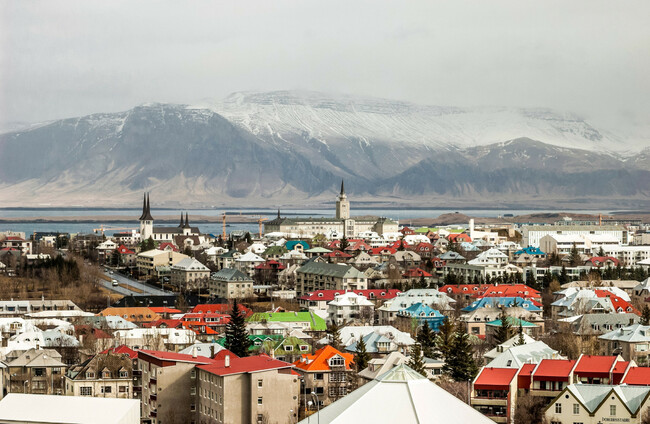
Iceland is in a housing crisis. Despite being an island larger than Ireland with a population less than one-tenth of the size, its capital and only city Reykjavík doesn’t have enough housing available for the number of locals who want to live there (partly due to the proliferation of short-term rentals for tourists).
“House prices have skyrocketed, especially in the city. I think it’s impossible for a young person to earn enough and save enough while renting to eventually own a house,” said Christopher Long, conservationist from Scotland who moved to Iceland about five years ago.
A new government was formed in Iceland in December of last year, an alliance between centre-left and centre-right parties.
The environmentalists I spoke to in Iceland gave the new government mixed reviews on the climate front, saying that it has been looking at developing new energy sources for the country but that its priority has been energy sovereignty more so than the climate.
Iceland is known for its use of geothermal energy, which powers much of the country alongside hydropower, but areas that aren’t connected up for geothermal or hydropower rely largely on diesel generators for electricity and heat. It currently has no wind power – despite being a rather windy country – either on land or offshore, and any plans to move into wind generation have been contentious.
Esther Jónsdóttir, a writer and PhD student from Reykjavík, said that climate was less of a priority for political parties in the most recent election compared with other elections in previous years.
She described how housing and other social issues have pushed climate down on the public agenda in recent years.
“The interest in climate has gone down,” she said.
She said that “people are aware of it” and are cognisant of taking personal actions like recycling, but that other problems that feel more “pressing” on daily life have pushed climate to the side in the public consciousness.
Dr Arnason made the point that public awareness of climate change has not yet been enough to fuel wide-scale uptake of significant climate measures in Iceland.
“At the same time as people say that they believe in climate change, it doesn’t really translate to any radically different behaviors,” he said.
“Quite a few people have bought electric cars, but that was because of some reductions offered by the government… People recycle, but they’re not changing so much their international travel or such. There’s a disconnect.”
The question that Iceland, Ireland and many other countries face is how to bridge that gap between understanding and action.
You’ve been reading an extract from the latest edition of Temperature Check, The Journal’s monthly climate newsletter. Sign up to receive the newsletter in the box below.

To embed this post, copy the code below on your site














have your say