Sign in. It’s quick, free and it’s up to you.
An account is an optional way to support the work we do. Find out more.
Sign in. It’s quick, free and it’s up to you.
An account is an optional way to support the work we do. Find out more.
IRAN HAS OFFERED to reopen the Strait of Hormuz and resume talks on its nuclear programme in seven days if the US lifts its naval blockade, waives sanctions on Iranian oil sales and observes a ceasefire that would include Lebanon.
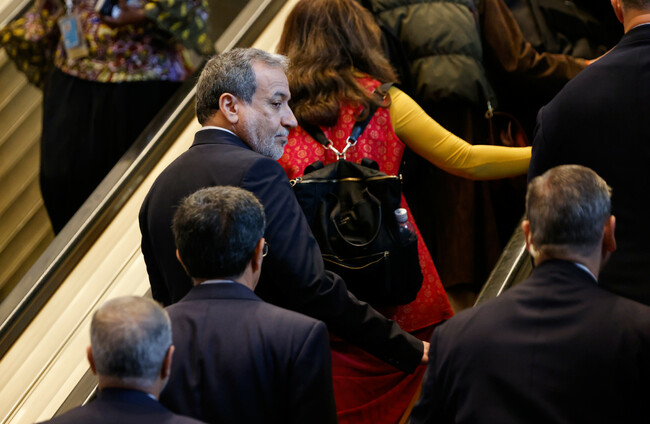
Iran’s foreign minister Abbas Araghchi detailed the proposal in a private gathering on Thursday on the sidelines of the UN General Assembly in New York, according to one attendee.
Trita Parsi, executive vice president of the Quincy Institute think tank, who attended, said Araghchi suggested that a speedy agreement would help US President Donald Trump ahead of November’s midterm elections.
The arrangement would also relieve enormous economic pressure on Tehran as the US piles on additional sanctions.
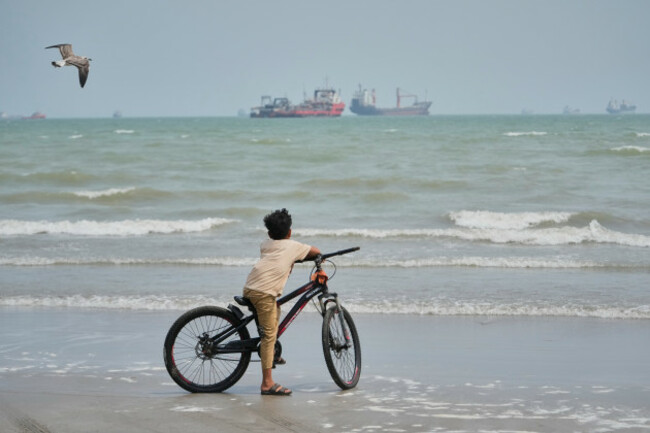
Iran’s disruption of the strait — through which a fifth of the world’s traded oil and gas transited before the war — has emerged as its main point of leverage. The effects have been felt far beyond the Middle East.
There was no immediate comment from Iran’s UN mission or other Iranian officials.
The proposal, conveyed to the US by mediators, strongly resembles the so-called Memorandum Of Understanding reached in June, but with an accelerated timetable. The earlier agreement, which had called for a 60-day interim period, quickly collapsed as Iran resumed attacks on shipping in the strait.
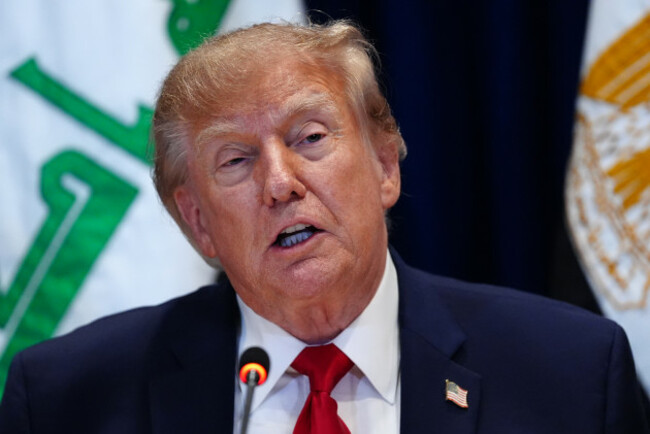
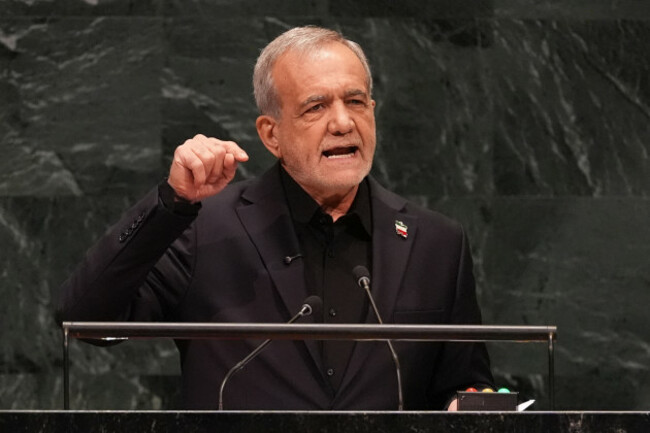
Trump has said he is in no rush to reach a deal, even as high oil prices fuel inflation and exacerbate cost-of-living concerns. On the Iranian side, there are questions as to whether the hardliners who dominate the security forces will accept compromises championed by relative moderates, such as the country’s president Masoud Pezeshkian.
“If Trump calculates this arrangement is worthwhile and can bring political benefit before the midterms and reduce gas prices, perhaps we’ll see flexibility not seen in previous weeks,” Parsi said.
But he noted “deep suspicion”, especially around the prospect of Iran merely buying time to get out more of its oil and ease its economic pain.
In the latest sign of diplomatic movement, Pezeshkian hosted the prime minister of Qatar early on Friday.
Qatar has served as a key mediator, including during hours of indirect Iranian-US talks at the UN this week.
It was not clear how long Pezeshkian and Araghchi would stay in the US after Pezeshkian addressed the annual UN gathering of world leaders on Wednesday.
US secretary of state Marco Rubio said on Wednesday that “if there’s an opportunity to exchange ideas and messages, we will”.
But after multiple failed attempts at a deal, suspicion is high on both sides.
The US and Israel launched the war with a surprise attack on 28 February while Iran was engaged in nuclear talks, killing Iran’s supreme leader.
Each side accuses the other of violating the June agreement.
Parsi said Iran’s current push for speed reflects Tehran’s suspicion that Washington is “using this diplomacy to make it harder for Iranians to launch pre-emptive strikes before the midterms”.
The proposal would include Lebanon, where Israel and the Iran-backed Hezbollah have been mostly observing a ceasefire.
But it is not clear if it would include the revived conflict between Yemen’s Iran-backed Houthi rebels and Saudi Arabia, which has put even more pressure on global markets.
Iran appears to think the Houthis’ newly enhanced ability to threaten the Bab el-Mandeb strait on the Red Sea — another trade choke point on the other side of the Arabian Peninsula — could push Trump to make a deal.

To embed this post, copy the code below on your site
















have your say