Sign in. It’s quick, free and it’s up to you.
An account is an optional way to support the work we do. Find out more.
Sign in. It’s quick, free and it’s up to you.
An account is an optional way to support the work we do. Find out more.
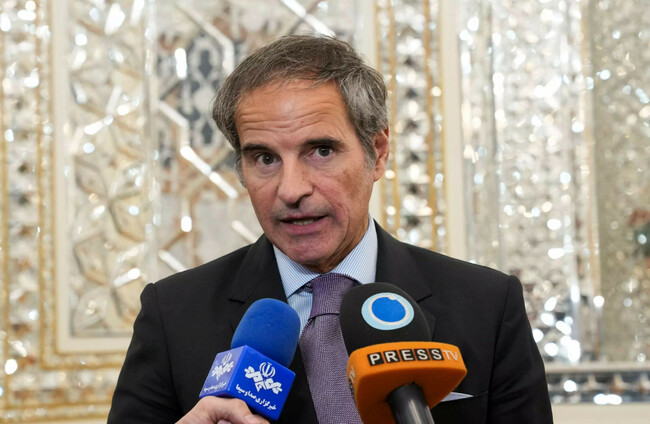
IRAN HAS FURTHER increased its stockpile of uranium enriched to near weapons-grade levels, a confidential report by the UN nuclear watchdog said.
The report comes at a sensitive time as Tehran and Washington have been holding several rounds of talks over a possible nuclear deal that US President Donald Trump is trying to reach.
The report by the Vienna-based International Atomic Energy Agency — which was seen by The Associated Press — says that as of May 17, Iran has amassed 408.6kg of uranium enriched up to 60%. That is an increase of 133.8kg since the IAEA’s last report in February.
That material is a short, technical step away from weapons-grade levels of 90%. A report in February put the stockpile at 274.8kg.
IAEA chief Rafael Mariano Grossi has stressed repeatedly that “Iran is the only non-nuclear weapon state enriching to this level”.
On Saturday, Grossi said he “reiterates his urgent call upon Iran to cooperate fully and effectively” with the IAEA.
On Thursday, senior Iranian officials dismissed speculation about an imminent nuclear deal with the United States, emphasising that any agreement must fully lift sanctions and allow the country’s nuclear programme to continue.
The comments came a day after Trump said he has told Israeli Prime Minister Benjamin Netanyahu to hold off on striking Iran to give the US administration more time to push for a new nuclear deal with Tehran.
Trump said on Friday that he still thinks a deal could be completed in the “not too distant future”.
“They don’t want to be blown up. They would rather make a deal,” Trump said of Iran. He added: “That would be a great thing that we could have a deal without bombs being dropped all over the Middle East.”
US intelligence agencies assess that Iran has yet to begin a weapons programme but has “undertaken activities that better position it to produce a nuclear device, if it chooses to do so”.
Israel said Saturday’s report was a clear warning sign that “Iran is totally determined to complete its nuclear weapons programme”, according to a statement from Netanyahu’s office.
It said the IAEA’s report “strongly reinforces what Israel has been saying for years — the purpose of Iran’s nuclear program is not peaceful”.
It also added that Iran’s level of enrichment “has no civilian justification whatsoever” and appealed for the international community to “act now to stop Iran”.
Grossi said on Saturday that he “reiterates his urgent call upon Iran to cooperate fully and effectively” with the IAEA’s years-long investigation into uranium traces discovered at several sites in Iran.
The IAEA also circulated to member states on Saturday a second, 22-page confidential report, also seen by the AP, that Grossi requested following a resolution passed by the 35-member IAEA Board of Governors last November.
In this so-called “comprehensive report”, the IAEA said that Iran’s cooperation with the agency has “been less than satisfactory” when it comes to uranium traces discovered by IAEA inspectors at several locations in Iran that Tehran has failed to declare as nuclear sites.
Western officials suspect that the uranium traces discovered by the IAEA could provide evidence that Iran had a secret military nuclear programme until 2003.
One of the sites became known publicly in 2018 after Netanyahu revealed it at the United Nations and called it a clandestine nuclear warehouse hidden at a rug-cleaning plant.
Iran denied this but in 2019 IAEA inspectors detected the presence of manmade uranium particles there.

To embed this post, copy the code below on your site















have your say