Sign in. It’s quick, free and it’s up to you.
An account is an optional way to support the work we do. Find out more.
Sign in. It’s quick, free and it’s up to you.
An account is an optional way to support the work we do. Find out more.
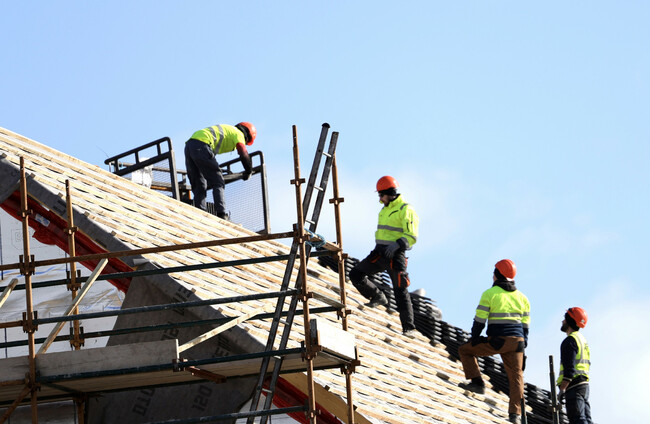
IRELAND MUST FIND an extra 100,000 construction workers in the next four years if the country is to meet its housing and infrastructure targets.
This means the workforce would have to grow by 50% by 2030.
That’s according to new stats by Property Industry Ireland (PII), the association representing the property sector.
It has expressed concern about a “severe” skills shortage and an ageing workforce.
A government housing plan published in November aimed to deliver a minimum of 300,000 new homes by 2031, or an average of 50,000 homes per year from 2026 onwards.
An internal report by the Department of Housing - which was circulated just one week after the government announced its plans – warned housing completions could begin to decline from 2028, citing a drop in planning approvals.
Figures published by the CSO in January showed there were 36,284 new houses built last year, almost 30% short of the average needed over the next five years.
The Irish construction sector currently employs over 177,600 workers. The new PII report states that between 95,000 and 110,000 additional roles will need to be filled to reach the 300,000 homes target in the desired timeframe.
It says many workers take jobs abroad where project returns are higher, which is contributing to the minimisation of Ireland’s workforce.
While workers are also immigrating, there is a shortage of homes for them in the areas where construction needs are greatest.
The lack of gender diversity in the sector is also an issue. Women account for just 9% of construction workers, with representation in trades as low as 1%.
“The industry is often stereotyped as physically arduous, unstable, and unsuitable for women, deterring young people, parents, and guidance counsellors from seeing it as a viable career path,” the report says.
PII says fragmentation in the Irish construction sector is another challenge.
In 2022, 99% of all active enterprises employed fewer than 20 people.
This structure, the report says, means it’s harder to provide widespread, formalised training.
“Smaller firms often lack the dedicated resources, administrative capacity, or financial buffer to invest heavily in upskilling staff or taking on a large number of apprentices, which can slow the adoption of new technologies and standards across the sector,” it said.
It recommended using new technology, including artificial intelligence, to automate administrative burdens, optimise project scheduling, and “significantly reduce waste”. This would free up workers to focus on construction.

To embed this post, copy the code below on your site














have your say