Sign in. It’s quick, free and it’s up to you.
An account is an optional way to support the work we do. Find out more.
Sign in. It’s quick, free and it’s up to you.
An account is an optional way to support the work we do. Find out more.
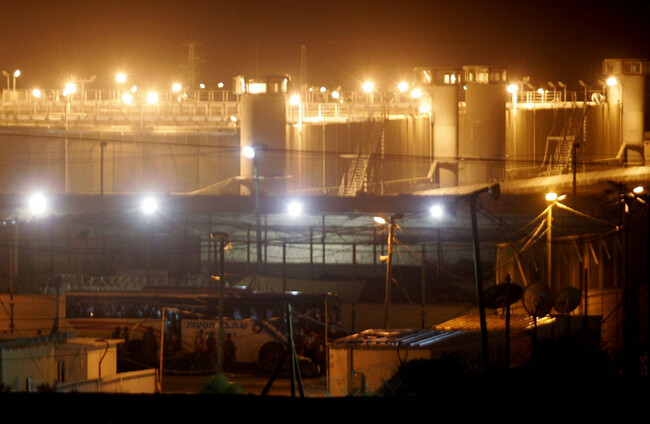
BEGINNING IN SEPTEMBER, hundreds of humanitarians set sail across the Mediterranean Sea in convoys carrying food, medical supplies and other essentials to the besieged Gaza Strip in Palestine, while Israel waged a war against the people there and continued to enforce its longstanding blockade.
Weeks later, Israeli forces intercepted many of the boats in international waters under cover of darkness and detained those on board at gunpoint. Politicians captured from the flotilla were deported straight away. Other activists were taken to the Israeli port of Ashdod, before being transported to the notorious Ketziot Prison.
Speaking to The Journal, Irish activists who were part of the flotillas detailed various forms of abuse and said their brief time in Israeli detention gave them some idea of what it is like for the more than 10,000 Palestinians currently held in Israeli jails, many without charge or trial.
Abuses described included sleep deprivation, dehydration, denial of medical care, forced stress positions “Guantanamo-style”, as well as being held incommunicado with no contact with the outside world and no sense of time.
Two flotillas were intercepted by Israeli forces in early October, the Global Sumud Flotilla and the Thousand Madleens/Freedom Flotilla, both of which had Irish citizens on board.
In some cases, the raids on the boats were aggressive, while others were less intense.
One of the Irish members of the Sumud Flotilla was comedian Tadhg Hickey. The raid on his boat, he said, was conducted by inexperienced soldiers who seemed nervous.
Sarah Clancy, a poet from Galway, was on the same boat and said they were “very young kids” and “extremely polite”.
Independent TD Barry Heneghan, who was on the later Thousand Madleens Flotilla, had a different experience, however, when his boat was boarded.
“They rammed our boat, screaming in the middle of the night, guns pointing at us.
You were treated like an absolute animal.
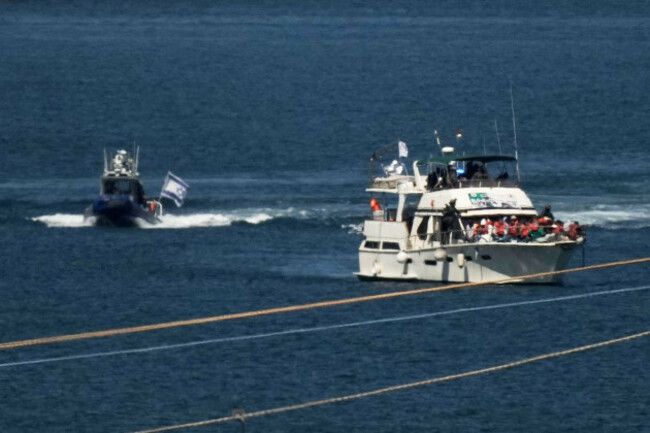
When they got to port in Ashdod, they were forced to kneel on the hot tarmac for hours in what some described as “an exhibition”. This was particularly hard on the elderly activists.
Their possessions – including medication – were taken, they said, and a number of people did not get them back.
“You’re zip-tied then, put in the back of a van for four hours, not told where you’re going,” Heneghan said of himself and the other elected politicians he travelled with, who were deported almost immediately.
Henaghan and Hickey both said that Arab and other non-white activists were given harsher treatment than their Western crewmates.
“They were very rough with anyone who is a person of colour. Anyone who’s a Muslim or from Arab countries they really hit and treated a lot worse than they would treat anyone else,” Heneghan said.
Human rights activist Tara Reynor O’Grady said that people were asked if they were Muslim or Christian and that the activists were separated based on the answers they gave.
Hickey also said Irish activists were treated worse than other Westerners.
“Germans and Americans were getting a different class of treatment,” he said.
“The Irish were treated almost on par with the Arabs,” Hickey said, adding that the guards and soldiers used the word Irish as “a term of contempt”.
Then Israel’s national security minister Itamar Ben-Gvir arrived at the port for what Hickey called “a PR stunt”, during which he called them “terrorists”.
Videos of Ben-Gvir, who himself has been convicted of supporting a terrorist organisation in the past, were shared online at the time.
#ICYMI: Israel’s National Security Minister Itamar Ben Gvir filmed himself taunting activists from the intercepted Gaza Sumud flotilla, baselessly calling them 'terrorists.'
— Al Jazeera English (@AJEnglish) October 5, 2025
The far-right minister has previously called for the activists to be jailed rather than deported. pic.twitter.com/lCfkrfyVCk
Israeli prisons and detention centres have been shown through numerous reports to be sites of serious human rights abuses, including sensory deprivation, rape and torture, especially since the Hamas-led attack of 7 October 2023.
After Ashdod, the activists were taken to Ketziot Prison in the Negev Desert, which Israeli human rights NGO B’Tselem lists as part of a network of “torture camps”.
All of the Irish activists who spoke to The Journal were keen to stress that what they experienced was only “a fraction” of what is visited upon Palestinians in Israeli prisons.
When they were allowed out of their cells, they were put into a yard, where a picture of the destroyed Gaza Strip was fixed to one wall with the caption: “The new Gaza”.
“We had the strong sense that we were in a place where huge harm has been done,” said Clancy while describing blood stains and inscriptions on the walls.
We knew we’d get out but at the same time you have this creeping sense of what it must be like (for Palestinians).
In prison, the activists had to go without food and drinking water for days at a time and said armed soldiers with dogs repeatedly entered their cells on the pretence of conducting head counts in order to deprive them of sleep.
The cells were “filthy” and because of its location in the Negev Desert, temperatures in the prison soared during the day and plummeted at night.
Some of the Irish detainees went on hunger strike, but for those who did eat, they were only given food intermittently – often with no cutlery or plates. At one point, pieces of chicken were dropped through the hatches in cell doors onto the floor without any plate or wrapping.
No clean drinking water was provided. Clancy said the water in the taps in the cells was “foul” but she eventually reached a point of dehydration when she “gave up and drank it”. She got sick as a result and has only recently recovered.
The conditions were harshest for the elderly and those with medical needs, one of whom was a 75-year-old Irish man with diabetes who did not receive insulin during his five days in Israel.
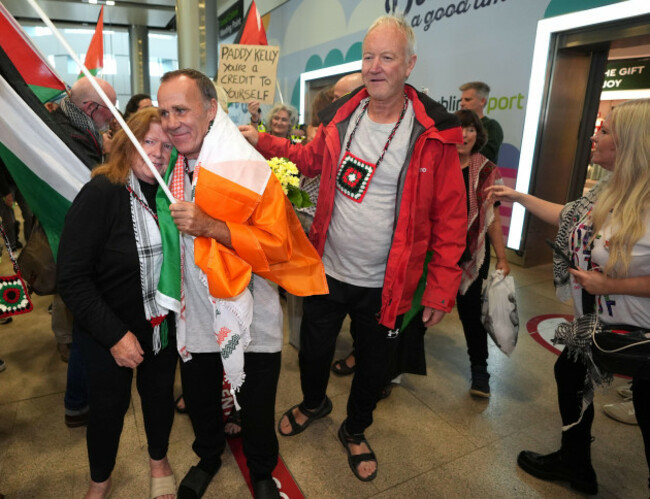
Clancy described how one woman in her cell was a cancer patient on pain medication, which she was denied. She only got medical attention “when we basically started a riot”.
Another Irish activist, Diarmuid Mac Dubhghlais, said one person had an asthma attack in his cell and that assistance only came after they spent hours shouting and banging on the cell door.
All the activists we spoke to shared similar view on the attitude of the soldiers and guards. Hickey said the Israeli tactics and abuses were “obviously upsetting and sadistic”, but also “ridiculous” and “petty”.
They were unpleasant and oppressive but we found them kind of pathetic as well.
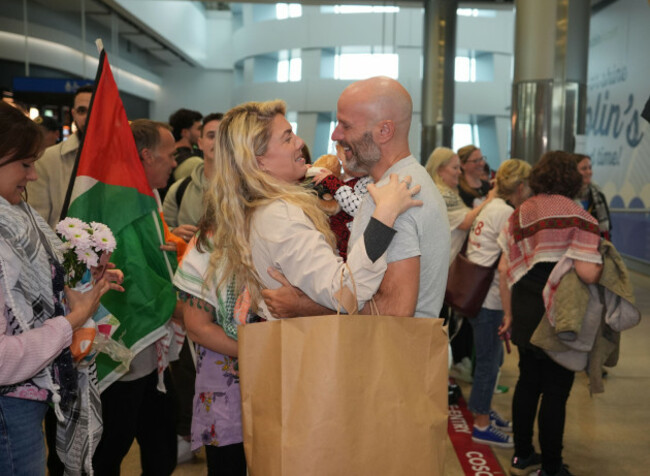
This pettiness is one of the overriding themes of the testimonies from the Irish activists.
Clancy also said the guards were poorly trained and unprofessional.
“You’ve no idea how disorganised they were,” she said – adding that a bouncer in a small Irish town would have better de-escalation skills.
Clancy said that the guards had obviously been told not to be violent with the detainees, and that it was clear “they were only used to running the prison with violence”.
To her, it seemed they resorted to using “people’s physical needs against them”.
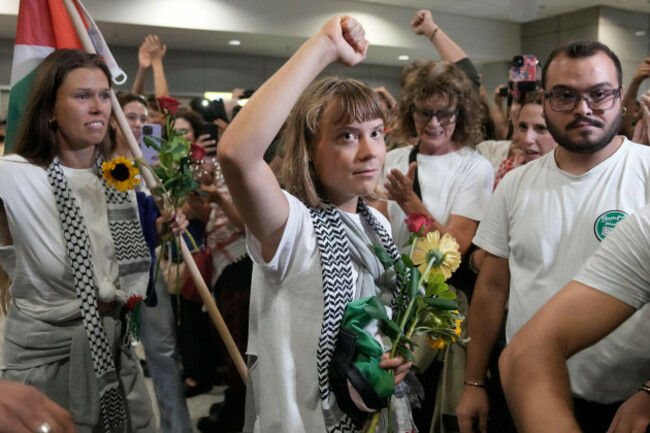
She shared a cell with Swedish activist Greta Thunberg and said Israeli authorities used her as a prop for propaganda videos.
“They tormented her,” she said, and often took Thunberg out for “some stupid kind of performance”.
The most violent incident described by the activists was one in which prison guards took exception to one woman carrying a bunch of mattresses while detainees were being moved to a new cell.
Clancy said the guards, mostly female, tried to drag the woman away and kicked her on the ground.
Another detainee grabbed hold of the woman (who wasn’t one of the Irish activists) to prevent the guards from taking her.
Clancy said the situation “escalated from nothing” and quickly led to the second woman being beaten on the ground.
“They were banging her head off the floor” while the activists shouted “stop this, this is only about mattresses”.
The detainees managed to drag the two women into the new cell. Clancy said the guards were incensed by this.
“Give us the two women, or we’ll gas the cell,” they were told.
Then a team of soldiers burst in.
“They pinned us back against the wall and took the two women away,” Clancy said.
They thought to themselves they shouldn’t have let them be removed and feared what would happen to them.
At the same time, though, “we were only ever a step from it being not okay”.
In each interview, all of the activists returned to the reason why they set sail for Gaza and the plight of Palestinians in Israeli prisons.
“We were in an entirely different scenario,” Clancy said.
Early one morning, she was woken by “the most anguished sounds of a man roaring” somewhere else in Ketziot.
“If they treat us like this, you can be sure that the people without the eyes of the world on them are being treated far worse.”
Need more information on what is happening in Israel and Palestine? Check out our FactCheck Knowledge Bank for essential reads and guides to navigating the news online.

To embed this post, copy the code below on your site











have your say