Sign in. It’s quick, free and it’s up to you.
An account is an optional way to support the work we do. Find out more.
Sign in. It’s quick, free and it’s up to you.
An account is an optional way to support the work we do. Find out more.
 GE2024Gaeilge
ONE-BY-ONE, political parties have committed to introducing bilingual packaging in their general election manifestos so that the Irish language is included on products in Ireland.
Fine Gael, Labour, People Before Profit, the Social Democrats and the Green Party have all, in one way or another, said that they would like to see Gaeilge appear on packaging.
Sinn Féin is expected to contain the measure in its manifesto, set to be published tomorrow, and has campaigned on the issue since the Official Languages (Amendment) Act was tabled in the last Dáil in 2020.
Though not appearing in its manifesto, there is strong support for the measure in Fianna Fáil for the policy.
This cross-party promise is the result of the work of Cian Ward, a 28-year-old Cavan man who thought of the idea when living, like so many young people, in Canada.
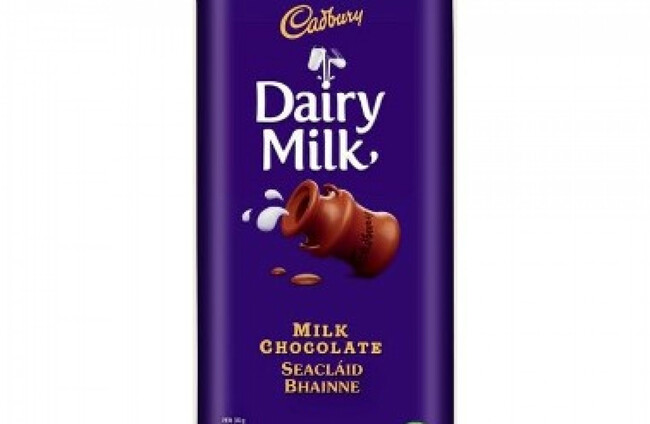
Ward said: “I was living in Montreal in the summer of 2019. You go into the supermarket and see everything there is in both French and English.
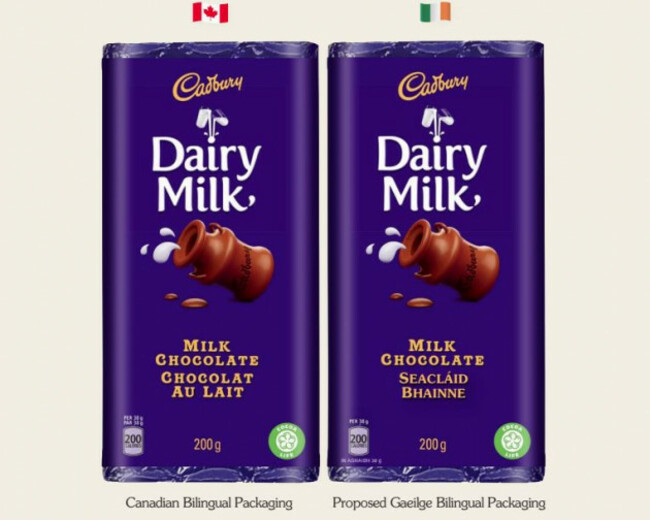
“I’m not a graphic designer, so I wouldn’t look at a box and think: ‘I could fit a second language on there’. But, when you see it done you realise it’s political choice and not a constraint of reality or space.”
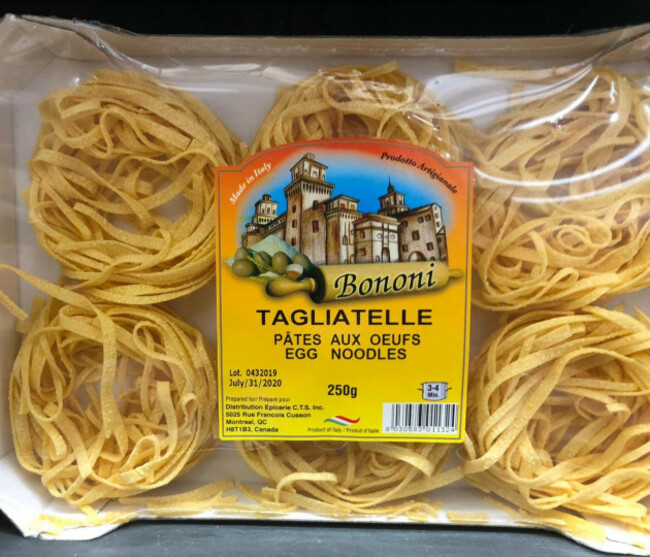
Upon returning to Ireland in 2020, during the first Covid-19 lockdown, Ward began emailing TDs and local councillors to gauge the level of support for introducing Irish-English packaging.
Ward told The Journal that he felt he was pushing on an open door in many cases and that most political parties, other Irish language campaigners and Conradh na Gaeilge quickly took to the idea.
An impromptu, and viral, social media post supporting the idea from Senator Malcolm Byrne and lobbying within government from the Green Party’s Marc Ó Cathasaigh soon followed.
His campaign received cross-party support at the Oireachtas Gaeilge committee.
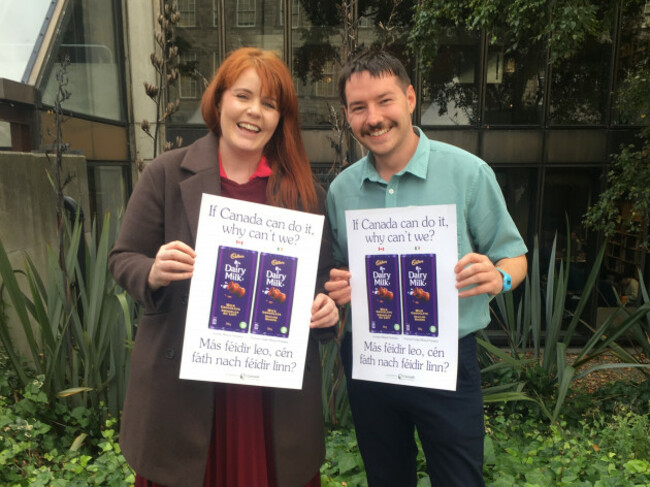
Ward particularly mentioned a Sinn Féin parliamentary assistant, Eoghan Ó Finn, who promoted the idea to TD Aengus Ó Snodaigh and pushed the party to adopt a commitment to introduce bilingual packaging as internal party policy in 2022.
“If they had a fada their name, I’d use that as a good shorthand for possibly having a fondness for Irish,” Ward said.
Along with General Secretary of Conradh na Gaeilge and campaigner Julian De Spáinn, graphic designer Róisín Jordan and other senators, TDs and government backbenchers, Ward’s idea began to have a good bit of momentum.
Within two years, he and other campaigners were present in meetings between commercial sector representative Ibec and junior enterprise minister Dara Calleary as well as a briefing with then-minister for the Gaeltacht Jack Chambers.
“When it comes to reviving the Irish language outside of the Gaeltacht, and when it comes to supporting speakers and learners it’s every little helps,” Ward said.
“It has to be a very holistic thing, you know? Just doing bilingual packaging won’t revive anything by itself. It only helps for other initiatives like language classes, culture and that sort of thing.”
Ward added: “When people are confronted with Irish, some will try their best to learn it. So the more they’re confronted with it, the more they’ll make the effort.”
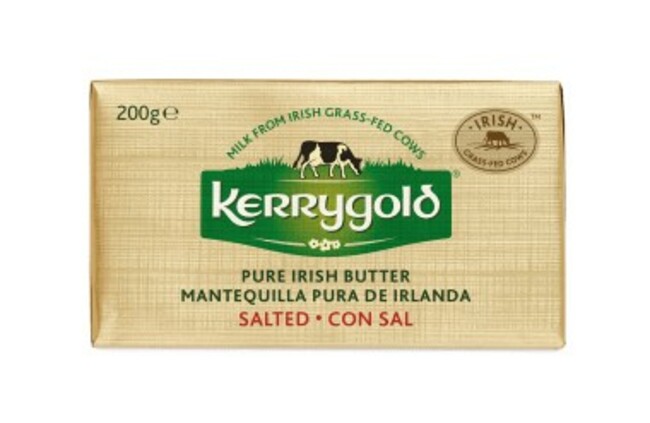
So far, Ward said, the main opposition to the idea has been the additional cost that are associated with altering and printing different packaging. He said his campaign is angled more towards multinational firms, rather than small-or-medium enterprises.
Ward argued that – in most cases – the larger companies are already producing dual-language labels in Canada, where it is a legal obligation.
Ward said that he’d prefer that it Ireland introduced similar legislation, making bilingual packaging mandatory, while others are hoping for a ‘norm cascade’ approach from one or two companies.
He added that he would like to see the parties who have committed to the idea in their manifestos push it further when taking up their seats in the Dáil.
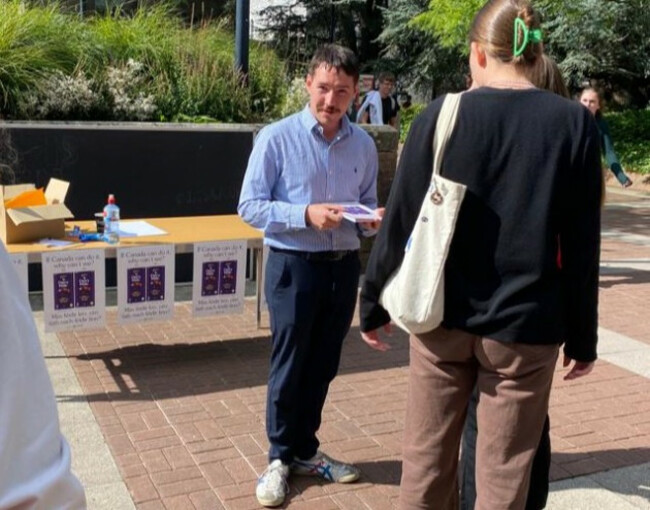
“It’s been very fun,” Ward told The Journal. ”The way I see it is, there’s so many fantastic supports for the Irish language, but this is the thing that connects us all together.”
“Irish society is an anglo society in the commercial space and everywhere you go. Trying to learn Irish is remarkably difficult – not because the language is difficult, but it’s the same as if you tried to learn Korean in Ireland, but you basically can’t immerse yourself.”
He added :”There’s plenty of small towns, in the midlands in particular, where there’s no presence of it. This would change that. That’s the kind of big inspiration for me.”

To embed this post, copy the code below on your site













have your say