Sign in. It’s quick, free and it’s up to you.
An account is an optional way to support the work we do. Find out more.
Sign in. It’s quick, free and it’s up to you.
An account is an optional way to support the work we do. Find out more.
(Seo alt ónár bhfoireann nua Gaeltachta. Is féidir an bunleagan as Gaeilge a léamh anseo.)
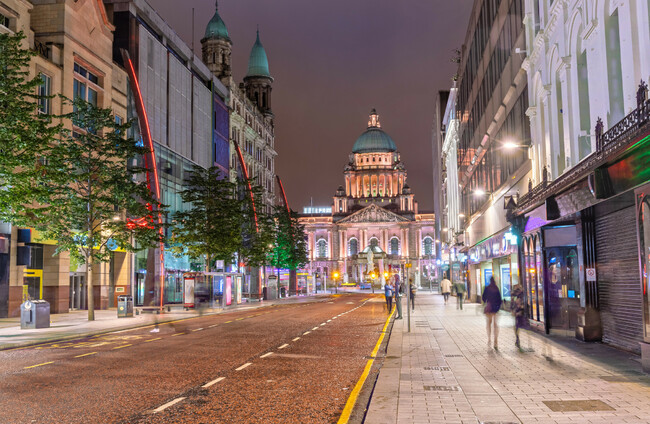
UNIONIST COUNCILLORS HAVE pledged to fight “tooth and nail” a new Irish language policy approved at last night’s monthly meeting of Belfast City Council which will result in dual language signage, stationery and logos on staff uniforms for workers in the council administering Northern Ireland’s capital city.
Sinn Féin, SDLP, Alliance, Community Before Profit and Green Party councillors voted in favour of ratifying the draft policy, while the DUP, UUP and TUV voted against. Last night’s vote was the final hurdle in a lengthy process which received a significant boost last monthwhen councillors approved a budget of £1.9m for the implementation of the policy.
The latest vote means that the Council will work to promote and use the Irish language in the various services provided by the local authority.
According to a statement issued by the Council following the vote last night, the new policy will include “interpretation and translation, core documents and publications, signage in its facilities, on the Council’s website and as part of the Council’s corporate identity, including its logo”.
This policy has been under discussion for months now and Sinn Féin Councillor Natasha Brennan, chair of the Strategic Policy and Resources Committee which was in charge of the discussions and negotiations on the policy had this to say about it:
This policy is a historic milestone for the Irish-speaking community in Belfast, and for our Council.
“We have committed £1.9 million over the next two years to implement the policy, and will be providing regular updates to councillors, so that we can monitor the progress we are making and see the gradual increase in access to our services and facilities, through the medium of Irish.”
Unionist councillors have said they will fight fiercely against the new policy, claiming that the policy which allows the council to put up bilingual signage across the city is “disgraceful”.
DUP councillor Ruth Brooks said there was a lack of transparency and openness about the policy, its impact and the cost of implementing it.
“We tried to discuss this at the Strategic Committee, what it would mean for logos on staff uniforms and the timeframe for implementation,” she said, also referring to the need for a breakdown of the £1.9m that would be spent on implementing the policy.
Councillor Ron McDowell, who is a member of Jim Allister’s party, the TUV, said the policy would be fought fiercely.
On BBC Northern Ireland’s Stephen Nolan Live programme last night, Unionist activist Jamie Bryson suggested that the campaign against the Irish language should be stepped up, saying that hundreds of British flags should be flown in response to efforts to implement the policy.
“The days of unionists sitting back and accepting nationalists getting their way are over,” he said. He indicated that an attempt would be made to stop the policy and said that a process would be initiated to review it.
Conradh na Gaeilge has welcomed the new policy, saying that they have been working in collaboration with other interested parties for almost half a decade, referring to the success of the Irish language in the city, including the growth of Irish-medium education and others. This was stated by Ciarán Mac Giolla Bhéin, President of Conradh na Gaeilge.
In recent years, the Irish-speaking community has been fighting day after day to push forward language rights in our institutions and public spaces.
“We helped design the policy in accordance with the fundamental principles of equality set out in the Good Friday Agreement which directs our authorities to take ‘decisive action’ for the Irish language.
“We took into account guidance from the United Nations, the Council of Europe, the Equality Commission, the Human Rights Commission and Foras na Gaeilge.”
The Journal’s Gaeltacht initiative is supported by the Local Democracy Reporting Scheme

To embed this post, copy the code below on your site












have your say