Sign in. It’s quick, free and it’s up to you.
An account is an optional way to support the work we do. Find out more.
Sign in. It’s quick, free and it’s up to you.
An account is an optional way to support the work we do. Find out more.
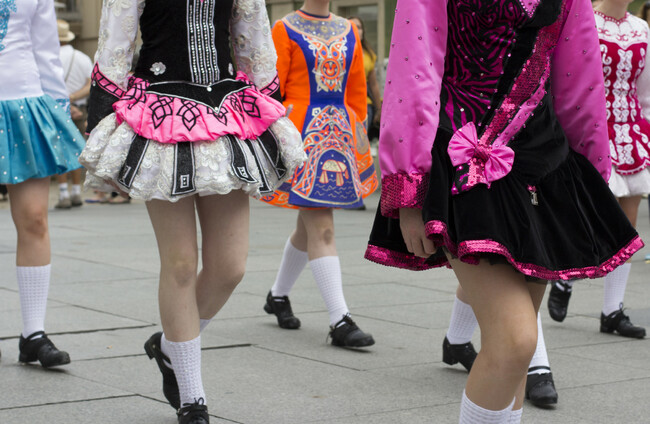
IRISH DANCING IS a significant part of Irish culture, but some former competitive dancers and parents have reservations about the Irish dancing world, describing it as “akin to beauty pageants”.
Wigs, fake tan, makeup, false eyelashes and glue used to prevent socks falling down, have all become customary in competitive Irish dancing.
Former Irish dancer Méabh Delaney told The Journal that she views Irish dancing competitions as an “Americanised beauty contest covered up with a few Irish jigs”.
“It was so over the top,” Delaney said, recalling the expense and costumes.
“It’s a money racket, with young girls and boys being judged on their appearance. At times it felt as though it was 30% dancing and 70% how you looked,” she said.
There is no official scoring rubric for Irish dancing, and items such as wigs are not officially required by the Irish Dancing Commission, but some parents have said that if a competitor is wearing their natural hair and a plain dress, they can “forget winning”.
The World Irish Dancing Association told The Journal that dancers are successful regardless of the costume worn, or their hair and makeup.
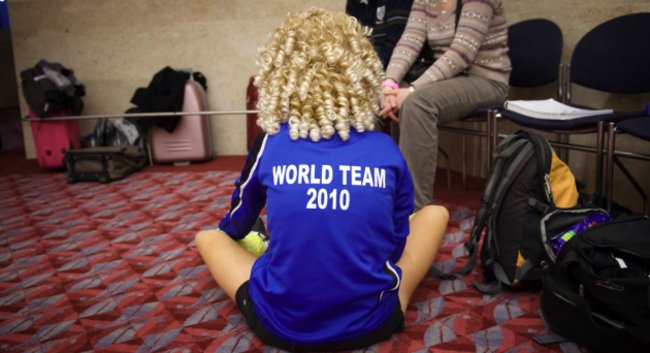
The World Irish Dance Association allows dancers to wear bun wigs but not full wigs in under-15 age categories, and does not allow other embellishments such as buckles on shoes for any dancers.
It also does not allow makeup or fake tan for any child in the age category up to under eleven.
It does require dancers to be in full dancing costume when receiving awards.
The rules state: “Dancers who are not in full dancing costume will not be allowed to accept an award”.
There are also strict rules on costume malfunction; one point is docked from a dancer’s performance for each malfunction, which includes a wig falling or shoelace coming undone.
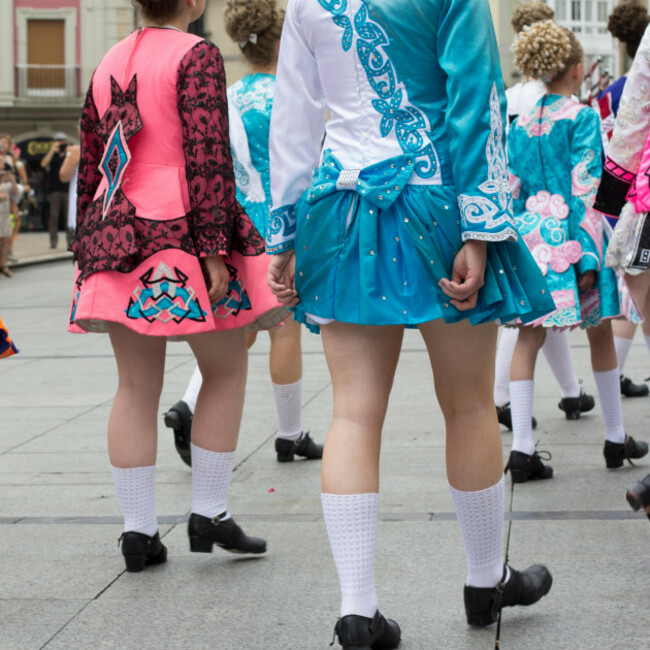
Irish dancing dresses for solo performances can cost over €1,500, while wigs and shoes can both cost over €100 each.
Since 2014, the Irish Dancing Commission banned children in under-10 age groups from wearing makeup. However, children aged below 10 can wear makeup if they are competing in older age groups.
Another form of Irish dancing called festival dance, which is more popular in Northern Ireland, often prohibits or discourages the use of wigs and fake tan, and generally involves the use of more simple dresses, as is traditional to the dance.
Eliza Appezzato, from Kilkenny, competed in Irish dancing from ages four to 18, reaching the highest grade possible.
Speaking to The Journal, she said the focus on appearance, particularly in competitions, takes away from the sport.
“It is actually pageantry. It’s a shame as it’s such a nice cultural thing,” she said.
“I think when you’re in it, it’s so normal, now, looking back, it’s so crazy. All the things you had to do for competitions were crazy,” she said.
She said that she feels that too much pressure is put on competitive dancers to focus on their appearance in order to score highly.
“It was never even an option not to wear a wig,” she said, explaining that although the rule is not official, they are the widespread standard and she feels she would not have been able to win a competition without wearing one.
“There’s a very specific body type in Irish dancing,” she said, adding that it would have been unusual to see a child that was not thin compete in the sport.
Before each competition, Eliza remembers feeling very anxious, as points could be docked for small flaws in your appearance.
She also recalled a high-pressure atmosphere, with some parents being “very competitive”.
When asked if she would let her child compete in the sport, she said she isn’t sure.
“I love Irish dancing, but I just don’t know about the whole competition aspect,” she added.
Eliza’s mother Kelli told The Journal that as someone who didn’t grow up in Ireland, she didn’t fully grasp the culture of Irish dancing and just encouraged her daughter to have fun, but she noticed other parents placed pressure on their children to compete to a high standard.
“Our attitude was we would let [the kids] do what they wanted for as long as they enjoyed it,” she said.
She said Irish dancing culture was more relaxed while in primary school, but she noticed an increase in the focus on appearance and intense rivalry in competitions when Eliza entered secondary school.
Kelli also highlighted the “financial pressure” that came with the sport.
“Socks, shoes, wigs, it was constant. Especially at that age, your feet are growing. Every year we got new soft shoes and hard shoes, it could get quite expensive,” she said.
She doesn’t see Irish dancing as pageantry, but can understand how, for a teenage girl, the pressure on appearance could have felt that way.
Other parents have said that the sport can be enjoyable and manageable, particularly when enjoyed recreationally rather than competitively.
One parent said online: “My daughter absolutely loves it and her teachers are great. A tenner a class is the going rate for these things”.
But others criticised the sport due to the emphasis on beauty standards as well as the expense of wigs and dresses, and its competitive nature.
“Stay far away from it”, one parent said.
Another parent said: “It’s atrocious, essentially just child pageants. Forget about the financial aspect, the culture is disgusting. I’d love to know the mental health impact on the children. Parents lose the rag and the competitiveness is off the charts.”
The Irish Dancing Commission declined to comment on the subject.
The “pageantry” of Irish dancing likely developed from both tradition and practicalities to become the culture we see today.
Irish dancing is believed to have originated in casual dances held after mass on a Sunday.
Women would allegedly curl their hair before mass and wear their best dress, which has led to the modern tradition of wearing extravagant dresses and curly wigs.
Erica Maslowski, an Irish dancing teacher, said in a video that people view the skills of an Irish dancer based on how bouncy their curls are.
Speaking online, many Irish dancers said that because of this, wigs are an option which level the playing field for dancers, as not everyone’s hair is easily manageable or holds curls well.
A Reddit user said: “I have long, naturally curly hair and ironically that’s why I wear a wig. Curly hair is notorious for doing its own thing, and I can’t handle the added stress of my hair not cooperating on the day of a competition.”
Another dancer said wigs reduce the stress of getting ready as she doesn’t have to wear hair curlers to bed the night before.
Other dancers said the wig helps improve their confidence and allows them to step “into character” before competing.
Costume maker Elevation designs says on its website that Irish dancing dresses were originally plain and simple, but as the sport evolved and became more international, partly due to the popularity of performances such as Riverdance, the dresses also changed.
It said dresses became brighter and more embellished, while the development of new materials changed costumes as more flexible materials were incorporated.
As described in a video by Irish dance teacher and former Riverdance member, Ruth McKenna, Irish dancing is performance art as well as a sport.
In this way the elaborate costumes make sense when compared with dances in other cultures, such as German folk dancing, where dancers also wear specific costumes.
The popularity of fake tan and elaborate makeup is controversial, but the reasoning behind it is allegedly to prevent the bright stage lights making dancers appear paler and washed out.
Some dancers said tan also increases the appearance of muscle definition, which they believe may help their score.
Other dancers said they wear tan as it has become “standard”.
The use of sock glue is also meant for the practical purpose of preventing socks from falling, which could lead to points being docked in a competition.

To embed this post, copy the code below on your site













have your say