Sign in. It’s quick, free and it’s up to you.
An account is an optional way to support the work we do. Find out more.
Sign in. It’s quick, free and it’s up to you.
An account is an optional way to support the work we do. Find out more.
LAST UPDATE | 24 Sep 2024
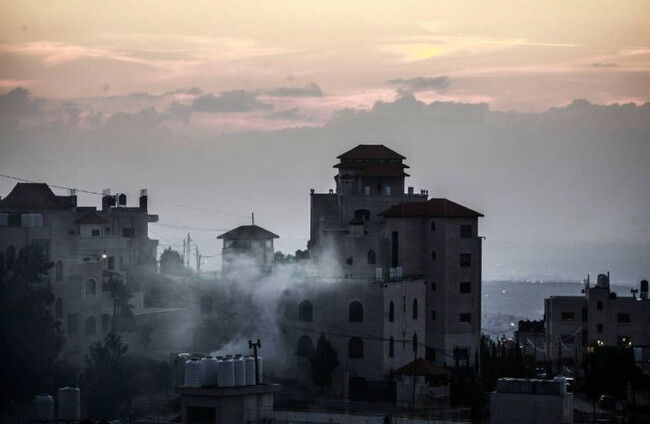
ISRAEL AND HEZBOLLAH traded heavy fire today as the conflict continued to intensify following waves of exploding portable devices rocked Lebanon last week.
Israeli bombs continued to pound Lebanon today as world leaders called for restraint and a diplomatic resolution in speeches at the UN General Assembly in New York.
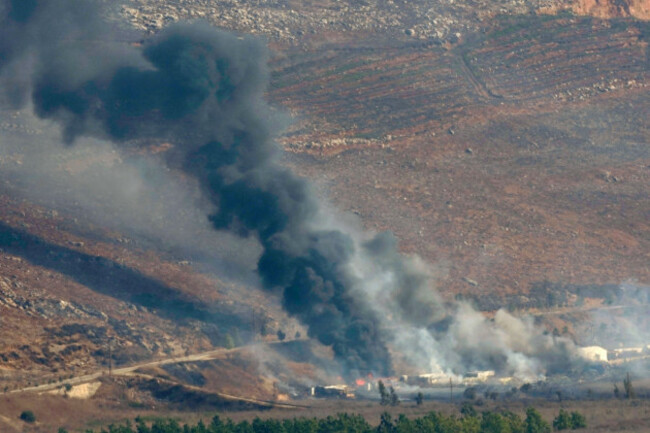
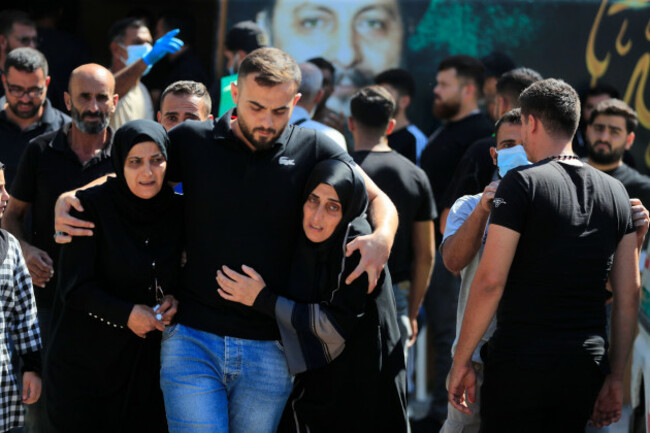
Lebanon said Israeli strikes killed at least 558 people yesterday, marking the deadliest day of violence in the country since its 1975-90 civil war.
Hezbollah claimed 18 attacks on Israel today, while the Israeli military said the group fired about 300 rockets across the border.
Lebanese Health Minister Firass Abiad, who gave Monday’s toll of 558 dead, said the “vast majority, if not all, of those killed in yesterday’s attacks were unarmed people in their homes”.
His office said another six people were killed t in today strike on south Beirut.
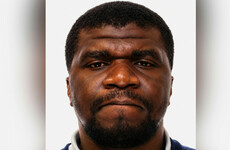
Israel said it “eliminated” Hezbollah’s rocket forces commander Ibrahim Kobeissi in the strike on the Lebanese capital. A source close to Hezbollah also said Kobeissi had been killed.
In the evening, the Israeli military said it was “currently conducting extensive strikes on Hezbollah terror targets in Lebanon”.
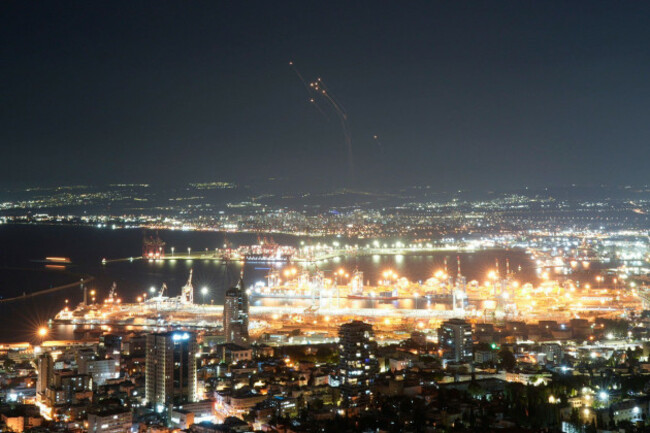
Lebanon’s official National News Agency later reported extensive Israeli strikes, particularly in the south but also in the east.
The UN refugee agency said it was “outraged” after one of its staff members and a contractor were killed.
The UN’s High Commissioner for Refugees Filippo Grandi said Israeli airstrikes “are now relentlessly claiming hundreds of civilian lives” in Lebanon.
Thuraya Harb, a 41-year-old housewife at a makeshift centre for displaced families in Beirut, described Monday as a “day of terror”.
“I didn’t want to leave my home, but the children were scared,” the mother of four said, adding that her family fled “with nothing but the clothes on our backs”.
Not all the displaced stayed in Lebanon. A security official in neighbouring Syria told the AFP news agency about 500 people had crossed the border to flee the bombing.
United Nations Secretary-General Antonio Guterres warned the situation in Lebanon was critical.
“We should all be alarmed by the escalation. Lebanon is at the brink,” he said, while cautioning against “the possibility of transforming Lebanon (into) another Gaza”.
US President Joe Biden warned against a full-blown war in Lebanon, in his speech during the New York gathering.
“Full-scale war is not in anyone’s interest. Even though the situation has escalated, a diplomatic solution is still possible,” Biden said.
Prime Minister Benjamin Netanyahu vowed to continue the devastating air campaign in Lebanon.
“We will continue to hit Hezbollah… the one who has a missile in his living room and a rocket in his home will not have a home,” he said.
Israeli military spokesman Rear Admiral Daniel Hagari said “approximately 300 rockets were fired at Israel… injuring six civilians and soldiers, most of them lightly”.
He added that Israeli jets “precisely attacked a floor of the building” where Kobeissi was located in Beirut, adding that at least two commanders from his force were “eliminated”.
The United Nations said tens of thousands of Lebanese had fled their homes because of the Israeli bombardment.
Iran, Hezbollah’s main backer, condemned the raids, with its president, Masoud Pezeshkian, saying its ally “cannot stand alone” against Israel.
“We must not allow Lebanon to become another Gaza at the hands of Israel,” he said.
Other leaders have expressed alarm over the rapid escalation, with the European Union’s top diplomat Josep Borrell warning “we are almost in a full-fledged war”.
A US official, speaking on condition of anonymity, said Washington opposed an Israeli ground invasion targeting Hezbollah and had “concrete ideas” on how to de-escalate the crisis.
Israel’s ambassador to the UN Danny Danon meanwhile said Israel was “not eager to start any ground invasion” in Lebanon.
Hezbollah and Israel have been locked in near-daily exchanges of cross-border fire since Palestinian militants led by Hamas launched an unprecedented attack on Israel in October last year.
The Hamas attack sparked a war in Gaza that has drawn in Hezbollah and other anti-Israel and anti-US militant groups from across the Middle East, including Yemen and Iraq.
With reporting from AFP

To embed this post, copy the code below on your site









have your say