Sign in. It’s quick, free and it’s up to you.
An account is an optional way to support the work we do. Find out more.
Sign in. It’s quick, free and it’s up to you.
An account is an optional way to support the work we do. Find out more.
LAST UPDATE | 30 Apr
WHILE BRITAIN’S KING Charles received a royal welcome in every sense of the word from Donald Trump, there was a frostier welcome awaiting Charles in New York yesterday.
Charles yesterday visited New York on the third day of the monarch’s visit to the US.
He and Camilla attended a 9/11 memorial event and left with a bouquet of flowers at the imposing memorial in New York.
Speaking on Tuesday after hosting Charles at the White House, US president Donald Trump said it was a “tremendous privilege to host” Charles.
Trump also described Charles as a “very elegant man” and revealed his mother, Mary, had a “crush” on Charles when he was younger.
But while Charles was feted by Trump in Washington, New York City mayor Zohran Mamdani turned down an opportunity to meet privately with the British monarch.
“The mayor will not meet privately with King Charles,” Mamdani’s press secretary confirmed yesterday.
“But the mayor will be at the wreath laying ceremony today,” added the press secretary.
Before the 9/11 memorial event yesterday, Mamdani was asked what he would discuss with Charles if he had the chance.
Journalist: King Charles will be in New York. What will you say to him?
— Shashank Mattoo (@MattooShashank) April 29, 2026
Mamdani: I would highly encourage him to return the Kohinoor Diamond if I were to speak with him pic.twitter.com/J0JhQ4syqf
“If I was to speak to the king, separately from that, I would probably encourage him to return the Koh-i-Noor diamond,” the leftist mayor said, adding that his focus would be honouring those killed in the terror attacks.
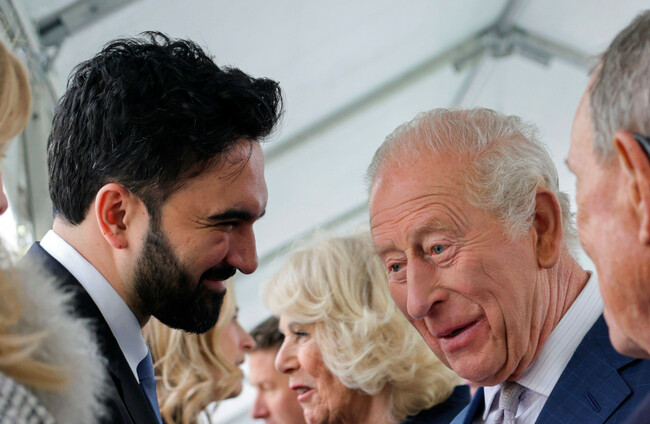
Charles was later seen at the 9/11 event laughing with Mamdani and having a brief conversation after they shook hands.
It’s unclear whether Mamdani followed through and brought up the contentious subject when the two met.
King Charles shakes hands with New York Mayor Zohran Mamdani during his visit to the 9/11 Memorial in New York.https://t.co/wZGgK7RyLG
— Sky News (@SkyNews) April 29, 2026
📺 Sky 501, Virgin 602, Freeview 233 and YouTube pic.twitter.com/Dizixu1rop
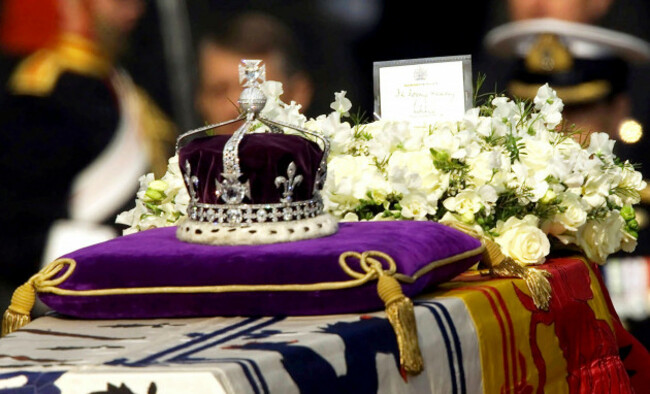
Housed in the Tower of London, the massive 106 carat stone is the star of Britain’s crown jewels, adorning the Crown of Queen Elizabeth the Queen Mother.
The ownership of the jewel has been contested over the centuries, passing through the hands of Mughal emperors, Iranian shahs and Sikh maharajas before the Kingdom of Punjab gave it to Queen Victoria in 1849 as part of a peace treaty.
India has repeatedly and unsuccessfully sought the return of the priceless jewel.
While there is little doubt it was mined in India, its history thereafter is a mixture of myth and fact, with several countries including Afghanistan, Iran and Pakistan also laying claim to the gem.
A politician from the anti-immigration Reform UK party was quick to slam the comments as an “insult to our King.”
“This beautiful diamond is currently on display in the Tower of London,” the party’s home affairs spokesman Zia Yusuf said in an X post. “That is where it will stay.”
Mamdani’s father, Mahmood, is an academic whose work is focused on colonialism and post-colonialism.
Mamdani meanwhile last month praised Ireland for its resistance to British rule.
In remarks on St Patrick’s Day, Mamdani name-checked James Connolly, Pádraig Pearse and Roger Casement and added: “Irish solidarity is no coincidence, as it was on Irish soil that the British Empire developed their colonial project.
“So much of the exploitation later imposed elsewhere across the world was honed first in the plantations in Ireland.”
He added that the “story of Ireland is not merely one of violent oppression or of attempted domination” but that “it is one of resistance too”.
“I think of leaders like James Connolly and Patrick Pearse, who roused hundreds of thousands with demands of political freedom and economic self-determination,” said Mamdani.
“I think of those who endured unimaginable hardship during the Troubles. The 10 prisoners who died after going on hunger strike to protest the British government’s refusal to deem them political prisoners.”
And with additional reporting from © AFP 2026

To embed this post, copy the code below on your site












have your say