Sign in. It’s quick, free and it’s up to you.
An account is an optional way to support the work we do. Find out more.
Sign in. It’s quick, free and it’s up to you.
An account is an optional way to support the work we do. Find out more.
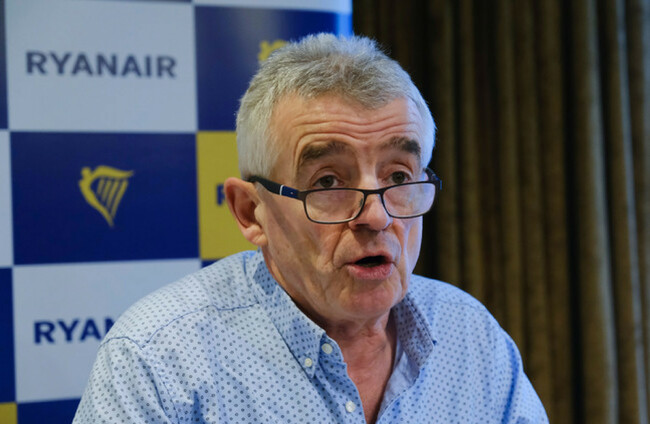
CEO OF RYANAIR Michael O’Leary will appear before the Oireachtas joint-committee on transport and communications networks next week to discuss the impact of the passenger cap at Dublin Airport on Ryanair’s business and operations.
Current planning permission at Dublin Airport states that the annual passenger cap, meaning the maximum number of people who are able to go through the airport each year, is set at 32 million.
O’Leary, who has long been very critical of the cap, called for the Minister for Transport Eamon Ryan to resign and has claimed that the limit has impacted his business, will discuss the planning regulation with TDs and Senators on Tuesday.
According to Ryanair boss, the passenger cap has not only stopped him from making more flights available for potential customers, but it has also resulted in increased prices for tickets.
In March, Ryan met with O’Leary and claimed the pair had a discussion that was concentrated on the issues, rather than personalities.
O’Leary said him and other Ryanair representatives were “very critical” of the Green Party and claimed that the refusal to scrap the cap sent a message to other markers that Ireland was “closed for business”.
After the meeting, the transport minister confirmed that the two men had disagreed over the passenger cap, but did agree when discussing sustainable aviation fuels. However, according to Ryan, lifting the cap would “completely undermine our planning system”.
The airport’s operators are also hopeful that the cap will be scrapped, with CEO of DAA Kenny Jacobs telling reporters last month that Dublin Airport also needed to be reclassified as strategic infrastructure.
Jacobs added that he believed there were higher chances that the cap would come to an end after a similar arrangement at Schiphol Airport, in the Netherlands, was thrown out by the European competitions court.

To embed this post, copy the code below on your site












have your say