Sign in. It’s quick, free and it’s up to you.
An account is an optional way to support the work we do. Find out more.
Sign in. It’s quick, free and it’s up to you.
An account is an optional way to support the work we do. Find out more.

RECORDING FOOTAGE WITH a headcam or GoPro might give you some amazing views, but it’s very likely that the resulting footage will be incredibly shaky as a result.
That may be a thing of the past thanks to a recent project from Microsoft Research. It has created an algorithm that will convert first-person videos, like those captured with a helmet camera during activities like rock climbing and cycling, into smooth hyperlapse videos.
By reconstructing the scene recorded by using a depth map, the algorithm can then stitch together an image from each frame – the view slightly different from the original – and create a smooth video that is easier to watch.
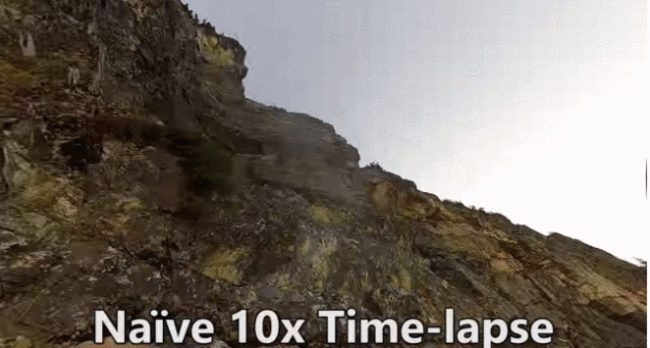
Although there are some elements that need work, some of the scenery does appear randomly or sharpens when it comes into view, it’s still an impressive achievement with much potential.
The team is currently working on making the hyperlapse algorithm available as a Windows app.
To get an idea of how it works, here are comparison shots of raw footage and hyperlapsed footage.
And if you want a more technical explanation, here are the researchers going into greater detail about their findings.

To embed this post, copy the code below on your site















have your say