Sign in. It’s quick, free and it’s up to you.
An account is an optional way to support the work we do. Find out more.
Sign in. It’s quick, free and it’s up to you.
An account is an optional way to support the work we do. Find out more.
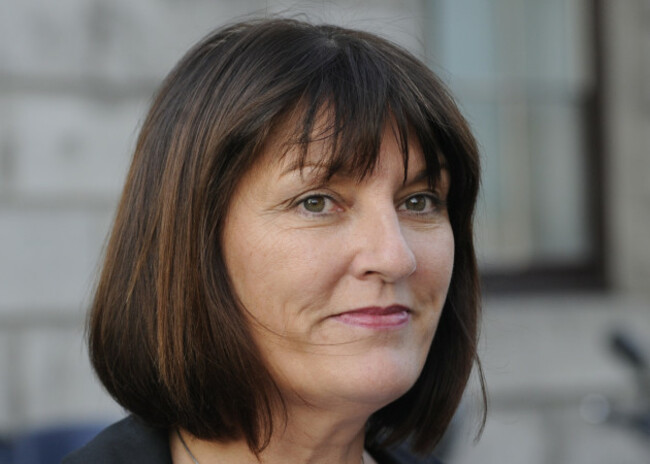
A WOMAN WHO received one of the biggest defamation settlements in the history of the State is suing the solicitors firm who represented her in three of her legal actions.
Communications consultant Monica Leech began proceedings against renowned legal firm McCann FitzGerald earlier this week in the High Court.
The firm had been Leech’s representatives for three separate libel actions taken against Independent News and Media, the parent company behind titles such as the Irish Independent and the Herald, in 2005.
Both McCann FitzGerald and Waterford firm Kennedy Stephenson Chapman (which is representing Leech, herself a Waterford native) declined to comment on the nature of the litigation, saying that given the ongoing nature of the case it would be inappropriate for them to do so.
Attempts to contact Leech herself proved unsuccessful prior to publication.
Libel actions
Now aged 57, Monica Leech became well-known in Ireland after taking a number of high-profile libel actions in 2004.
One of those actions related to a series of 11 articles published in what was then the Evening Herald which falsely alleged that Leech had received certain public contracts from the Department of the Environment because of an alleged relationship with the then Fianna Fáil Environment Minister Martin Cullen.
The same erroneous allegation was inadvertently broadcast on RTÉ radio’s Liveline in late 2004, leading the state broadcaster to apologise unreservedly to Leech and to pay her €250,000 in damages.
In 2009, she won a High Court libel action against Independent News and Media (INM). In that case, the jury found that there was no extra-marital affair, that Leech had been defamed by the articles and awarded her €1.87 million.
The media company subsequently had that figure reduced to €1.25 million by the Supreme Court on appeal.
INM then complained to the European Court of Human Rights that the damages awarded amounted to a violation of freedom of expression.
Although unanimously upholding the company’s complaint in June 2017, the court accepted that Leech had been defamed in a serious manner.
In their judgement, however, the panel of seven judges contended that unreasonably high damages for defamation claims can have a chilling effect on freedom of expression, and therefore there must be adequate domestic safeguards so as to avoid disproportionate awards being granted.
That judgement had no impact upon the €1.25 million figure owed to Leech, but was rather seen as indication that the Irish legal system needs to control defamation damages costs being awarded by juries.
Comments are close as the case is before the courts

To embed this post, copy the code below on your site















have your say