Sign in. It’s quick, free and it’s up to you.
An account is an optional way to support the work we do. Find out more.
Sign in. It’s quick, free and it’s up to you.
An account is an optional way to support the work we do. Find out more.
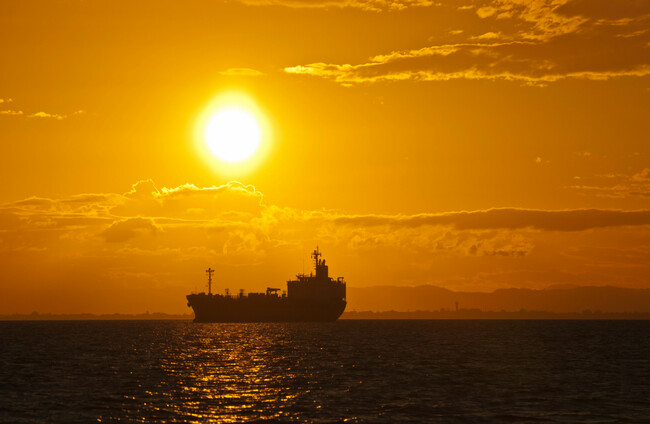
CARGO SHIPS DELIVERING large amounts of cocaine and other drugs to Ireland are suspected of making deliveries off the coast of Spain and Africa before coming to Irish shores, The Journal has learned.
The ships, which are colloquially called motherships, meet smaller vessels off the coast and transfer the drugs in a process known as “coopering”.
Sources have said that there is growing evidence that the drug ship, the MV Matthew, the site of Ireland’s biggest ever drug seizure, may have made a drop-off at the Canary Islands before moving on towards Ireland in September 2023.
It is believed that a shipment of drugs last week may have performed a similar delivery off the coast of Spain, having travelled from South America before coming up towards Ireland.
The transport of the huge quantities of drugs – there was an estimated €157 million worth of cocaine on board the MV Matthew – involves, for the most part, legitimate ships that are bringing goods or raw materials to Europe.
Security sources have told The Journal that they are seeing a massive spike in intelligence analysis identifying corrupt crew members who are facilitating the trade.
Sources said not all of the crew on the ships transporting large amounts of drugs, who are generally low-paid workers, are aware of the illegal cargo, but that there are some sailors on these ships arriving into Ireland that have done deals with drug cartels.
Sources said some of the ships have tacit approval from captains and shipping companies for drug cartel operatives to travel on the voyage across the Atlantic. A pattern has been spotted where these people are listed as having unusual and extremely specific jobs such as air conditioning specialists – they are also listed aboard as ill-defined as cleaners.
On the MV Matthew, a man called Cumali Ozgen was listed as a cook and cleaner for the ship, but was in reality a major player in the cartel that organised the transport of the drugs. Rather than staying with other low-level employees on the ship during the voyage, he was in a plush pilot cabin next to the bridge to monitoring proceedings.
Ozgen was born in Turkey but had moved to the Netherlands, where it is suspected that he had connections to an Iranian/Dutch and north African gang. He got the biggest sentence last week out of the eight men who got jail terms for their role on the MV Matthew, receiving 20 years.
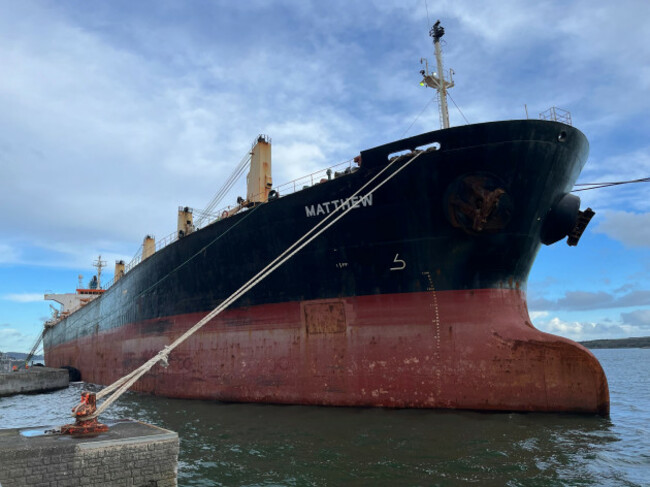
The MV Matthew was an outlier: sources have said that the vast majority of shipments coming into Ireland with large-scale quantities of drugs are onboard ships that are also carrying legitimate cargo.
The Matthew was bought solely to carry the drugs to Ireland.
In one incident in which drugs were allegedly found onboard a ship arriving at a location on the west coast of Ireland last year, the drugs were found by Customs officers and gardaí in a room inside the crew quarters after a missed drop-off.
Maritime intelligence experts and gardaí monitoring the activities of the suspected ships have spotted a number of patterns. One of those is that they are able to identify the moment when smugglers ‘spoof’ their GPS location data, by assessing ship tracking data.
This ‘spoofing’ is where a technological solution is used to mask the real location of the ship and to display another location.
It was notably used by the crew of the MV Matthew when it was loading the drugs onto the ship at Venezuela in 2023. It is understood that it did something similar off the coast of Spain.
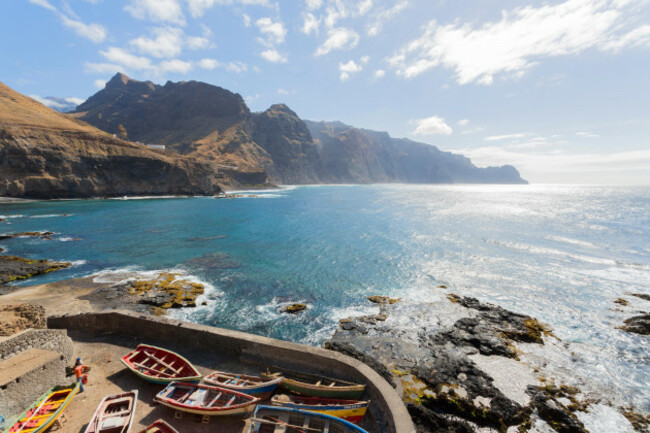
Ireland and Spain are not the only targets with African countries such as Senegal and Cape Verde also being used as delivery points. The drugs then go either by another ship or are taken by land to cross into Europe.
Sources have said Irish involvement in a European naval mission to the area was considered but it did not materialise.
The US coastguard and European navies have been off the African coast monitoring the movements of suspected drug ships. Instead the European Union is donating €12m to the Cape Verde military.
Spain’s national police and other agencies claimed in June that they had dismantled a criminal network involved in trafficking drugs from South America to the Canary Islands.
Intelligence officials here and in agencies such as MAOC-N in Portugal have used a number of methods to identify ships that are suspicious.
This includes the traditional intelligence gathered from human sources, known as HUMINT, not just here in Ireland but also abroad.
Analysts are also used to examine changes in ownership and the movements of ships. They also marry open source intelligence with criminal activity assessments gathered from European and US-based agencies to identify ships coming from South America to Europe that may be carrying drugs.
Analysts also try to establish which ships are owned by legitimate companies and those that are owned by shell or front companies that are in effect fake entities set up by organised crime gangs.
These shipping fronts can have multiple different entities controlling them, and analysts have to check back through other companies to find the actual owners.
In some cases, sources said, there are distinct connections between the renaming of a vessel and companies that have been sanctioned. These companies or individual ships have been identified as being involved with the so-called Shadow Fleet.
The Shadow Fleet is about 500 ships worldwide involved in smuggling of oil and gas from Russia. The Journal has confirmed that the Irish Naval Service is monitoring these ships travelling up the west coast of Ireland on a regular basis.
Sources have said that while the ships involved in the smuggling are not specifically classified as Shadow Fleet, they are mimicking the methods used by the Russian smugglers to ferry drugs.

To embed this post, copy the code below on your site













have your say