Sign in. It’s quick, free and it’s up to you.
An account is an optional way to support the work we do. Find out more.
Sign in. It’s quick, free and it’s up to you.
An account is an optional way to support the work we do. Find out more.
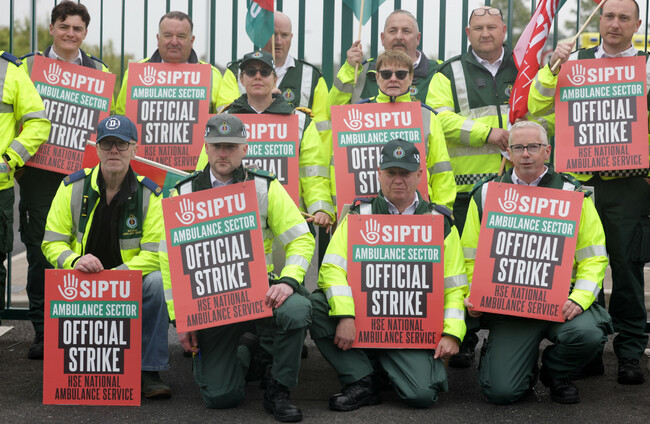
STRIKING NATIONAL AMBULANCE Service workers are “prepared for the long haul”, a paramedic on a Dublin picket line has said.
Ambulance personnel, including medical technicians, paramedics, advanced paramedics, paramedic specialists and paramedic supervisors, began a 24-hour strike at 8am this morning.
Under contingency plans, the 999 phone service will be fully operational and priority will be given to patients experiencing emergencies like heart attacks or with serious injuries from road accidents.
The HSE has warned there “will be delays responding to non-life-threatening calls for ambulances” today and tomorrow.
The health service said the capacity of the NAS to respond during the strike will be “significantly impacted”.
“During this time, consider if another healthcare option might be suitable,” it said.
Last month, Unite and Siptu members voted in favour of industrial action due to what they refer to as management’s ongoing failure to implement the 2020 Roles and Responsibilities Review.
The unions say the qualifications, clinical responsibilities and operational duties of ambulance personnel have expanded significantly in recent years.
They also say a 5% increase recommended under the benchmarking II process has not been delivered.
This morning, Paula Lawless, a paramedic and shop steward for Siptu, said striking workers are “happy to be out, but they’re not happy to be here”.
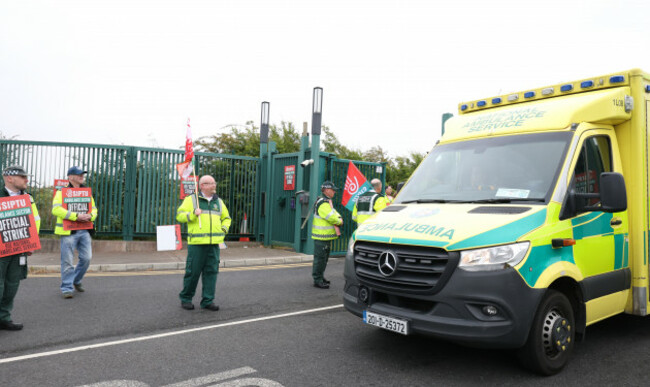
She said morale was at “100%” and they were “absolutely” in it for the long haul.
“The long haul is the long haul, whatever it takes. Hopefully it won’t come to that, but we’re all prepared for the long haul.”
As she spoke, dozens of passing vehicles beeped their horns in support of the protest at the Dublin South Central ambulance station.
Lawless said over the past 15 years “our skills have been upgraded and the pay hasn’t”.
She said while the change in the role has made the job harder, it has considerably improved patient care, adding: “The patient always will come first and you’ll give them whatever they need and the best care you can give them at that time.”
Unite general secretary Sharon Graham has said paramedics have been left “with no option but to take action to secure long-overdue recognition and pay commensurate with their skills and expertise”.
“They have Unite’s full support in this fight,” she said.
Unite regional officer Eoin Drummey said the HSE “can resolve this dispute by agreeing to implement the 2020 review immediately and without preconditions”.
“Our members would prefer to be on the front line saving lives, but they have been forced on to the picket line to demand that the vital work they do serving communities across Ireland is finally recognised,” he said.
The Irish Patients Association said that while it recognises the “immense pressure ambulance personnel are working under”, it believes the situation has moved beyond a routine industrial actions and “into an area of legitimate patient-safety concern.”
“Patients must not be used as pawns by any party in an industrial dispute,” it said.
“We are not calling for political interference in the outcome of negotiations. We are calling for every possible effort to help ensure the conditions exist for meaningful and urgent engagement before risks deepen further.”
Meanwhile, Sinn Féin has called on Minister for Health Jennifer Carroll MacNeill to “engage with workers and implement an agreed pay and grading modernisation plan.”
“The Minister for Health cannot stand back while ambulance workers are forced into industrial action,” health spokesperson David Cullinane said.
“The Minister must intervene directly, engage meaningfully with workers, and ensure that ambulance workers get the respect, recognition and safe staffing that they deserve.”
The strike dominated Leaders’ Questions in the Dáil this afternoon, with Sinn Féin’s Mary Lou McDonald stating that the government has “left the ambulance system stretched to breaking point” with “overworked paramedics under extreme pressure”.
McDonald also criticised the health minister for a “failure to intervene”.
She said: “Indeed, yesterday, at a meeting in Clare, the minister shocked people when she referred to paramedics and EMTs as ‘ambulance drivers’.
“And there’s the problem. In a nutshell, your Government is blind to the expertise and skill of those who save lives every day. You ask ambulance workers to upskill and then refuse to pay for it properly.”
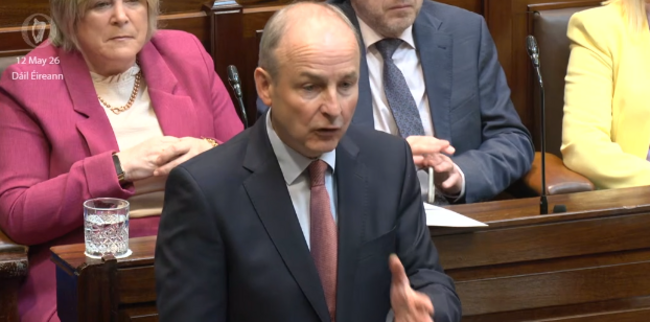
The Taoiseach accused McDonald of presenting a “very dishonest” assessment of the paramedic strike.
“Surely you realise that the HSE has been engaged with the trade unions for quite some time on this issue,” he said.
Martin added that the State has invested “very significantly” in the National Ambulance Service, stating that negotiations had arrived at an agreed outcome that was recommended to the membership by unions. Martin said he accepted that members had been entitled to vote against it.
The Taoiseach said the only way to resolve the dispute was through dialogue and “exhausting the well-established industrial relations machinery of the State”, namely the Workplace Relations Commission or the Labour Court.

To embed this post, copy the code below on your site











have your say