Sign in. It’s quick, free and it’s up to you.
An account is an optional way to support the work we do. Find out more.
Sign in. It’s quick, free and it’s up to you.
An account is an optional way to support the work we do. Find out more.
IRELAND’S BID TO join the European Organisation for Nuclear Research (CERN) as an associate member took a significant step forward this week, with the country set to become an associate member in 2026.
The announcement has received widespread support from university staff, researchers, and industry leaders across the country, who see it as a key moment for Ireland’s scientific and technological development.
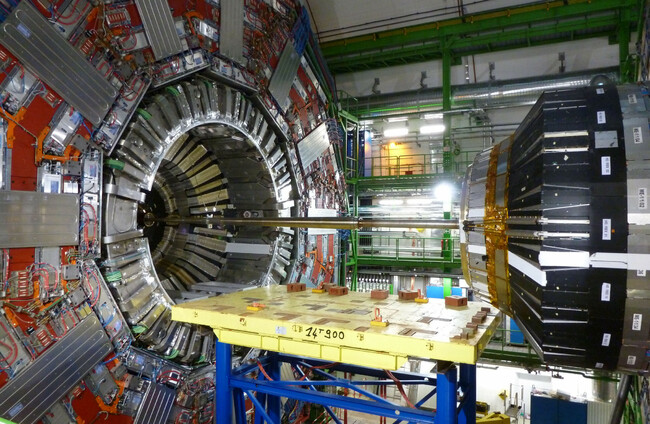
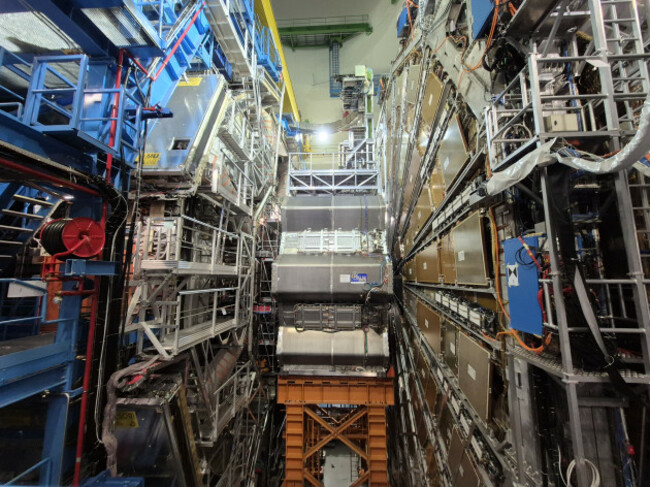
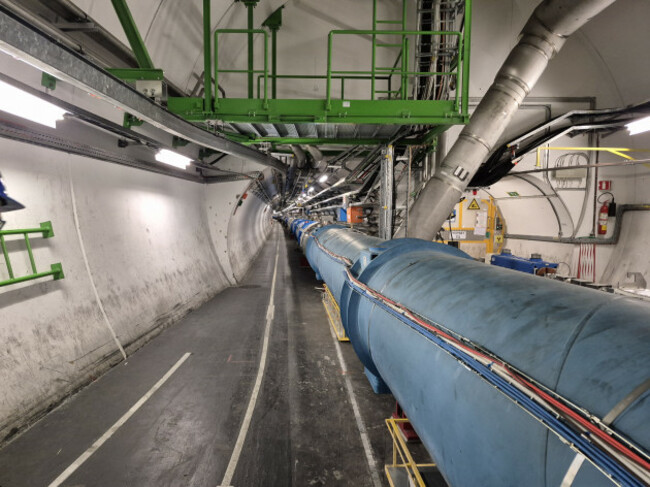
CERN, based on the Franco-Swiss border near Geneva, is home to the world’s largest particle physics laboratory, including the Large Hadron Collider (LHC).
The core mission of CERN is to deepen our understanding of the fundamental particles and forces that make up the universe, and the work conducted there requires the development of new technologies.
These innovations have broad applications, spanning fields such as physics, engineering, computer science, healthcare, and industrial processes.
Following a visit to the site in Geneva by Minister for Science James Lawless and Irish academic staff from over 20 institutions, the country looks set to become an associate member.
Associate membership would allow Ireland’s researchers to participate in CERN’s scientific programmes and will make Irish citizens eligible for staff positions and fellowships at CERN.
So why did it take so long for us to join, given the many perks of membership?
Dr Niall Smith from Munster Technological University, a member of the Irish delegation which visited CERN this week, suggested that the delay stemmed from a lack of focus on large-scale scientific collaborations in the past.
While many academics and industry workers have advocated for Ireland to join the major research body for decades, there was little interest from successive governments until recent years.
“While there is a focused effort now, there wasn’t the same focus on international scientific partnerships in previous years,” Smith told The Journal.
“Historically, funding constraints and competing priorities meant opportunities like CERN were not prioritised. Ireland’s focus has traditionally been elsewhere, and international collaborations of this scale may not have been on the radar.”
Currently there are 24 full member states of CERN – Ireland is among only seven EU nations that have not yet joined the research organisation.
Smith pointed to Ireland’s recent success with the European Space Agency (ESA) as a positive example of the benefits of international cooperation.
“Joining the ESA was a bold decision, but it has paid off for Ireland – not only have we contributed to major space exploration projects, but we’ve also seen real financial and research returns,” he said.
“The success with ESA proves that when we invest in international collaborations, we benefit not just in terms of knowledge, but also financially.”
Smith added that CERN is “crying out” for engineers, and Irish membership will greatly benefit “a number of fields, not just the expected scientific ones”.

Professor Enda McGlynn, Head of the School of Physical Sciences at DCU, told The Journal that two major factors had stalled Ireland’s progression towards a CERN membership application.
“The cost of joining would have been one reason, but I also don’t think the potential benefits were seen before,” McGlynn said.
“I believe that previous governments did not see a payoff or benefits for Irish society in the investment, which would have gone hand-in-hand with the cost in putting off Irish membership.”
Despite Ireland not being a member of CERN, anumber of Irish researchers, academics and engineers have worked for the major research body since its foundation in 1954.
McGlynn said that these workers had been employed “on sufferance” thanks to the kindness of member states.
He explained that there was a frustration among academics who had advocated for Ireland to join CERN previously.
“We were missing out on a large number of benefits that CERN membership offers,” he said.
“As Ireland grew and funding for science in the country expanded, it seems that there was a degree of frustration that Ireland could not reap those benefits, simply due to funding and lack of interest.”
UCD physicists, who are already active in CERN research, expressed excitement about the associate membership application.
UCD staff have previously contributed to major CERN discoveries, including the 2012 Higgs boson discovery, and they have collaborated on projects with practical applications in healthcare.
Staff and students at UCD have used CERN-developed sensor technology for medical imaging and radiation therapy at St. Luke’s and St. Vincent’s hospitals in Dublin.
Professor Ronan McNulty, a UCD particle physicist and another member of the Irish delegation that visited CERN on Wednesday, and said he was “delighted” about the membership news.
“Joining CERN opens up new doors for Irish teachers, students, and apprentices to be trained at CERN,” McNulty said.
“For Irish people or companies working with CERN, it’s taking that knowledge and bringing it back to Ireland – that’s the big key thing,” McNulty told The Journal.
“Access to CERN means access to knowledge – having the Irish scientific and engineering community collaborate with the premier scientific laboratory in the world will enrich our society with the latest scientific ideas and technology.”
Professor Denjoe O’Connor from the Dublin Institute for Advanced Studies (DIAS) was another Irish academic to make the trip to CERN this week.
O’Connor, the Director of the School of Theoretical Physics at DIAS, welcomed the membership application as “a fantastic opportunity”.
“Joining CERN will enable Irish researchers to participate fully in CERN’s scientific programmes, fellowships, internships, and training schemes,” O’Connor said.
“The chance for teachers and students to access CERN’s facilities and collaborate with global experts will provide them with invaluable experience and open up new pathways into STEM careers.”
DIAS said in a statement that they believe Ireland’s membership of CERN will strengthen our national and international research network.

To embed this post, copy the code below on your site














have your say