Sign in. It’s quick, free and it’s up to you.
An account is an optional way to support the work we do. Find out more.
Sign in. It’s quick, free and it’s up to you.
An account is an optional way to support the work we do. Find out more.
LAST UPDATE | 15 Jun
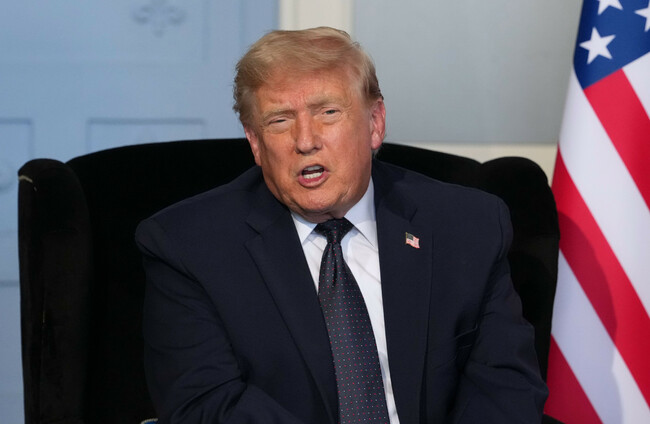
DONALD TRUMP HAS said the Strait of Hormuz will be “completely open” on Friday, when a deal between the US and Iran to end war in the Middle East is expected to be signed.
Washington and mediator Pakistan said the agreement was to be signed on Friday in Switzerland – news which caused global oil prices to tumble by as much as 5%.
World leaders have welcomed the news, but Israeli politicians have slammed the plan.
It has been announced that the war will end on all fronts, including Lebanon, and the vital Strait of Hormuz will reopen, but little information has been offered on the thorny question of Tehran’s nuclear programme.
Speaking at a press briefing alongside French president Emmanuel Macron ahead of the G7 summit, the US president said the strait is “already partially open”, adding that “a little hunting” is taking place for mines.
“Ships are starting to go out now. On Friday, it will be completely open,” he said
To Macron’s apparent surprise he also said: “I don’t think we are going to need much help” on keeping the Strait open, after London and Paris proposed a joint naval mission.
Macron had said earlier France and UK were “ready to act very quickly” on the Hormuz mission.
Tracking platforms show that shipping through the strait remain virtually at a standstill.
Trump: "The strait is already partially opened. On Friday it will be completely opened." pic.twitter.com/R4FhE198tA
— Aaron Rupar (@atrupar) June 15, 2026
There has also been controversy on potential Iranian fees on vessels using the Strait of Hormuz with Tehran insisting it would charge what it described as maritime service fees and said they should not be described as tolls.
But Macron told TF1 television: “We defend international law and we will do everything in our power to ensure there is no toll.”
“There shouldn’t be any tolls or anything that would enrich those in power” in Iran, he added.
Speaking at a press briefing earlier today, Iran’s foreign ministry spokesman Esmaeil Baqaei said the country would charge maritime service fees on ships transiting the strait.
“We have always maintained that we do not seek to collect transit tolls, but fees for navigation services, environmental protection, ship insurance and other necessary services will be charged,” he said.
Baqaei said the US committed to the release of the frozen Iranian assets in the deal, as well as the “reparations for damages” due to the war, adding that the final agreement “is expected to be endorsed by a United Nations Security Council resolution after a period of 60 days.”
Trump said the text of the deal would likely be released after the signing on Friday, but US officials said it would be “put out in the next 24-48 hours.”
One official, speaking on condition of anonymity, said Trump, US Vice President JD Vance and Iranian parliament speaker Mohammad Bagher Ghalibaf electronically signed the deal on Sunday.
“The president wanted to sign it personally because he wanted to show his dedication to the process,” they said.
In the first reaction from an Israeli official to the deal, national security minister Itamar Ben Gvir said: “Trump’s agreement does not bind us… we are not party to this agreement. It does not safeguard our security.
“We must not settle for anything less than the dismantling of Hezbollah. We must not withdraw from a single inch of territory that our soldiers have captured and cleared of terrorist infrastructure,” he said.
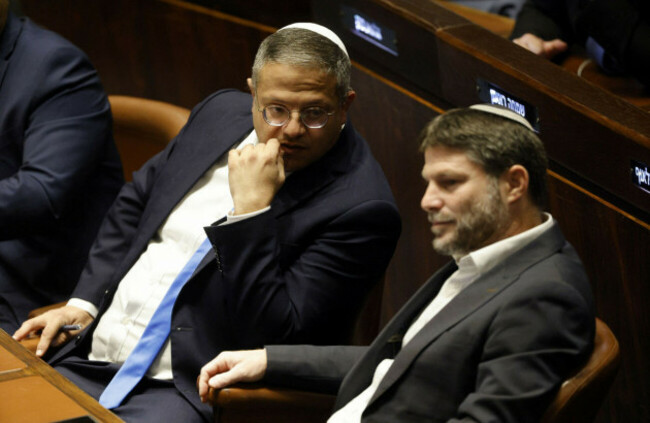
Israel’s finance minister Bezalel Smotrich echoed the sentiment, calling the deal “bad for Israel”.
“The joint (US-Israeli) campaign achieved many successes in weakening Iran, and those achievements have not been in vain,” Smotrich said.
“We will have to continue the campaign to bring down the regime ourselves, using creative means, and ensure that Iran never acquires nuclear weapons.”
Smotrich also called for a stronger campaign in Lebanon, saying he would work to ensure “that we stand firm on our position and allow the IDF complete freedom of action to continue pushing Hezbollah farther away”.
Earlier this month, Ireland banned both politicians from entering the country. It followed Ben Gvir posting a video on social media of him mocking bound activists who had been detained by Israeli forces on a Gaza-bound aid flotilla.
Opposition politicians in Israel have also condemned the agreement. Naftali Bennett, a former prime minister and a leading contender in Israel’s upcoming election, said it marked a “dangerous turn for Israel’s security”.
“In the past 1,000 days, we have discovered time and again the greatness of our nation and the weakness of the government,” he said in a statement.
“We have a clear strategic plan to collapse the Iranian regime. With one hand, we will not allow Iran to break out to a nuclear weapon, and with the other hand, we will bring about the disintegration of the regime through combined diplomatic, intelligence, economic, technological, and military means.”
Yair Golan, head of the left-wing Democrats Party, argued in a statement that the deal effectively wiped out Israel’s military gains “with the stroke of a pen”, while Netanyahu stood on the sidelines: weak, ill, isolated, and without influence”.
“Trump is signing an agreement that pours billions into the ayatollahs’ regime, leaves the nuclear infrastructure intact, leaves the ballistic threat unresolved, and provides a lifeline to the murderous regime in Tehran.”
European Commission chief Ursula von der Leyen said the priority is now the “swift and full implementation” of the deal.
In a statement, she said the agreement should allow for the immediate reopening of the Strait of Hormuz and toll-free navigation.
She also said it “should end Iran’s nuclear and ballistic programmes and its destabilising activities in the region” and called on all parties to respect Lebanon’s sovereignty and territorial integrity and implement a genuine ceasefire.
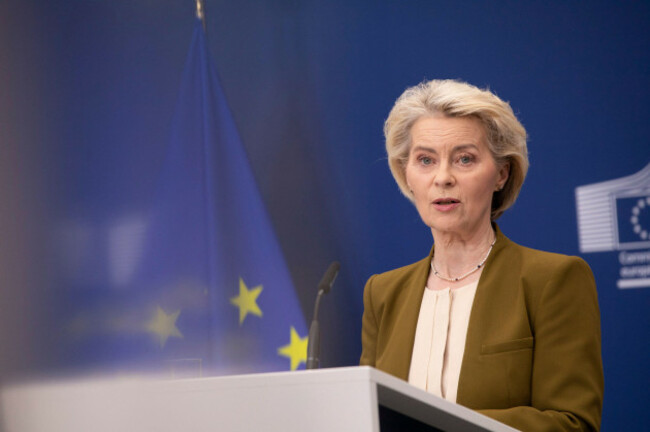
Meanwhile, European Council president António Costa said: “Weapons must now fall silent, and outstanding differences must be resolved by peaceful means, in accordance with international law”.
“I look forward to an end to this costly war and to the full restoration of freedom of navigation in the Strait of Hormuz.”
Minister for Foreign Affairs Helen McEntee said she would discuss the developments with colleagues in Luxembourg at the final meeting of EU foreign ministers before Ireland assumes the European presidency.
“I hope there can now be a full engagement by all involved to implement this agreement, address all issues including Iran’s nuclear programme, and achieve a just and lasting peace across the region,” she said.
“Re-opening the Strait to international shipping would bring much-needed relief to the global economy. The situation in Lebanon is deeply concerning and must also be addressed.”
Iran’s Mehr news agency reported that the US would release $12 billion (€10.37 billion) in frozen assets to Iran before the start of negotiations.
It quoted a 14-point “memorandum of understanding” between the two nations, which it said stipulated “the release of 24 billion dollars (€20.75 billion) in frozen Iranian assets during the 60‑day negotiation period” that begins after the MoU is signed.
The Trump administration didn’t immediately comment on the details of the agreement, which may prove contentious as the US presses its effort to end Tehran’s nuclear ambitions and deal with its stockpile of highly enriched uranium — believed to have been buried by US strikes last year.
In an interview with the New York Times on Sunday, Trump said Washington was still negotiating whether Iran would suspend its enrichment for 20 years.
The US leader hinted that he might settle for a 15-year suspension, but said he did not want to negotiate via the press.
Fuels for Ireland chief Kevin McPartlan said he welcomed the news that the conflict may soon see its end, but cautioned that it will not mean an instantaneous return to previous oil and fuel prices.
“Ireland is a price taker, not a price setter. The cost of transport and heating fuels here is largely determined by international commodity markets,” he said, highlighting the volatility of this.
“That is why this period of relative stability should be used to move beyond short-term crisis responses. Since the conflict began, the Government has twice intervened on fuel prices, while also acknowledging the need to avoid knee-jerk responses to oil market emergencies.”
With additional reporting from AFP, Jane Matthews, and Emma Hickey

To embed this post, copy the code below on your site










have your say