Sign in. It’s quick, free and it’s up to you.
An account is an optional way to support the work we do. Find out more.
Sign in. It’s quick, free and it’s up to you.
An account is an optional way to support the work we do. Find out more.
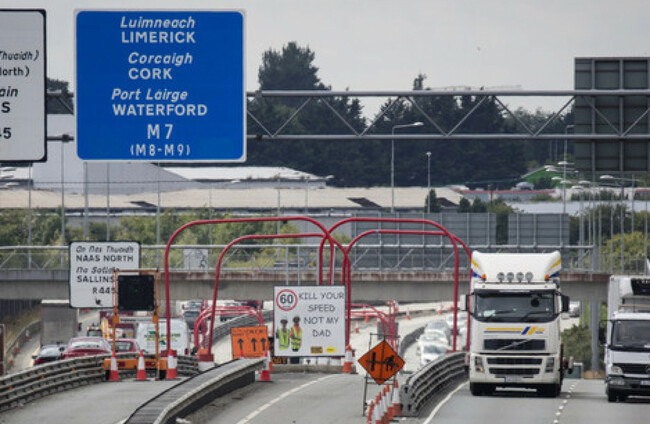
NEW SPEED CAMERAS, known as Motorway Average Speed Safety Cameras, have gone live on a stretch of road this morning.
The system is in place on the M7 in Tipperary between Junction 26 and Junction 27, both directions, eastbound and westbound.
Vehicles detected driving in excess of the 120km/h posted motorway speed limit will be subject to prosecution from 7am, according to gardaí.
A similar system is already in place at the Port Tunnel in Dublin city.
Paddy Comyn of AA Roadwatch said it should create a better flow of traffic by preventing a “concertina effect where people speed up and slow down” as happens when motorists are exceeding the speed limit.
“If your vehicle reaches the next camera too quickly a server will highlight this and flag a violation has occurred,” he told RTÉ Radio One’s Morning Ireland programme.
“So essentially it’s tracking how long it take you to get from point A to point B and if they deem it has being too fast that is a charge.”
Prosecution of speeding offences take place by Fixed Charge Notice. The current Fixed Charge Notice is €80 fine accompanied by three penalty points.
Gardaí said that prior to the installation of the system, compliance with the 120km/h motorway speed limit was below 70%.
During the periods of the testing/ pilot scheme compliance levels have risen, but remain below 90%.
A garda spokesperson said last week that analysis of traffic data by Transport Infrastructure Ireland (TII) shows that speeding is typical of driver behaviour on low traffic volume sections of the motorway network throughout the country.
“This type of driver behaviour is very dangerous, and it is compounded during rain or hail showers increasing the potential of serious accidents.
Further, the data identified that speeds are not being appropriately moderated in response to adverse weather conditions such as heavy rain or low road temperatures.
“The specific locations chosen have been subject to frequent weather-related/micro-climate events (mostly hail) resulting in increased collision frequency in the area.”

To embed this post, copy the code below on your site













have your say