Sign in. It’s quick, free and it’s up to you.
An account is an optional way to support the work we do. Find out more.
Sign in. It’s quick, free and it’s up to you.
An account is an optional way to support the work we do. Find out more.
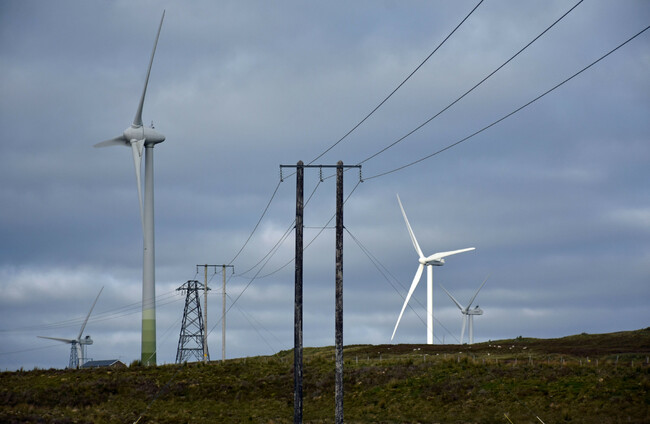
Ireland’s energy emissions are at the lowest rate in 30 years, but more needs to be done for Ireland to reach its legally binding climate targets, the Sustainable Energy Authority of Ireland (SEAI) has said.
According to a report from the SEAI, energy-related greenhouse gas emission from transport, electricity and heat fell 8.3% last year.
The data is promising, but the SEAI said Ireland will have to “increase the rate of change significantly” in order to meet emissions targets.
The SEAI is calling for energy use in carbon-intensive sectors to be strategically slowed and the deployment of more renewable energy, as well as energy efficiency technologies and practices, to be urgently sped up.
Ireland remains massively dependent on fossil fuels for heat, power and transport, however, with only minimal progress made in reducing reliance.
Overall, 82.7% of the country’s energy use came from oil, gas, coal and other solid fuels last year.
Some sectors were even more tightly tied to high-carbon, high-emission energy sources, the SEAI report shows.
Ireland’s total energy demand increased by 0.8% in 2023, led mainly by increased energy demand for transport (which rose by 4.5%) and from the commercial services sector (up 6.9%), which includes data centre demand.
The SEAI report cautioned that “there is no room for complacency” as, despite progress in 2023, early 2024 data suggests that energy emissions may go up in 2024.
This is due to a recorded increase in residential demand for gas and heating oil this year.
It is also likely that Ireland’s transport and electricity emissions will exceed their sectoral emission ceiling in the first carbon budget (2021-2025).
In Ireland, three carbon budgets have been set for 2021-2025, 2026-2030 and 2031-2035, with the overall aim to set Ireland on a pathway to climate neutrality by 2050.
Any emissions that exceed the first carbon budget are carried over into the second carbon budget, where they will need to be addressed by even more intensive policies and measures.
Speaking on the report, SEAI CEO William Walsh said that acting immediately to reduce emissions “is essential”.
“We can see already that concerted effort and actions deliver results. It’s not just the end goal of emission reductions by 2030 or 2050 that matter, but reducing our emissions each and every year, to comply with science-based carbon budgets and sectoral ceilings. These are our non-negotiables,” Walsh said.
Walsh added that thanks to Government support and the efforts of citizens and businesses over the last few years, “we are seeing progress”.
“Ireland has set a strong legal basis and significant momentum that we now must capitalise on. The incoming Government comes at a time where a re-doubling of effort could see us realising the urgent change needed in our shift away from fossil fuels,” Walsh said.
“The challenge seems difficult, but we must remind ourselves of the benefits if we succeed – cleaner air, less energy poverty, enhanced energy security, and a safer, habitable planet for our children.”

To embed this post, copy the code below on your site














have your say